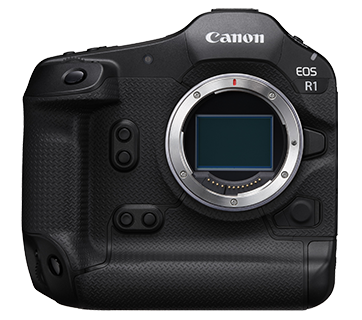
Full Specifications
| Sensor Size | Full frame (36 x 24 mm) |
| Megapixels | 24 MP |
| ISO Range | |
| Autofocus Points | 4897 |
| Image Stabilization | 8 stop(s) |
| Weight | 1115g |
| Dimensions | 158 x 150 x 87 mm (6.22 x 5.91 x 3.43″) |
| Price (USD) | $6299 |
| Lens Mount | Canon RF |
| Viewfinder | |
| Screen | 3.2″, 2,100,000 dots |
| Weather Sealed | Yes |
| Release Year | 2024 |
Pros & Cons
What We Like
- Eye Control AF works extremely well, accurately tracking subjects even in challenging conditions.
- Massive OLED EVF with 9.44 million dots and great brightness.
- High-speed capabilities with up to 40 fps electronic shutter performance and virtually no rolling shutter.
- Built-in neural upscaling creates 96MP JPEGs in about 10 seconds.
- Dust- and weather-resistant design, maintaining Canon's reputation for durability in harsh conditions.
- Good low-light performance with an advanced sensor design.
- Ability to capture video and stills simultaneously without interruption.
What We Don't
- Only 24.2 megapixels, which some users feel is insufficient for modern photography needs.
- Absence of internal ND filters, requiring additional gear for optimal video shooting.
- The shutter sound, while intended to mimic a mechanical shutter, is perceived as odd and needs customization options.
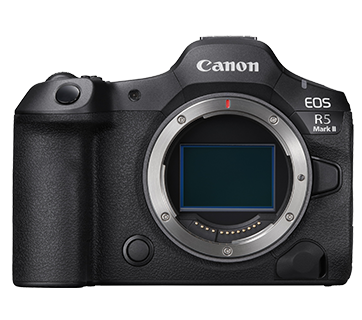
- More expensive than anticipated, especially in comparison to the R5 II, which offers higher resolution.
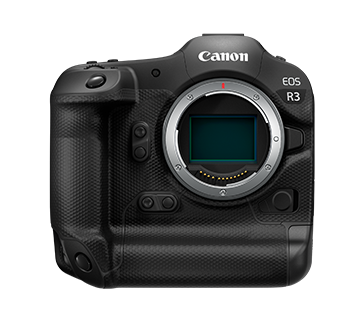
- Heavier than previous models like the R3, which may affect portability for some users.
The Verdict
The Canon EOS R1 is characterized by impressive autofocus capabilities and robust build, catering primarily to sports and professional photographers. However, the limited megapixel count and high price point have raised concerns about its overall value in comparison to the R5 II.
"Eye Control AF works extremely well. I had doubts but... it followed my dark colored eye around flawlessly."
-- User shared this feedback after testing the R1 at a Canon event.
"The viewfinder is massive. It felt like I was looking at a large 4K monitor built into a camera."
-- Comment from a user who attended a Canon display event.
"There’s a pretty good amount of us who would have been willing to buy a grip body with the R5 II sensor."
-- User discussing the perception that Canon missed an opportunity with R1's sensor resolution.
"For many, that actually makes it a better choice than the R1 and for thousands less."
-- User comparing the R5 II to R1 in terms of value.
"240fps is just silly."
-- User reaction to the high fps specifications and its practical implications.
"If it isn’t at least 33mp it will be DOA."
-- User expressing disappointment over the R1's resolution in comparison to competitors.
Want the Full Picture?
Read our in-depth review with sample images, real-world testing, and detailed analysis.
Read Full ReviewCompare This Camera
See how the EOS R1 stacks up against the competition.
Featured In
This camera appears in the following curated lists.
Compatible Lenses
Lenses that work with the Canon EOS R1 (Canon RF mount).
Similar Cameras
Other cameras in the same segment you might consider.


Frequently Asked Questions
Does the Canon EOS R1 support CFexpress cards?
No, the EOS R1 does not have CFexpress card slots. It uses dual SD UHS-II card slots, which are sufficient for most shooting but limit maximum write speed and buffer clearing for sustained high-speed burst or heavy video use.
How does the Eye Control AF feature work in the R1?
Eye Control AF in the EOS R1 tracks where you are looking in the EVF and moves the autofocus point accordingly after a quick calibration process. Many users report it works surprisingly well and is particularly helpful for tracking unpredictable subjects.
Is the EOS R1 suitable for landscape or high-resolution studio work?
While the R1's image quality and dynamic range are excellent, its 24MP resolution may not provide the detail or cropping flexibility many landscape or studio photographers require. For those needs, a higher-resolution model like the R5 II or competing flagship cameras may be preferable.
What is the real-world battery life of the Canon EOS R1?
In typical use (mixing bursts, AF, and some video), most users can expect around 600-1,000 shots per battery. Heavy use of high-burst rates, video, or the high-res EVF will reduce this number, so carrying spares is recommended for extended or professional shoots.
Can video and stills be recorded simultaneously on the R1?
Yes, one of the EOS R1's unique professional features is its ability to record video and shoot stills simultaneously without interrupting either function. This is particularly valuable for event, news, and action coverage.
Is the R1 much larger and heavier than other Canon mirrorless bodies?
Yes, at 1,115 grams and with a body size similar to Canon’s former 1D X series, the R1 is heavier and bulkier than mainstream mirrorless cameras like the R5 II, reflecting its pro-focused, rugged design.