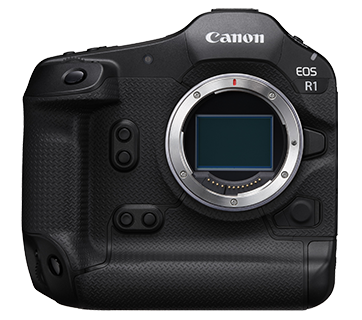

The Canon EOS R1 and Sony A9 II are two of the most advanced mirrorless cameras in the market, often pitted against each other by professional photographers and serious enthusiasts. Both models cater to similar demographics: sports, wildlife, and event photographers who require superior image quality, fast autofocus, and robust build quality. The choice between them revolves around discerning the nuanced differences in specifications, performance, and user experience.
Both the Canon EOS R1 and the Sony A9 II offer full-frame sensors with comparable 24-megapixel resolution. However, the R1's more extensive autofocus system with 4,897 points greatly surpasses the A9 II's 693 points, which can be appealing for those focused on capturing fast-moving subjects with precision. Additionally, the R1 also boasts an 8-stop stabilization mechanism compared to the A9 II's 5.5 stop, further influencing the decision-making for handheld shooting enthusiasts.
Specifications Comparison
Detailed Comparison
Image Quality
Both the Canon EOS R1 and Sony A9 II offer exceptional image quality with their full-frame sensors, each providing 24 megapixels of resolution. The R1's sensor size is slightly larger at 36 x 24 mm compared to the A9 II's 35.6 x 23.8 mm, which may contribute to slight advantages in dynamic range and low-light performance. Sensor technology plays a crucial role here, as both cameras utilize the latest advancements in image processing.
In practical use, users have often noted that Canon's color science provides warmer tones and skin color reproduction, which can be appealing for portrait and event photographers. Sony's JPEG output, on the other hand, is slightly cooler but offers more flexibility in post-processing. When shooting in challenging lighting conditions, both cameras perform admirably; however, the Canon tends to retain more detail in the highlights and shadows.
Ultimately, while both models render stunning images, the slight advantage in dynamic range and color reproduction gives the edge to the Canon R1, though the differences may be marginal in many real-world situations.
Autofocus System
The autofocus systems in both the Canon EOS R1 and Sony A9 II are highly advanced, but they cater to different priorities. The Canon EOS R1 features an unparalleled 4,897 autofocus points, utilizing AI-driven subject recognition that allows for incredibly precise focusing across the frame. This expansive coverage is particularly beneficial for sports and wildlife photographers, where tracking fast-moving subjects accurately is crucial.
In contrast, the Sony A9 II offers 693 phase-detection points, a number that is still impressive but not on par with the R1. The A9 II excels with its Real-time Eye AF technology, which can track both humans and animals, making it a favorite through multiple shooting scenarios. However, when it comes to sheer autofocus point count, the R1's sophisticated tracking capabilities lead it to outshine its counterpart.
In fast-paced environments, the response and accuracy of the autofocus system can greatly affect the outcome of critical shots. Given the Canon's far greater point coverage and its rapid focus lock capabilities, it stands as the stronger option for many professionals who rely on the highest precision.
Video Capabilities
When comparing the video capabilities of the Canon EOS R1 and the Sony A9 II, both cameras provide strong performance, but with notable differences. The Canon R1 supports high-resolution 4K video recording, though specific frame rates and quality metrics are essential to consider for videographers. While the camera is primarily geared toward still photography, it has shown potential as a solid video tool, especially for content creators who also shoot stills.
On the other hand, the Sony A9 II supports 4K video at 30p and is known for its impressive video functionality, including excellent autofocus during video shooting thanks to its hybrid autofocus system. Users commonly praise the A9 II for its clear and detailed video output, versatile codecs, which give it a slight edge in video-centric scenarios.
In this section, while both have viable video tools, the nuanced video performance and functionality of the A9 II cater more directly to videographers, making it the go-to option for those prioritizing video production over stills.
Build & Ergonomics
Both the Canon EOS R1 and Sony A9 II are built with superior weather-sealed bodies designed for professional use. The Canon R1's heftier weight of 1115 grams, reflected in its larger dimensions, may provide a more substantial feeling in hand, reassuring users about ruggedness and durability. In contrast, the A9 II, at 678 grams, is often touted for its lighter, more compact design, making it an excellent choice for photographers who are constantly on the move.
The R1 features a larger 3.2-inch touchscreen with 2,100,000 dots compared to the A9 II's 3-inch screen with 1,440,000 dots, providing more detail and flexibility for touch operation. Moreover, Canon's interface is generally regarded as user-friendly, which can make a noticeable difference in usability during fast-paced shooting environments.
In terms of controls, both cameras offer extensive customization options, but the R1's ergonomic design arguably allows for more comfortable prolonged use, especially during long shoots. Ultimately, while both cameras excel in durability and usability, the Canon's larger screen and robust build give it an edge in handling and comfort.
Battery & Storage
Battery life can be a significant deciding factor for many photographers, especially during lengthy shoots. The Sony A9 II boasts an outstanding battery life of approximately 690 shots per charge, which is notably impressive, allowing users to shoot extensively without frequent interruptions. This extended battery duration is further aided by the efficient energy usage seen in Sony's system, especially beneficial during long events or travel photography.
On the contrary, the Canon EOS R1's specifications on battery life aren't specifically mentioned, but its heavier design and additional features typically lead to a shorter lifespan per charge compared to the A9 II. Additionally, the Sony's dual card slots (CFexpress Type A) provide flexibility for higher speed and capacity, whereas Canon's card support details are not yet fully established.
In scenarios where shooting long durations without switching batteries or card swaps is crucial, the A9 II's battery performance provides a more reliable platform, granting it a solid advantage in this comparison.
Value for Money
With a price tag of $6,299, the Canon EOS R1 positions itself at the premium end of the market, reflecting its advanced feature set and capabilities. This investment may appeal predominantly to professionals who require ultra-high performance and do not mind the higher expenditure for the latest technology and top-quality results. However, for part-time photographers or those with budget constraints, this may not justify the benefit over more cost-effective options.
On the other hand, the Sony A9 II, priced at $4,500, offers many professional-level specifications at a more accessible price point. This makes it an attractive option for serious hobbyists and professionals who need high-performance features but wish to avoid breaking the bank. Particularly in terms of autofocus capabilities and video features, the A9 II represents a very competitive offering in its price segment.
Considering the price versus performance ratio, the A9 II may appeal more to a wider audience, making it a more versatile choice for those weighing performance against cost. Overall, the R1's premium features do place it in a class of its own, but for many, the A9 II provides a more balanced value proposition.
Our Verdict
Overall, the Canon EOS R1 takes the lead in autofocus system, image quality, and ergonomics, while the Sony A9 II surpasses it in video capabilities, battery life, and overall value for money. For professional photographers focused on high precision and superior image quality in stills, the R1 offers exceptional advantages. Conversely, the A9 II stands as an excellent choice for those who prioritize video functionality, battery longevity, and value without sacrificing performance. Consequently, the choice ultimately hinges on the specific needs and preferences of the photographer; thus, both models are highly commendable in their respective rights.
Canon EOS R1
Sony A9 II
Also Compare
Frequently Asked Questions
Which camera has better low-light performance?
Both cameras perform excellently in low-light situations, but the Canon R1 may offer slightly better dynamic range due to its larger sensor size, making it a favorable choice for low-light photography.
Is the Canon EOS R1 worth its higher price tag?
The EOS R1's higher price is attributed to its advanced features, particularly in autofocus capabilities and ergonomics. For professionals who benefit from these features, the investment may be justified, while casual users may find the A9 II more suitable.
What camera is better for video production?
The Sony A9 II is a better choice for video production given its strong video autofocus capabilities and 4K video recording options, making it an ideal choice for hybrid shooters looking to excel in both stills and video.
How does each camera handle overheating during long shoots?
The A9 II has proven reliability in longer shoots without significant overheating issues, while the R1's performance during extended video recording hasn't been fully established, potentially making the A9 II a more favorable option for lengthy video sessions.
What are the lens options for both cameras?
Both cameras have robust lens ecosystems. Canon RF lenses for the R1 have a selection that's rapidly expanding, while Sony E-mount lenses for the A9 II are well-established, providing a wide variety of options for photographers and videographers.