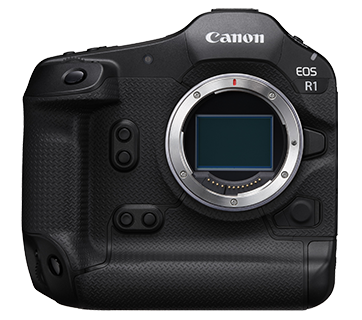
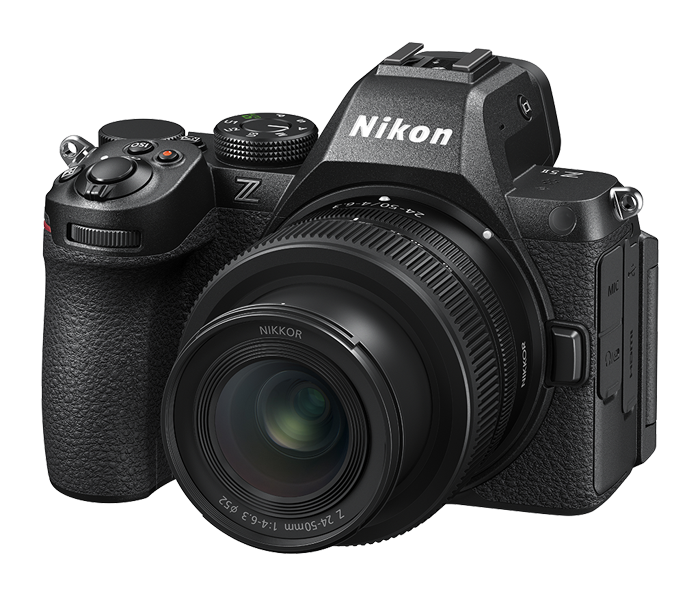
The Canon EOS R1 and Nikon Z5II represent two distinct ends of the full-frame mirrorless camera spectrum. The R1, Canon's flagship, is engineered for demanding professionals-sports shooters, wildlife photographers, and anyone needing utmost speed, durability, and dependability. In contrast, the Nikon Z5II appeals to enthusiasts and budding professionals, offering a well-rounded full-frame experience at a fraction of the cost.
Buyers often compare these models when debating whether to make a significant investment in a true flagship or seek value and versatility in a more affordable package. The decision hinges on priorities: uncompromising performance and ruggedness versus practicality, price, and portability. Key differentiators are autofocus sophistication, shooting speed, build quality, and of course, budget.
Specifications Comparison
Detailed Comparison
Image Quality
Both cameras feature full-frame sensors of highly similar size (Canon: 36 x 24 mm, Nikon: 35.9 x 23.9 mm) and 24 megapixels, promising similar image detail, dynamic range, and low-light capabilities in base performance. In practical terms, both will deliver excellent image quality suitable for large prints and professional use.
Color science does diverge between Canon and Nikon, with Canon often providing warmer, more saturated colors out of camera, and Nikon tending toward neutral tones that are preferred by some for post-processing flexibility. However, neither holds a significant edge in megapixel count, noise control, or per-pixel sharpness at this resolution.
Differences in processing engines and lens selection may impact final results in subtle ways, but for most users, image quality alone is effectively a tie-a testament to how far sensor technology has come.
Autofocus System
Here, the Canon EOS R1 stands apart, equipped with a staggering 4897 autofocus points covering a wide area, tailored for sports, wildlife, and dynamic events. Canon's latest AF system offers class-leading subject tracking and high reliability, bolstered by advanced AI-driven algorithms. This means faster, stickier eye- and face-tracking in challenging conditions.
The Nikon Z5II, in comparison, has a capable but mainstream AF system with 299 points-sufficient for most everyday and enthusiast needs, including portraiture and travel. However, it cannot match the sophistication, coverage, and speed of the R1's autofocus, especially in fast-moving or unpredictable scenarios.
Professionals relying on critical focus in demanding environments will notice a distinct advantage with the EOS R1, while the Z5II meets the expectations of its class but does not aim for the same tier.
Video Capabilities
The Nikon Z5II offers 4K video recording at up to 60p, providing flexibility for slow-motion work and high-resolution footage. While precise R1 video specs are yet to be fully confirmed, Canon's R1 line nearly always delivers advanced video functionality-typically surpassing enthusiast models in bit rate, color depth, autofocus, rolling shutter control, and thermal management.
However, for most users working in 4K, the Z5II covers the basics well: good quality video files, practical frame rates, and reliable performance for vlogging, casual filmmaking, or event coverage. Both cameras have in-body stabilization (7.5 stops for Nikon, 8 for Canon), contributing to smoother handheld footage.
Given its professional focus, the EOS R1 is expected to edge out the Z5II for demanding hybrid shooters who require extensive recording features, advanced codecs, and high reliability, though the price-to-performance ratio likely favors Nikon for mid-range creators.
Build & Ergonomics
Canon's EOS R1 is a large, robust body (1115g; 158 x 150 x 87 mm) engineered for rugged use, with deep weather sealing and a design optimized for extreme working conditions. The size accommodates extensive controls, a beefier grip, and presumably a larger battery, all of which benefit professionals working long hours in challenging environments.
Nikon's Z5II is notably smaller and lighter (700g; 134 x 101 x 72 mm), making it attractive for travel, street photography, and hobbists who value portability. Still, it remains weather-sealed, offering reassuring durability for real-world shooting. Its dimensions and control layout suit shooters who need less bulk without sacrificing core functionality.
Both feature 3.2-inch, high-resolution screens. Ultimately, if tank-like build and finite ergonomics are vital, the R1 is unmatched. However, the Z5II succeeds in delivering robust build quality in a portable form, satisfying different needs equally well.
Battery & Storage
The Z5II is rated for 330 shots per CIPA standard battery test, which is typical for a camera of its size and audience. The EOS R1 doesn't specify battery life here, but being a pro flagship, it likely uses a high-capacity battery supporting much longer shoots-possibly two to three times that of the Z5II-especially appreciated by sports and wildlife shooters who need endurance.
The R1, given its size and professional status, may also offer dual memory card slots with robust formats (CFexpress/SD UHS-II), crucial for backup, speed, and dependability under pressure. The Z5II also features dual SD slots, but its write speeds and storage versatility are likely more entry/pro-focused, not matching the ultra-high throughput of the R1's likely configuration.
For most enthusiasts, the Z5II's battery and storage is adequate. Professionals and high-volume shooters will appreciate the extra endurance and security only a flagship provides.
Value for Money
The price gap is immense: the Canon EOS R1 commands $6,299, placing it at the pinnacle of the market, while the Nikon Z5II is just $1,699-a full-featured, modern full-frame mirrorless accessible to many enthusiasts and emerging professionals.
The Z5II delivers nearly all of the essential photographic and video capabilities most users need, including a full-frame sensor, robust build, modern autofocus, and weather-sealing. It offers unbeatable value by bringing pro-level features to a much lower price point.
The R1's value is justified for professionals whose livelihood depends on maximum performance, reliability, and the edges its advanced features provide. For most buyers, however, the Z5II represents a far better use of budget, allowing for lenses or accessories with the savings.
Lens Ecosystem
Both RF (Canon) and Z (Nikon) mounts have rapidly growing lens selections, including native primes, zooms, and third-party offerings. Canon RF lenses remain largely excellent but expensive, with a few unique pro-grade telephotos and flagship optics. Third-party lens options for RF are more limited compared to Nikon Z, though this is gradually improving.
The Nikon Z system, while younger, has caught up quickly and is more open to third-party manufacturers, meaning there's a broader range of affordable and specialty options. This ecosystem flexibility can reduce long-term costs for Nikon shooters and provides appeal to those who want experimentation or value. Native glass for both systems is top-tier, and adapters are available for legacy lenses on both sides.
Currently, Nikon's open approach and lens pricing flexibility give it a modest advantage for system buyers.
Our Verdict
In summary, the Canon EOS R1 is the undisputed champion for professionals needing absolute reliability, build, and autofocus superiority, especially for sports, news, and wildlife applications. Its cutting-edge technologies and uncompromising construction earn it clear victories in performance-driven categories. The Nikon Z5II, however, shines as the pragmatic choice for most photographers-not only because of its drastically lower price tag but also due to its capability, handling, and expanding lens ecosystem. For enthusiasts, emerging pros, and travel shooters, the Z5II offers everything needed for serious photography at a fraction of the cost. Overall, the decision is tied because the winner truly depends on user need: the R1 is unmatched if you demand the best and can justify the investment; for everyone else, the Z5II is a smarter, value-packed option that covers the bases with confidence.
Canon EOS R1
Nikon Z5II
Also Compare
Frequently Asked Questions
Is the Canon EOS R1 worth the higher price over the Nikon Z5II?
If you're a working professional who depends on extreme autofocus speed, shooting endurance, rugged build, and needs every edge for critical assignments, the R1 is worth the price. For most photographers, the Z5II's performance will be more than sufficient at a far lower cost.
Which camera is better for video work?
Both suffice for high-quality 4K production, but the Canon EOS R1 (expectedly) offers more advanced codecs and higher-end video features for filmmakers, while the Nikon Z5II is excellent for everyday, content-creator, and enthusiast video needs at a much lower price.
How do the autofocus systems compare for fast action and wildlife?
The Canon EOS R1's AF system is vastly superior for tracking fast-moving subjects, with nearly 5,000 points and advanced AI. Action, sports, and wildlife pros will see a clear advantage here. The Z5II's AF is capable for general photography, but not designed for high-speed or erratic subjects.
Which is better for travel or street photography?
The Nikon Z5II is better suited for travel and street photography-its lighter weight, smaller size, and still-robust feature set make it easier to carry all day while still delivering outstanding results.
What about lens options and long-term system investment?
Both brands have strong lens catalogs, but Nikon's Z system is more open to third-party options and typically more affordable at the entry and mid-range. Canon's RF glass is superb, especially at the top, but can be more expensive with fewer third-party choices.
Is there a major image quality difference between the two?
No, both offer closely matched image quality thanks to similar modern 24MP full-frame sensors. The biggest differences will come from lenses and processing preferences, not intrinsic sensor performance.