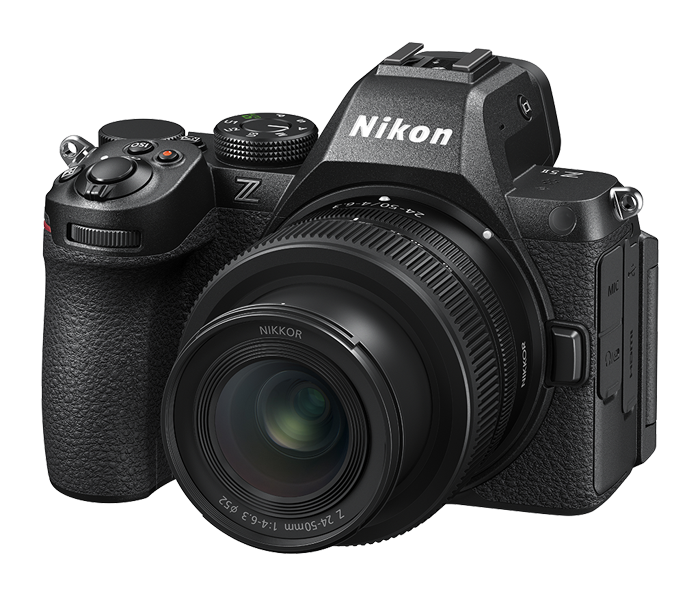
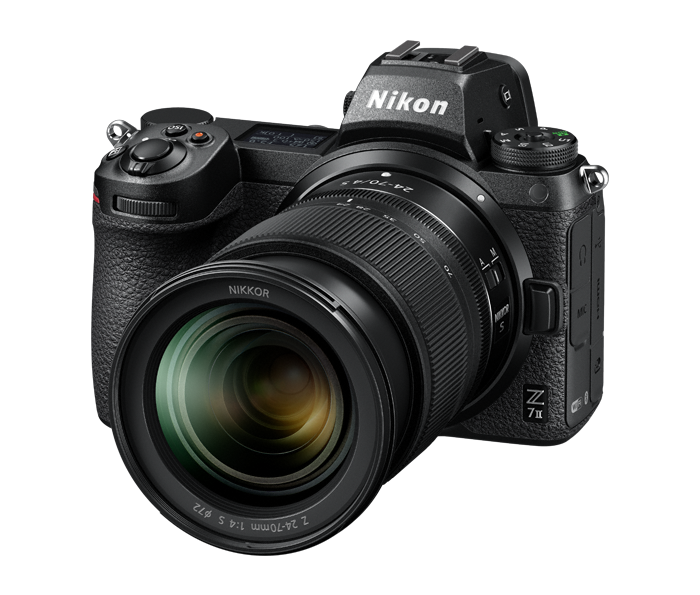
The Nikon Z5 II and Nikon Z7 II are both full-frame mirrorless cameras from Nikon that have gained significant interest among photographers and videographers alike. They often appeal to those moving from entry-level DSLRs or traveling professionals looking for quality, compact gear. The Z5 II is categorized as a more budget-friendly option with solid features, while the Z7 II is tailored for high-resolution demands and serious photographers needing top-tier performance. Key differentiators include image quality, autofocus capabilities, and value for money, making it essential to weigh your needs against what each model offers.
Specifications Comparison
Detailed Comparison
Image Quality
In terms of image quality, the Nikon Z7 II clearly has the advantage with its 46-megapixel sensor compared to the Z5 II's 24-megapixel sensor. Higher megapixels allow for more detailed images, making the Z7 II more suitable for large prints and cropping in post-processing. The ISO performance also gives an edge to the Z7 II, which has a native ISO range that can expand to 102,400, compared to the Z5 II's maximum of 51,200. This capability enables the Z7 II to handle low-light environments better. However, the Z5 II still provides excellent image quality for most conditions, particularly for everyday photography and consumer-level video.
While the Z5 II's images are sharp and vibrant for casual users, those requiring higher detail and performance will notice the benefits of the Z7 II in both dynamic range and low-light conditions. For professional work, the differences in resolution can make a significant difference, especially for landscape and studio photographers. Hence, if high-resolution imagery is the priority, the Z7 II overtakes the Z5 II significantly.
Autofocus System
The autofocus system showcases another significant difference: the Nikon Z7 II features 493 autofocus points, compared to the Z5 II's 299 points. This gives the Z7 II an advantage in tracking and acquiring focus accurately, especially in fast-paced environments or with moving subjects. The wider coverage of the Z7 II's autofocus points allows for more flexible composition and a higher likelihood of achieving critical focus.
The Z5 II, while more limited, still performs admirably in less demanding shooting scenarios, making it suitable for casual and hobby photographers. Its autofocus remains responsive and effective for general use, but it falls short when compared to the advanced capabilities of the Z7 II. Higher-end applications, such as wildlife or sports photography, will favor the Z7 II for its more advanced AF system.
Video Capabilities
Both cameras support 4K video recording at 60 frames per second (fps), making them excellent choices for videomakers. However, the Z7 II's higher resolution means that its 4K video retains more detail and is a better option for capturing high-impact sequences. Additionally, the Z7 II can utilize its extensive resolution to downsample, creating higher-quality video output when shooting.
On the other hand, despite sharing the same video resolution, the Z5 II tends to cater more towards entry-level videographers needing solid features without as much complexity. Both models support in-body stabilization, but the Z5 II boasts a more advanced 7.5 stops compared to the Z7 II's 5 stops. This can significantly benefit handheld shooting, particularly for casual filmmakers looking to achieve smooth footage with less concern for stabilization equipment.
Build & Ergonomics
Both cameras are weather-sealed, offering durability for outdoor shooting, but there are minor differences in their dimensions and weight. The Z5 II is slightly heavier at 700g compared to the Z7 II, which weighs 705g. However, the ergonomics feel similar across both models, featuring comfortable grips and a user-friendly interface. The slightly wider thickness of the Z7 II allows for better handling, especially with larger lenses.
Both models share a 3.2-inch touchscreen with 2.1 million dots, providing good resolution for playback and live-view shooting. In terms of operational controls, both models offer customizable buttons and menus tailored for both novices and more experienced photographers, making user experience smooth in different shooting scenarios. Ultimately, neither has a clear advantage here, as they provide robust builds suitable for various environments.
Battery & Storage
The battery life of the Z5 II is rated at 330 shots per charge, while the Z7 II boasts a longer life at 420 shots. This increased battery performance in the Z7 II can be crucial for extended shooting sessions where charging may not be feasible. Both cameras utilize the same EN-EL15c battery, and both can be charged via USB for on-the-go convenience.
In terms of storage, both models support dual card slots, allowing for versatile recording options, such as separating video and photo files or using one for backup. This feature is becoming increasingly standard for professional-level cameras, providing peace of mind during critical shoots where data loss can be a concern. While both models excel in this area, the ease of long-session use with the Z7 II's superior battery life gives it a noticeable edge.
Value for Money
Price point is a significant differentiator between these two models, with the Z5 II priced at $1,699 and the Z7 II at $2,999. The Z5 II offers an enticing combination of features for the price, catering especially to enthusiasts, hobbyists, or even professionals needing a robust yet more budget-friendly option. It retains many relevant features found in higher-end cameras without breaking the bank.
Conversely, the Z7 II is a more significant investment targeted toward professionals who require the enhanced resolution, superior autofocus, and overall flexibility for various high-stakes shooting scenarios. The extra investment could be justified through either the quality of prints and production value or the demands of certain shooting environments. Therefore, the Z5 II provides excellent value for casual photographers, while the Z7 II may be a better option for advanced professionals.
Our Verdict
Overall, while the Nikon Z5 II excels in features like price-to-value ratio and superior stabilization for both photography and video, the Z7 II stands out in image quality due to its higher megapixel count, advanced autofocus capabilities, and longer battery life. Photographers needing high-resolution images and exceptional focusing abilities will likely lean towards the Z7 II. Meanwhile, those seeking a capable, well-rounded camera at a more accessible price point may find the Z5 II suitable for their needs, particularly for travel and general use.
Nikon Z5II
Nikon Z7 II
Also Compare
Frequently Asked Questions
Which camera is better for beginners?
The Nikon Z5 II is a more accessible choice for beginners due to its lower price point and excellent versatility, making it easier to learn without a steep investment.
Is the video quality significantly different between the two?
While both models record 4K at 60fps, the Z7 II offers better details due to its higher resolution, while the Z5 II features superior stabilization for handheld shoots.
Can I use my old Nikon lenses with these cameras?
Yes, you can use old Nikon lenses with these cameras using an adapter, but native Z-mount lenses will offer optimal performance.
How do the autofocus systems compare in low light?
The Z7 II's autofocus system is more effective in low light due to its greater number of points and better low-light sensitivity, making it preferable for challenging shooting conditions.
Is the price difference worth it?
It depends on your needs. For professionals needing high-resolution images and serious performance, the investment in the Z7 II may be justified, while the Z5 II provides great value for general photography and videography.