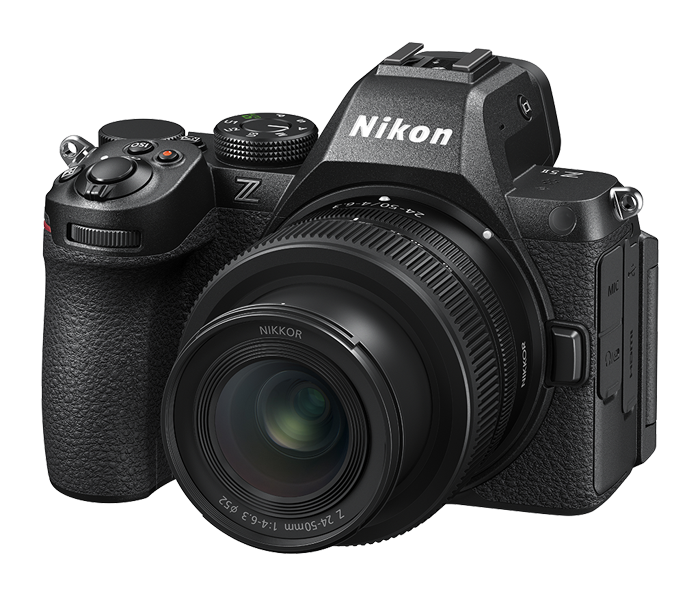

The Nikon Z5II and Sony A7S III are two notable contenders in the full-frame mirrorless market, often compared for their performance, especially among videographers and hybrid shooters. Both cameras cater to enthusiasts and professionals looking for robust features, superior image quality, and versatile performance. The choice between the two largely hinges on specific needs such as video capabilities, low-light performance, and overall system integration.
Specifications Comparison
Detailed Comparison
Image Quality
When it comes to image quality, the Nikon Z5II boasts a 24-megapixel sensor, allowing for high-resolution images that can capture intricate detail. This is beneficial for landscape photography, product shoots, and any application where detail preservation is paramount. On the other hand, while the Sony A7S III has a lower 12-megapixel count, it is designed to excel in low-light situations, utilizing its expanded ISO range of 40-409600 effectively to produce clean images in challenging lighting conditions. This makes the A7S III a preferred option for videographers and events with minimal lighting.
Additionally, the color science between the two brands may also influence user preference. Nikon is often praised for its skin tone representation in portrait photography, while Sony has received accolades for dynamic range and color accuracy, especially in video settings. Balancing these attributes means users need to consider the specific context in which they'll use the camera.
Overall, while the Z5II offers higher resolution for stills, the A7S III provides superior low-light performance. Hence, choosing a winner is subjective to the user's primary focus. For typical photography needs, Z5II may have an edge, while for videographers working in low-light, the A7S III shines brightly.
Autofocus System
The autofocus systems of the Nikon Z5II and Sony A7S III are among the best in their respective classes. The Z5II features 299 autofocus points, offering good coverage and effective tracking capabilities. However, the Sony A7S III leads this aspect with 759 autofocus points, which allows for superior tracking of fast-moving subjects. This can be particularly advantageous in sports, wildlife, or any scenario involving action.
Moreover, the A7S III employs real-time eye autofocus for both humans and animals, providing a level of precision in portrait and wildlife photography that the Z5II does not match. Quick adjustments in busy shooting environments make the A7S III a frontrunner in autofocus performance. The Z5II's system is reliable and capable, but it does not quite reach the responsive efficiency of the A7S III, leading to easier focusing in dynamic scenarios.
In situations where subjects are moving quickly, or when accuracy is critical, the A7S III is the clear winner. Therefore, for users prioritizing fast and efficient autofocus, especially in challenging conditions, the Sony A7S III outperforms the Nikon Z5II.
Video Capabilities
Video capabilities are a crucial aspect of both the Nikon Z5II and Sony A7S III, particularly for content creators. The Z5II offers 4K video recording at up to 60p, which is commendable but falls short compared to the A7S III, which can record in 4K at up to 120p. This higher frame rate provides filmmakers with more flexibility for slow-motion shots, making the A7S III more geared towards professional videography.
In terms of features, the A7S III also supports 16-bit raw output via HDMI and has advanced color profiles like S-Log3, which permit greater flexibility in post-production color grading. Meanwhile, the Z5II lacks some of these more advanced video features that appeal to serious filmmakers, maintaining a focus on solid, versatile video performance without the depths of control the A7S III provides.
For anyone looking to engage in serious video work, the A7S III is undeniably the winner, offering features that cater extensively to filmmakers and video professionals, while the Z5II may suffice for those engaging in more casual video capture.
Build & Ergonomics
In terms of build quality and ergonomics, both cameras feel robust and feature weather sealing, providing durability for outdoor use. The Nikon Z5II is slightly bulkier and heavier at 700 grams and larger dimensions compared to the A7S III's 699 grams and more compact design. Some users might prefer the feel of one over the other based on personal grip preferences.
Additionally, the control layout on each camera caters to different user preferences. Nikon's user interface is often regarded as more intuitive for new users, while Sony's may appeal more to advanced users due to its customization options. The Z5II's larger 3.2-inch screen with 2.1 million dots also outshines the A7S III's 3-inch, 1.44 million-dot screen, providing a clearer image for composing shots.
Ultimately, both are well-built but cater to different preferences in size, interface, and screen usability. Users will have to decide which ergonomic attributes align best with their shooting style.
Battery & Storage
The battery life is a significant consideration for shooters on the go. The Sony A7S III enjoys a longer battery life of approximately 600 shots on a full charge compared to the Nikon Z5II's around 330 shots. This advantage makes the A7S III superior for extended shooting sessions, especially in situations where accessing power sources is impractical.
Moreover, both cameras utilize CFexpress Type A or SD cards for storage, but the A7S III offers better writing speeds due to its CFexpress compatibility, which can be critical for handling high-bitrate video recording. The Z5II, while capable, does not match the A7S III's performance in this area when handling demanding video workflows.
For photographers and videographers planning to shoot for long periods without the option to change batteries frequently, the A7S III excels in this regard, making it the preferred choice for demanding projects.
Value for Money
In terms of price, the Nikon Z5II retails for $1699, significantly less than the Sony A7S III, which sells for $3499. For photographers looking for a full-frame mirrorless system that accommodates general photography needs, the Z5II represents an excellent value, offering solid image quality, reliable performance, and a good selection of features at a much lower price point.
On the other hand, the A7S III, while more expensive, targets professionals and serious videographers who benefit from its advanced video capabilities, exceptional autofocus, and superior battery performance. For those who make a living from video work, the investment in the A7S III may justify the price due to its high-end features that cater specifically to that audience.
Ultimately, while the Z5II offers compelling value, the decision hinges on the user's intended use and whether the advanced features of the A7S III warrant the additional cost for their specific workflows.
Our Verdict
In conclusion, the Sony A7S III emerges as the overall winner due to its superior autofocus system, video capabilities, and extended battery life which are critical for professional videographers. However, the Nikon Z5II holds its own with better image resolution and significantly improved value for photography enthusiasts or those who do not require extensive video features. Therefore, users focused on still photography and budget will find the Z5II a fantastic choice, while those leaning toward video production and needing the absolute best in that category will find more utility in the A7S III.
Nikon Z5II
Sony A7S III
Also Compare
Frequently Asked Questions
Is the Sony A7S III worth the extra money compared to the Nikon Z5II?
If video performance, low-light shooting, and advanced features are priorities, the A7S III justifies its higher price. However, if you're primarily shooting stills and require a dependable workhorse, the Z5II provides excellent value.
Which camera is better for low-light photography?
The Sony A7S III is better suited for low-light photography due to its lower megapixel count and higher ISO range, allowing for cleaner images at high sensitivities.
How do the autofocus systems compare between the two cameras?
The A7S III features 759 autofocus points, delivering superior tracking capabilities compared to the Z5II's 299 points, making it ideal for fast-moving subjects.
Can I use lenses from different manufacturers on these cameras?
Both the Nikon Z5II and Sony A7S III have their proprietary mounts. While you can find adapters for using other brands, performance may vary, so it's advisable to use native lenses for optimal results.
Which camera has better ergonomics for long shoots?
Ergonomics can be subjective, but the Z5II's slightly larger grip and screen may provide a better experience for long shooting sessions, especially for those who prefer a bigger hold.