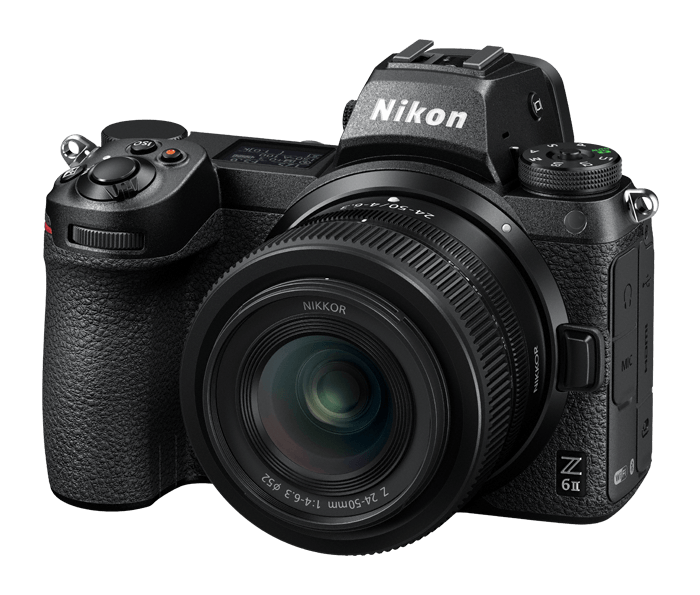

The Nikon Z6 II and the Sony A7S III are two popular full-frame mirrorless cameras that often find themselves at the forefront of photographer and videographer discussions due to their strong performance and versatility. Each camera caters to different use cases; the Z6 II is versatile with its robust stills performance, making it appealing for photographers, while the A7S III excels in the video department, attracting filmmakers and content creators. Understanding their specifications and capabilities is key for buyers, as they seek the best option to suit their specific needs.
Specifications Comparison
Detailed Comparison
Image Quality
In terms of image quality, the Nikon Z6 II features a 25-megapixel sensor that provides a higher resolution compared to the Sony A7S III's 12-megapixel sensor. This allows for more detail, especially in large prints or extensive cropping scenarios, making the Z6 II a better option for still photography. Additionally, the Z6 II has an ISO range that extends from 100 to 51200, expandable to 50-204800, producing cleaner images at high ISOs, which is beneficial for low-light shooting.
On the other hand, the Sony A7S III is designed with a greater focus on low-light performance, utilizing its lower resolution sensor for remarkable high ISO capabilities, with an impressive range of 80-102400, stretching up to 40-409600. This means that while its native resolution is lower, the quality of images produced in challenging lighting conditions is exceptional, making it ideal for video as well.
Despite the differences in megapixel count, both cameras deliver stunning image quality, but the Z6 II is likely a better choice for photographers prioritizing detail in their work, while the A7S III excels in high ISO performance and low-light conditions.
Autofocus System
When comparing autofocus systems, the Sony A7S III leads with an impressive 759 autofocus points compared to the Nikon Z6 II's 273 points. The A7S III's advanced autofocus technology incorporates Real-Time Eye AF for both humans and animals, ensuring precise focus, particularly in fast-moving or dynamic environments, which can be crucial for video shoots or action photography.
Moreover, the A7S III's continuous autofocus is highly regarded for its accuracy and speed, making it suitable for professional video applications. Meanwhile, the Z6 II has an effective autofocus system with good accuracy, but it may not perform as well in demanding autofocus situations as the A7S III.
Therefore, while both models offer reliable autofocus performance, the sheer number and effectiveness of the Sony A7S III's autofocus points make it the winner in this category.
Video Capabilities
The video capabilities of the two cameras are where their differences really stand out. The Sony A7S III is often hailed as one of the best cameras for videography due to its ability to shoot 4K video at up to 120 frames per second. This feature is invaluable for creators looking to produce high-quality slow-motion footage. Additionally, the A7S III incorporates multiple video codec options, 10-bit 4:2:2 internal recording, and offers excellent heat management for extended recording times.
In contrast, the Nikon Z6 II supports 4K video at 30 frames per second, which, while competent, does not match the A7S III in terms of frame rate or advanced video features. Although the Z6 II's video capabilities are satisfactory for most enthusiasts and semi-professional use, it lacks the high-frame-rate options and professional features that the A7S III provides. Consequently, the A7S III is the clear winner in video performance, especially for professionals.
Build & Ergonomics
Both the Nikon Z6 II and the Sony A7S III offer solid build quality, with weather-sealed bodies designed to withstand challenging conditions. The Z6 II is slightly larger and heavier at 705g compared to the A7S III's 699g, which might be a minor factor for those who prioritize portability.
In terms of ergonomics, users may prefer the Z6 II's grip, which some find more comfortable for extended shooting sessions, while the A7S III features a more compact design that aids in mobility. Both cameras sport electronic viewfinders and tilting screens, but the Z6 II has a slightly larger screen with a higher resolution (3.2" at 2,100,000 dots) compared to the A7S III's 3" at 1,440,000 dots.
Both are great in the build category; however, individual comfort and preference may dictate which is better for you. This section could be classified as a tie as both have strong points on either side.
Battery & Storage
The Nikon Z6 II comes with a battery life of approximately 410 shots on a single charge, which is relatively good for mirrorless cameras. Additionally, it supports dual card slots (CFexpress and SD), providing users with versatility in storage options, especially for high-resolution photography and extended video recording.
In comparison, the Sony A7S III offers a longer battery life of about 600 shots, which is significant for applications involving long shooting sessions without the need for battery swaps. This advantage can save time and effort on shoot days. The A7S III also includes dual card slots, enabling faster write speeds and the ability to record video and photos simultaneously on different media types.
While both cameras offer dual card slots, the superior battery performance of the A7S III makes it the winner in this section overall.
Value for Money
When considering value for money, the Nikon Z6 II is priced at $1995, making it a more accessible option for photographers and videographers looking for a versatile camera that performs well in various shooting scenarios. It offers solid specifications for its price, especially in still photography and general videography.
Conversely, the Sony A7S III comes with a significantly higher cost of $3499, which reflects its advanced features tailored for professional video work. The investment in the A7S III may pay off for content creators requiring high-quality 4K video capabilities, low-light performance, and extensive autofocus features, targeting a niche audience.
In terms of broad accessibility versus professional-grade capabilities, the Nikon Z6 II provides better value for general use, whereas the A7S III is justifiable by its unique video capabilities. Consequently, the Z6 II shines in terms of value for more budget-conscious buyers.
Lens Ecosystem
Both Nikon and Sony have developed robust ecosystems of lenses to support their respective camera mounts. The Nikon Z mount has been expanding rapidly, with a variety of excellent native lenses available, including fast primes and zooms suited for different photographic styles.
Sony, however, has a more mature lens ecosystem with an extensive range of native lenses, from high-quality G and G Master series lenses to specialized options, catering to professionals and enthusiasts alike. This wider selection allows for more creative versatility, particularly for video creators looking for a variety of tools.
While both brands offer options, Sony's superior lens selection gives it an edge in this category, making it the winner for versatility in lens choices for both still photography and video production.
Our Verdict
In the head-to-head comparison, the Sony A7S III emerges as the overall winner, particularly for video capabilities, autofocus performance, and battery life. It is ideally suited for professional videographers and content creators who demand high performance in low-light situations. However, the Nikon Z6 II offers stronger value and versatility for photographers, particularly those focused on still imagery and seeking a camera that excels across a broader range of shooting scenarios. Ultimately, the decision should be based on the specific needs: choose the Z6 II for stills dominance and greater affordability, or the A7S III for unmatched video prowess and advanced features.
Nikon Z6 II
Sony A7S III
Also Compare
Frequently Asked Questions
Which camera is better for low-light photography?
The Sony A7S III has superior low-light performance due to its lower resolution sensor, allowing for higher ISO settings with less noise, making it an excellent choice for low-light environments.
Can the Nikon Z6 II shoot high-quality video?
Yes, the Nikon Z6 II can shoot 4K video at 30p and offers great quality for general videography, although it lacks the higher frame rates found in the A7S III.
Which camera has a better autofocus system?
The Sony A7S III boasts a significantly more advanced autofocus system with 759 points, making it better suited for fast-paced action and video work compared to the Nikon Z6 II's 273 points.
Is the Nikon Z6 II weather-sealed?
Yes, the Nikon Z6 II is weather-sealed, providing durability in adverse conditions, similar to the Sony A7S III.
What is the main use case for the Sony A7S III?
The Sony A7S III is primarily designed for videographers, thanks to its high frame rate capabilities and advanced video features, making it ideal for professional content creation.