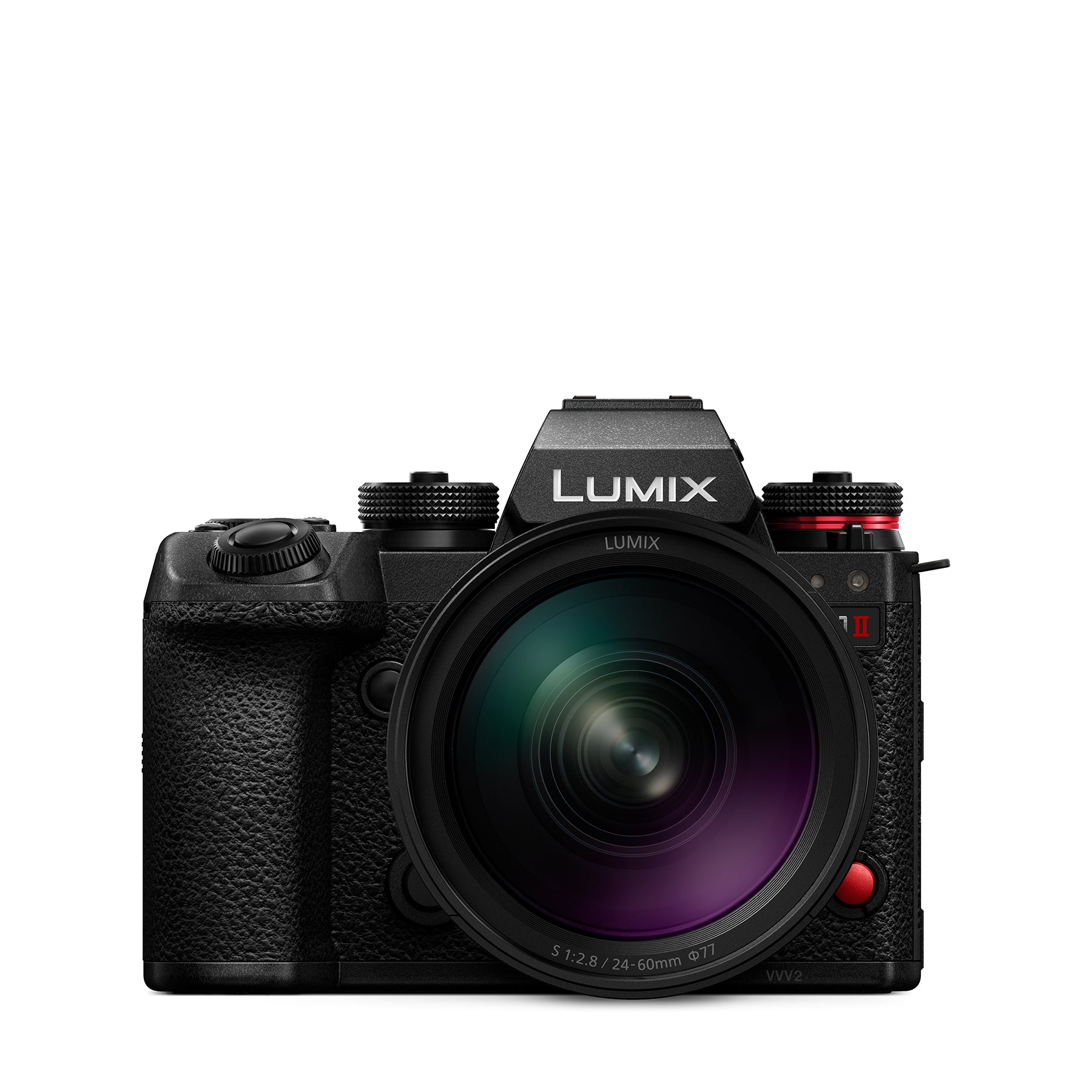

The Panasonic S1 II and Sony A7S III are two highly regarded full-frame mirrorless cameras that cater to both professional videographers and photographers alike. These models are often compared due to their high-end specifications, impressive performance, and the strong reputations of their respective brands. Choosing between them often comes down to individual needs, whether that's superior video performance, low-light capabilities, or advanced autofocus systems. Each camera has its strengths, making it essential for potential buyers to analyze features such as image quality, video capabilities, and overall ergonomics to find the best fit for their style of content creation.
Specifications Comparison
Detailed Comparison
Image Quality
The Panasonic S1 II features a 24.1-megapixel sensor, providing a robust level of detail in still images. This higher megapixel count allows for greater flexibility when cropping images or printing in larger formats. Its full-frame sensor excels in delivering sharp, vibrant colors, particularly in well-lit conditions. On the other hand, the Sony A7S III comes equipped with a lower 12-megapixel sensor, which is intentionally designed for superior low-light performance rather than sheer image resolution. The A7S III's sensor excels in high ISO scenarios, rendering clean images with minimal noise, making it particularly effective for video and low-light photography scenarios.
In terms of dynamic range, both systems perform admirably, with the S1 II providing slightly increased headroom at higher contrasts, thanks to its higher resolution. However, this advantage may be marginal to many users. Ultimately, while the S1 II may win in terms of detail and resolution, the A7S III's focus on low-light performance makes it an exceptional choice for night photography or high-ISO video work.
Winner: 'a'
Autofocus System
The autofocus systems between the Panasonic S1 II and Sony A7S III represent a significant differentiation point for these two cameras. The S1 II features a contrast-detection autofocus system that is reliable but may not be as fast as the phase-detection systems seen in competitive models. In contrast, the Sony A7S III boasts an advanced hybrid phase-detection autofocus with 759 autofocus points, allowing for quick and accurate focusing on subjects, especially in fast-moving shoots.
This prominent advantage makes the A7S III particularly suited for videography, where subject tracking is crucial. In real-world applications, the A7S III's performance in dynamic environments and low light situations excels, enabling the capture of fleeting moments with high precision. While the S1 II provides satisfactory autofocus performance, it does not reach the same level of effectiveness found in the A7S III.
Winner: 'b'
Video Capabilities
Video performance is a key consideration for many users of these cameras. The Panasonic S1 II stands out with its impressive 5.1K video resolution at 60p, providing filmmakers with a superb level of detail and versatility in post-production. This makes it an ideal choice for those looking to produce high-quality cinematic content. Additionally, it offers excellent in-body image stabilization, rated at an 8.0-stop, which is particularly beneficial for handheld shooting.
Conversely, the Sony A7S III offers 4K recording at an outstanding 120p, allowing for professional-grade slow-motion footage. Its ability to handle over 15 stops of dynamic range in video, combined with exceptional low-light performance, gives it a unique edge in various shooting conditions. However, for those aiming for higher resolution in the final output, the S1 II takes precedence.
In conclusion, while both cameras are proficient for video applications, the S1 II leads with its greater resolution, but the A7S III presents unparalleled versatility with its frame rates and dynamic range handling.
Winner: 'a'
Build & Ergonomics
Both the Panasonic S1 II and Sony A7S III boast robust builds suitable for professional use. The S1 II features a solid, magnesium alloy body with weather sealing, enhancing its durability in harsh conditions. Its design is user-friendly, providing ample grip and button placement that appeals to photographers accustomed to DSLR ergonomics, which usually translates to a comfortable shooting experience.
On the other hand, the Sony A7S III, while slightly smaller and lighter at 699g, also incorporates weather sealing and a compact design, making it more portable for filmmakers on the go. The electronic viewfinder on the A7S III is notably clear, with a resolution of 9.44 million dots, which comes in handy during precise focusing. Hence, while the S1 II supplies more heft, some shooters may appreciate the lighter, more compact addition of the A7S III in their kit.
Ultimately, the choice between these two will largely depend on personal preference regarding how substantial a camera feels when shooting.
Winner: 'tie'
Battery & Storage
The battery life of a camera can greatly influence its usability, especially for events or long shooting sessions. The Sony A7S III has a significant advantage in this area, providing around 600 shots per charge under standard usage, thanks to its more efficient battery system. In contrast, the Panasonic S1 II's battery life has not been explicitly detailed but is generally regarded as decent but may fall slightly short in comparison when considering intensive video recording.
In terms of storage, both cameras offer dual card slots, which is an essential feature for serious shooters who require redundancy and ample space for their files. The A7S III supports both CFexpress Type A and SD UHS-II cards, while the S1 II utilizes SD XAVC cards. The flexibility and speed offered by the A7S III's storage capabilities cement its position for high-demand workflows.
Overall, in terms of battery life and flexibility in storage options, the A7S III emerges as the more reliable choice for extended shooting.
Winner: 'b'
Value for Money
Pricing often plays a defining role in the decision-making process. The Sony A7S III is generally priced at $3499, which aligns with its full-featured specification set, particularly appealing for videographers. Given its superior autofocus system and robust performance in low light, many users find this price justifiable, especially in professional settings where these attributes translate to better output.
In comparison, while exact pricing wasn't provided for the Panasonic S1 II, it was released in 2023 and is expected to sit in a similar price range or slightly higher, particularly given its advanced video capabilities. For users primarily focused on high-resolution videos, the investment in the S1 II may be a calculated move that offers high value.
Ultimately, assessing value becomes subjective depending on what the primary use case of the camera will be. Both offer unique selling points that cater to their respective audiences, with the A7S III providing broader videography advantages at a traditional high price range.
Winner: 'tie'
Our Verdict
Overall, while both the Panasonic S1 II and Sony A7S III have strong offerings aimed at professional photographers and videographers, the A7S III wins in this head-to-head comparison. The A7S III's exceptional low-light performance, advanced autofocus system, and versatile video capabilities provide distinct advantages, especially for those focusing on filmmaking and dynamic photography. However, for those more inclined towards high-resolution output with a stronger emphasis on still images, the S1 II remains a formidable competitor with its detailed 5.1K video capabilities. Depending on the user's unique requirements, both cameras offer exceptional performance, ensuring both models are well-placed within the market.