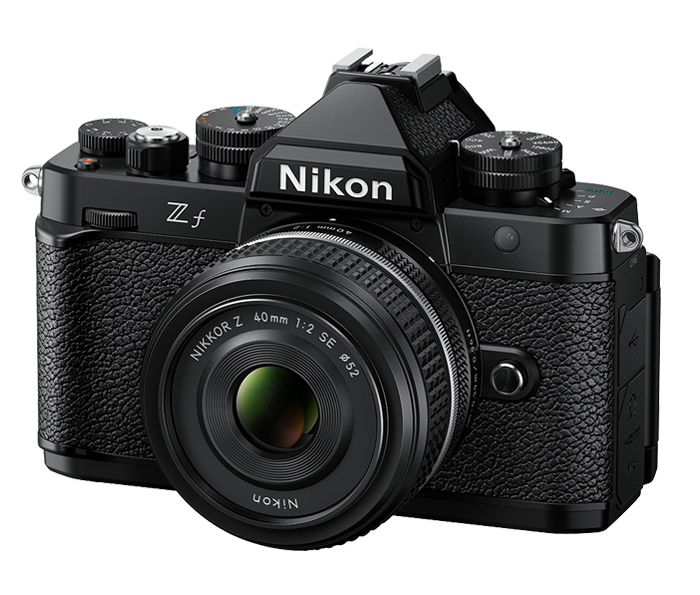

The Nikon Zf and Sony A7S III are two renowned full-frame mirrorless cameras that appeal to both professional and enthusiast photographers looking for high-quality images and advanced video capabilities. While the Zf, released in 2023, targets those valuing an effective balance of features for stills and video, the A7S III, from 2020, is notable for its exceptional low-light performance and video specs, making it a favorite among videographers. Choosing between these two models typically centers around specific needs such as image quality, autofocus performance, video capabilities, and user ergonomics, which are pivotal for different styles of photography and videography.
Specifications Comparison
Detailed Comparison
Image Quality
The Nikon Zf features a 25-megapixel full-frame sensor, which affords photographers a higher resolution compared to the Sony A7S III's 12-megapixel sensor. The higher megapixel count of the Zf allows for more detailed images when cropping or printing at larger sizes. In contrast, the A7S III sacrifices resolution for outstanding low-light performance and dynamic range, which is crucial for video and certain still photography niches. The lower pixel count also means larger individual pixels, contributing to better noise performance in low-light settings, an area where the A7S III excels.
When it comes to color science, Nikon is often preferred for its accurate and pleasing skin tones, making it a strong contender for portrait photography. However, the A7S III offers versatility with an extensive ISO range, providing options from ISO 40 for bright conditions to ISO 409600 for challenging low-light captures. This extensive ISO capability allows for shooting in conditions where the Zf may struggle. Overall, the Zf has a slight edge in resolution and versatility in regular lighting, while the A7S III provides superior flexibility in extreme shooting conditions.
Considering the balance between resolution and low-light capability, photographers focused heavily on stills may lean towards the Zf, while those needing strong low-light performance will appreciate the A7S III.
Autofocus System
The Nikon Zf offers an impressive autofocus system with 273 points, which allows for effective tracking of subjects across the frame. It leverages advanced technology for accurate focusing, particularly in varied lighting. Meanwhile, the Sony A7S III boasts a robust 759 autofocus points, making it one of the best systems on the market. This extensive focus point coverage enhances its ability to lock onto subjects quickly, even in challenging conditions.
Furthermore, Sony has a reputation for excellent performance in eye detection across both human and animal subjects, giving it a notable advantage for portrait and wildlife photography. The Zf performs admirably, though it may not match the speed and accuracy of the A7S III's tracking performance.
The A7S III's superior autofocus system gives it a distinct edge in fast-action scenarios, while the Zf still holds its own for everyday shooting, making the winner of this section clear.
Video Capabilities
When comparing video capabilities, the Sony A7S III is designed with videographers in mind; it supports 4K recording at up to 120 frames per second, providing phenomenal slow-motion options and superior overall flexibility. The 10-bit 4:2:2 internal recording also enhances color grading options in post-production. The Zf, while capable, offers 4K video at 60 frames per second, which is impressive but less than what the A7S III delivers.
Additionally, the Zf's stabilization system holds an advantage with 8 stops, which can significantly reduce shake when shooting handheld. The A7S III, with its 5.5 stops of in-body stabilization, still performs well but may not match the extreme smoothness provided by the Zf. However, the A7S III's higher frame rates and video features make it more appealing to serious videographers looking for cutting-edge technology.
Ultimately, while both cameras can deliver high-quality video, the A7S III's superior frame rate capabilities and overall video features make it the clear choice for professional video work.
Build & Ergonomics
In terms of ergonomics, both the Nikon Zf and Sony A7S III have strengths. The Zf's dimensions are larger (144 x 103 x 49 mm) compared to the A7S III (129 x 97 x 81 mm), translating to a more substantial grip for handling, especially with larger lenses. The weight is also similar, with the Zf at 710g and the A7S III slightly lighter at 699g.
The A7S III is weather-sealed, enhancing its durability under tough conditions; this can be invaluable for outdoor photographers and videographers. Meanwhile, the Zf has a robust build but lacks the same level of weather sealing. Both cameras feature electronic viewfinders, but the Zf sports a higher resolution screen with 2.1 million dots versus the A7S III's 1.44 million dots, offering a clearer display.
While preference may come down to personal handling feel, the A7S III's weather sealing gives it an operational edge in adverse environments.
Battery & Storage
The Nikon Zf offers a battery life of approximately 380 shots, which is decent but may not satisfy heavy users. In contrast, the Sony A7S III shines with its longer battery life, achieving around 600 shots per charge. This difference can be crucial for extended shooting sessions, particularly for events or nature shooting where changing batteries frequently is impractical.
Regarding storage, both cameras support SD cards, but the A7S III also accepts CFexpress Type A cards, allowing for faster write speeds particularly crucial when dealing with high-resolution video recording. This feature enhances performance in demanding situations where quick access to data is essential.
Considering the longevity of battery life and the additional support for faster storage media, the A7S III presents a distinct advantage in this category.
Value for Money
The Nikon Zf has a competitive price point at approximately $1999, making it an attractive option for photographers wanting a well-rounded camera capable of high-quality stills and standard video capabilities without breaking the bank. The value is particularly appealing considering its higher megapixel count and sophisticated stabilization system.
On the other hand, the Sony A7S III comes in at $3499, a significant investment that primarily caters to professional videographers and those requiring advanced video features such as higher frame rates and superior autofocus capabilities. This elevated price might deter some, but for serious users, the features justify the cost.
Consequently, for those prioritizing budget and versatility in both photography and standard video, the Zf provides an excellent value proposition. However, for dedicated professionals seeking top-tier video features, the A7S III is worth the higher price.
Our Verdict
Overall, while both the Nikon Zf and Sony A7S III present remarkable options for photographers and videographers alike, the A7S III edges out due to its superior autofocus system, advanced video capabilities, and extended battery life. These features make it the preferred choice for professionals focusing primarily on video work or those who operate in dynamic environments. The Zf, on the other hand, provides excellent value and performance for still photography, making it suited for photographers not solely dedicated to video but who still wish to produce high-quality content across various scenarios.
Nikon Zf
Sony A7S III
Also Compare
Frequently Asked Questions
Which camera is better for low-light photography?
The Sony A7S III is better equipped for low-light photography due to its larger pixel size and extended ISO range, allowing for superior performance in dark conditions.
Is the Nikon Zf good for video shooting?
Yes, while the Nikon Zf provides good video capabilities with 4K at 60p and excellent stabilization, it does not match the Sony A7S III's features like 4K at 120p.
How does the battery life compare between the two cameras?
The Sony A7S III has longer battery life, offering approximately 600 shots compared to the Nikon Zf's 380 shots, making it more suitable for extended shoots.
Can I use Nikon lenses on the Zf?
Yes, the Nikon Zf is compatible with Nikon Z lenses directly, but may need an adapter for F-mount lenses.
What type of photographer should choose the Nikon Zf?
The Nikon Zf is an excellent choice for photographers seeking a balance between high-resolution images, good video capabilities, and better value for money.