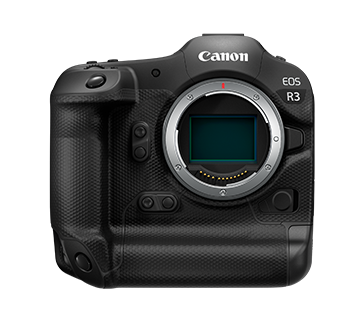
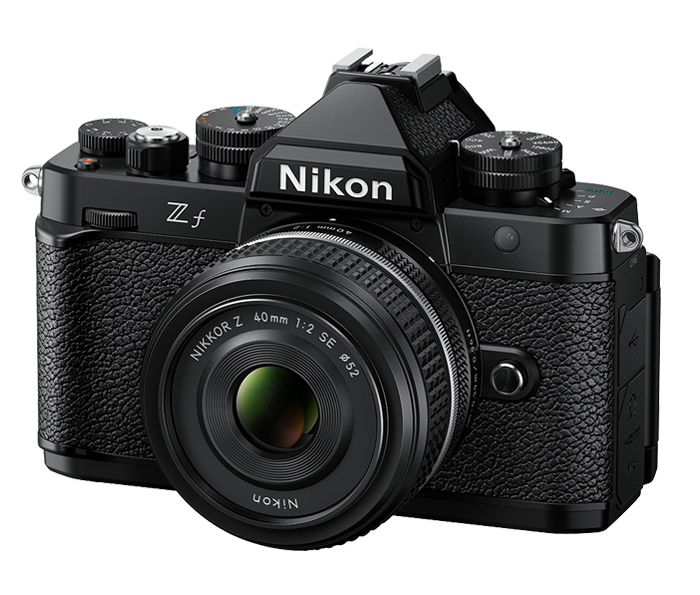
The Canon EOS R3 and Nikon Zf are two prominent full-frame mirrorless cameras that are often compared by both professional and enthusiast photographers. Both models represent their respective brands' latest technology and cater to similar audiences looking for high-performance devices suitable for various photographic styles. However, they differ significantly in specifications and key features that can influence a buyer's decision based on specific needs and preferences.
The R3, released in 2021, is aimed at professionals requiring high-speed performance, advanced autofocus, and robust build quality. In contrast, the Zf, introduced in 2023, offers remarkable resolution, lightweight design, and a competitive price point, appealing to a broader audience, including newcomers and those transitioning from entry-level models. Overall, the decision often hinges on the balance between advanced capabilities and budget considerations, alongside the photographic requirements of the user.
Specifications Comparison
Detailed Comparison
Image Quality
The Canon EOS R3 features a full-frame sensor size of 36 x 24 mm with a resolution of 24 megapixels, which provides a solid balance of detail and performance, particularly in low-light conditions. Its maximum ISO range expands from 100 to an impressive 204800, allowing for excellent performance in a variety of lighting environments. The R3's image processing capabilities contribute to vibrant color reproduction and good dynamic range.
On the other hand, the Nikon Zf has a slightly larger sensor at 35.9 x 23.9 mm and boasts a higher resolution of 25 megapixels. This can translate to more detailed images at lower ISO settings. While the Zf's ISO range is also commendable, expanding from 100 to 102400, it doesn't reach the extreme capabilities of the R3. However, users may find the difference in image quality in real-world scenarios minimal unless pushing the boundaries of ISO.
Therefore, while both cameras perform admirably, the Canon EOS R3 slightly edges out in terms of versatility in challenging lighting conditions, whereas the Nikon Zf provides a marginally higher resolution, beneficial for detailed expansive prints. The R3's overall image processing advantages help it secure a win in this aspect.
Autofocus System
The autofocus systems in both models are robust but serve different needs. The Canon EOS R3 boasts an extraordinary 1053 autofocus points, which offers impressive coverage and accuracy, making it extremely capable for tracking moving subjects. This is particularly advantageous for sports and wildlife photography where fast-paced action is involved. The R3 also incorporates advanced Eye Detection AF, further enhancing its capability in capturing sharp and well-focused images in dynamic situations.
Conversely, the Nikon Zf includes 273 autofocus points, which is respectable but significantly lower than its Canon counterpart. While it utilizes the same hybrid AF technology combining phase-detection and contrast detection, it may not perform as well as the R3 in fast action shots or complex scenes with multiple subjects. Nonetheless, the Zf's focusing speed and accuracy remain competent for general photography and casual use.
Considering the number of points and advanced tracking systems, the autofocus capabilities of the Canon EOS R3 clearly outperform those of the Nikon Zf, making it more suited for specialized use cases that rely on fast and precise focus.
Video Capabilities
For videographers, the Canon EOS R3 offers impressive video capabilities, supporting 4K video at up to 120 fps. This high frame rate allows for smooth slow-motion footage and greater flexibility in post-production. Additionally, the R3 includes advanced features such as C-log 3 for enhanced dynamic range and color grading options, making it a versatile tool for filmmakers.
In contrast, the Nikon Zf limits its video capabilities to 4K at 60 fps, which, while still competitive, does not offer the same level of versatility for high-frame-rate shooting. The Zf is well-equipped for basic videography and provides good quality video output but lacks some of the advanced options found in the R3, making it less suitable for those prioritizing video work.
Ultimately, for creators focused on high-performance video capabilities, the Canon EOS R3 demonstrates a significant advantage, making it the clear winner in this category.
Build & Ergonomics
When it comes to build quality and ergonomics, the Canon EOS R3 weighs 1015 grams and has a robust construction designed for professional use, featuring weather sealing for durability in challenging conditions. Its dimensions of 150 x 143 x 87 mm allow for a substantial grip that many users find comfortable, particularly during long shooting sessions.
On the other hand, the Nikon Zf, although lighter at 710 grams and smaller with dimensions of 144 x 103 x 49 mm, retains a comfortable feel and functional design. Its lighter weight and compact nature make it ideal for travel and everyday use, appealing to those looking for mobility without sacrificing image quality.
While both cameras exhibit high-quality builds, the R3's heavier weight and more rugged features make it preferable for professional photographers who prioritize durability, whereas the Zf's lighter build is advantageous for casual usage or travel. Thus, this category can be seen as a tie depending on user preference.
Battery & Storage
In terms of battery life, the Canon EOS R3 excels, offering around 760 shots per charge, which is substantial for those engaging in long shoots or events where changing batteries frequently is inconvenient. This extended battery life is complemented by its capability to handle multiple high-speed tasks without draining quickly.
The Nikon Zf, however, has a lower battery life rated at 380 shots, which could be limiting for users who shoot extensively, particularly in situations where changing batteries might not be ideal. Moreover, both cameras utilize different storage formats but provide similar performance capabilities; the R3 uses dual CFexpress and SD UHS-II cards, while the Zf uses dual SD UHS-II cards.
This clear advantage in battery longevity allows the Canon EOS R3 to win in this category, supporting extended workflows without the immediate need to recharge or swap batteries.
Value for Money
The Nikon Zf delivers exceptional value, priced at $1999, making it an enticing option for those seeking high-quality full-frame performance without a substantial financial commitment. With its 25 megapixels, good autofocus performance, and compact design, it presents a well-rounded solution for amateurs and enthusiasts looking for a capable camera.
In contrast, the Canon EOS R3, priced at $5999, is positioned as a high-end option, suitable for professionals who require advanced features, high-speed capabilities, and exceptional durability. This price tag may be more justified by professionals who depend on the latest technology and superior performance in diverse shooting conditions.
Due to the substantial difference in pricing and the value provided, the Nikon Zf clearly offers better value for those who may not require the high-end features of the R3. Therefore, it earns the win in this category based on its affordability and solid performance.
Our Verdict
Overall, the Canon EOS R3 emerges as the winner due to its superior autofocus system, exceptional video capabilities, impressive image quality, and longer battery life-making it the ideal choice for professional photographers and film creators who prioritize performance and flexibility. However, the Nikon Zf makes a compelling case with its lighter weight, more accessible pricing, and sufficient features for enthusiasts and amateur photographers who seek high-quality performance. Depending on the user's needs, the Zf is a strong contender for those looking for a well-rounded camera at a more approachable price point.
Canon EOS R3
Nikon Zf
Also Compare
Frequently Asked Questions
Which camera is better for sports photography?
The Canon EOS R3 is better for sports photography due to its advanced autofocus system and faster frame rate.
Is the Nikon Zf suitable for professionals?
Yes, the Nikon Zf can be suitable for professionals, especially those who don't require the highest-end features offered by the R3.
What are the video recording capabilities of each camera?
The Canon EOS R3 supports 4K at 120 fps, while the Nikon Zf supports 4K at 60 fps.
How does battery life compare between the two models?
The R3 offers approximately 760 shots on a single charge, while the Zf provides around 380 shots.
Which camera offers better value for money?
The Nikon Zf offers better value for money, priced significantly lower than the Canon EOS R3 while still providing solid performance.