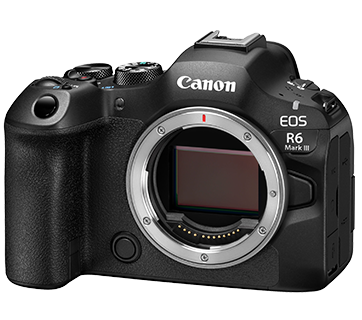
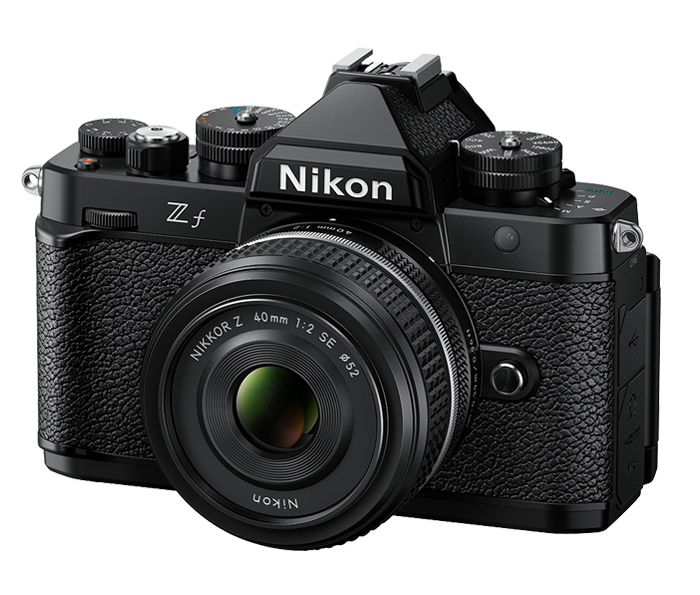
The Canon EOS R6 Mark III and Nikon Zf are two prominent contenders in the mirrorless camera market, appealing to both enthusiasts and professional photographers. As both models feature a full-frame sensor size, they offer excellent image quality and versatile shooting capabilities. Buyers often find themselves choosing between these two cameras based on specific feature sets, particularly in the areas of autofocus performance, video capabilities, and overall usability in various conditions. Understanding the strengths of each model is crucial for making an informed purchasing decision.
Specifications Comparison
Detailed Comparison
Image Quality
Both the Canon EOS R6 Mark III and Nikon Zf feature a full-frame sensor (35.9 x 23.9 mm), which is ideal for capturing high-quality images with depth and clarity. The R6 Mark III, however, excels with its high ISO range of 100-102400 (expandable to 204800), making it particularly effective in low-light situations. While the Zf has a respectable ISO range, it doesn't quite reach the same heights as the R6 Mark III. Additionally, the R6 Mark III's image processor contributes to faster image processing and better overall performance.
The Nikon Zf provides a solid 25-megapixel output, which offers good clarity, but the Canon's image capabilities are regarded as slightly superior due to its robust features and reliability in diverse lighting conditions. In general photography, landscape, and portrait settings, many users report the Canon's images exhibit more detail and improved color accuracy, largely owing to its superior ISO performance and advanced processing.
Considering these factors, while both cameras deliver excellent image quality, the Canon EOS R6 Mark III has the edge due to its broader ISO range and enhanced processing capabilities.
Autofocus System
The autofocus systems in both models show impressive capabilities but differ markedly in specifications. The Canon EOS R6 Mark III boasts a staggering 4897 autofocus points, offering more flexibility and precision in tracking subjects. This is crucial for capturing fast-moving subjects or in dynamic shooting scenarios where accuracy is paramount. It also features dual-pixel autofocus technology that further enhances focus performance, especially in video and live view modes.
On the other hand, the Nikon Zf's autofocus system, while robust with 273 points, may not perform as quickly or accurately as the R6 Mark III in challenging environments. The Zf is still effective for most photography needs but may lack the same tracking precision that full-time sports and wildlife photographers demand. The Canon system excels particularly in portrait and event photography, where precise autofocus can make a significant difference.
Overall, the enhanced autofocus capabilities of the Canon EOS R6 Mark III make it the more compelling choice for users who prioritize speed and accuracy in focus.
Video Capabilities
When it comes to video capabilities, the Canon EOS R6 Mark III is a powerhouse, offering 4K at up to 120 frames per second (fps). This feature allows filmmakers to create smooth, slow-motion footage and capture fast action with clarity. Additionally, the camera's advanced image stabilization of 8.5 stops ensures that handheld shooting remains steady, reducing the likelihood of shaky footage.
Conversely, the Nikon Zf records 4K video up to 60 fps, which, while adequate for many applications, does fall short of the frame rates offered by the Canon. The Zf also features 8 stops of stabilization, providing decent performance, but lacks the additional headroom offered by the R6 Mark III for more dynamic shooting scenarios. For videographers looking to explore creative possibilities, the higher frame rate and superior stabilization of the R6 Mark III make it the preferable option.
In summary, for those prioritizing video performance, the Canon EOS R6 Mark III outclasses the Nikon Zf, making it more suitable for professional video production.
Build & Ergonomics
Both cameras demonstrate strong build quality, featuring weather-sealed designs that enhance durability for outdoor shooting in varied conditions. The Canon EOS R6 Mark III weighs 699 grams, which is slightly lighter than the Nikon Zf at 710 grams. However, when considering dimensions, the Nikon Zf is bulkier: at 144 x 103 x 49 mm compared to Canon's 138 x 98 x 88 mm. This slight difference may affect portability, depending on individual preferences.
In terms of ergonomics, both cameras offer electronic viewfinders, but the Nikon Zf has a larger 3.2-inch screen with 2,100,000 dots compared to Canon's 3-inch screen with 1,620,000 dots. This difference may lead to better visibility and user experience with the Nikon, making it a bit easier to work with in bright lighting.
For photographers valuing a compact and lightweight feel, the Canon EOS R6 Mark III may hold an advantage, but those who prioritize a larger, more detailed display may lean towards the Nikon Zf. Ultimately, the decision in this category may come down to personal comfort and handling.
Battery & Storage
In terms of battery life, the Nikon Zf holds an advantage with a rated capacity of approximately 380 shots per charge, making it more suitable for extended shooting sessions without needing a battery swap. The Canon EOS R6 Mark III, while still competitive, does not specify an exact battery life measurement, as it can fluctuate greatly depending on usage, notably during video recording, which tends to drain battery life more quickly.
When it comes to storage options, both cameras utilize SD cards, but the R6 Mark III supports dual card slots, which allows for seamless backup or simultaneous storage of RAW and JPEG files - a significant advantage for professional photographers who require reliability and flexibility in their storage solutions. The Nikon Zf, on the other hand, comes with just a single card slot, which may be a limitation for some users.
With an emphasis on practicality and versatility in battery performance and storage capability, the Canon EOS R6 Mark III takes a clear lead in this category.
Value for Money
The Canon EOS R6 Mark III is priced at $2799, while the Nikon Zf is notably more affordable at $1999. For many buyers, budget constraints can significantly influence their choice, especially if they are beginners or hobbyists. The Nikon Zf offers a compelling feature set for its price and remains attractive for users looking to enter the full-frame mirrorless market without overextending their budget.
However, with this lower price point, potential buyers must consider which features they prioritize. While Nikon provides good value for general photography, the Canon EOS R6 Mark III might present a much stronger value proposition for professionals or serious enthusiasts who require higher performance in autofocus, image stabilization, and video recording. The additional investment could justify long-term benefits for users seeking higher output quality and reliability.
So while the Nikon Zf offers better affordability, the capabilities of the Canon EOS R6 Mark III are positioned towards those willing to invest for enhanced performance, making the assessment of value largely dependent on the specific needs of the photographer.
Our Verdict
The Canon EOS R6 Mark III emerges as the overall winner, primarily due to its superior autofocus capabilities, extensive video performance, and robust image quality, making it a top choice for professionals and serious enthusiasts. While the Nikon Zf serves as an excellent entry point for budding photographers and offers a competitive price, the Canon shines for those who demand high performance in challenging shooting conditions. The final decision should consider individual needs, but for those aiming for maximum capability and quality, the Canon EOS R6 Mark III is hard to beat.
Canon EOS R6 Mark III
Nikon Zf
Also Compare
Frequently Asked Questions
Which camera is better for low-light photography?
The Canon EOS R6 Mark III is better suited for low-light photography due to its superior ISO range and performance
Is the Nikon Zf good for videographers?
While the Nikon Zf can capture decent video, it does not match the Canon EOS R6 Mark III's capabilities, especially for high frame rate video.
Are both cameras weather-sealed?
Yes, both the Canon EOS R6 Mark III and Nikon Zf are weather-sealed, making them suitable for outdoor photography.
Which camera has better autofocus?
The Canon EOS R6 Mark III features a significantly better autofocus system with 4897 points compared to the Nikon Zf's 273 points.
How does the price affect value for these models?
The Nikon Zf is priced lower and offers good value for its feature set, but the Canon EOS R6 Mark III provides higher performance, justifying its higher price for many serious users.