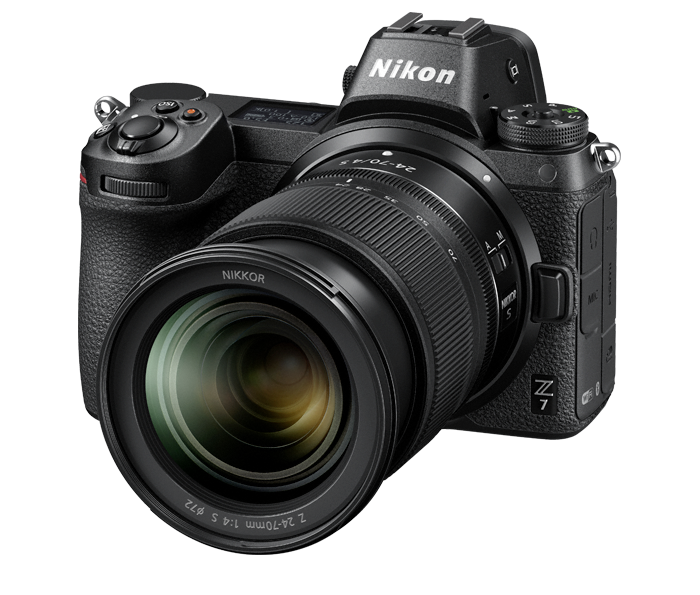
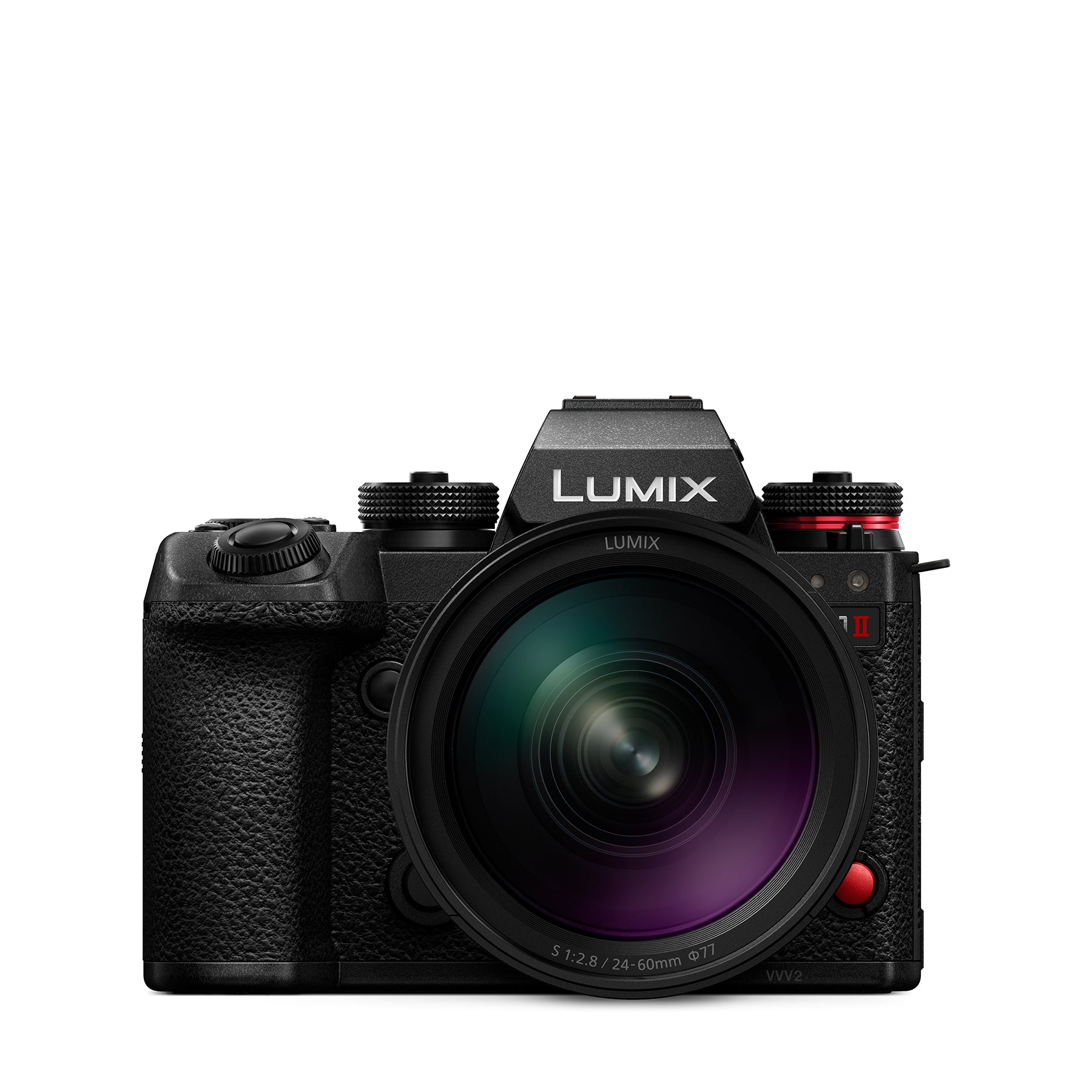
The Nikon Z7 and Panasonic S1 II are two prominent mirrorless cameras that often pique the interest of photographers and videographers alike. Both models boast full-frame sensors and cater to professionals and serious enthusiasts looking for advanced features. Photographers may choose between these two based on their specific needs, such as resolution for still photography or advanced video specifications, with the Z7 being a solid choice for stills and the S1 II excelling in video functionality. The key differentiators include megapixel count, video capabilities, and image stabilization systems, which greatly influence overall performance and user experience.
Specifications Comparison
Detailed Comparison
Image Quality
When evaluating image quality, sensor resolution plays a significant role. The Nikon Z7 features an impressive 46-megapixel sensor, delivering exceptional detail and sharpness, especially in large prints. This high resolution can be advantageous for landscape and portrait photographers capturing fine details. Conversely, the Panasonic S1 II offers a lower resolution of 24.1 megapixels, which while still high, may not rival the Z7 in terms of detail retention, especially in cropping scenarios. However, the S1 II benefits from advancements in sensor technology that provide excellent dynamic range and color accuracy, making it versatile across various settings.
Another aspect to consider is low-light performance. The Z7 has an ISO range of 64-25600, expandable to 32-102400, which enables flexibility in different lighting conditions. While the S1 II has not specified its ISO range, its lower megapixel count generally helps with noise performance at higher ISOs. Thus, while the Z7 leads in resolution, users might find both cameras suitable for a variety of lighting contexts.
Overall, while the Nikon Z7 offers superior image resolution, the Panasonic S1 II holds its ground with strong overall image quality, making this section a competitive one.
Autofocus System
Autofocus performance is crucial for capturing sharp images, and here, the Nikon Z7 features a robust system with 493 autofocus points. This extensive array allows for fast and precise focusing in a variety of situations, especially advantageous for portrait and wildlife photography where tracking subjects is essential. The Z7's Eye-Detection AF is also a strong feature that enhances portrait work.
In contrast, while detailed specifications for the S1 II's autofocus system are not enumerated, Panasonic cameras are generally known for their contrast-detect systems, which can be slower or less reliable in dynamic situations compared to phase-detection systems like the one on the Z7. However, the S1 II does possess advanced subject detection and tracking, improving performance in video usage, where continuous autofocus is crucial.
Given the Z7's superior AF capability and options for still photography, it emerges as the preferred option for photographers who prioritize focus accuracy and reliability.
Video Capabilities
Video enthusiasts are likely to lean towards the Panasonic S1 II due to its advanced video capabilities. With a maximum resolution of 5.1K at 60p, the S1 II is designed for high-quality video production. This resolution greatly surpasses the Nikon Z7's limitation of 4K at 30p, making the S1 II a notable choice for filmmakers seeking high frame rates and detail.
Moreover, the S1 II comes equipped with an 8.0-stop 5-axis in-body image stabilization, offering smoother footage during handheld shooting. In comparison, the Z7's 5 stops of stabilization, while still effective, does not provide as much leeway for dynamic filming scenarios.
Considering the S1 II's superior video performance along with enhanced stabilization, it clearly leads in video capabilities, making it a strong candidate for videographers.
Build & Ergonomics
Both cameras feature robust builds suitable for professional use, but there are differences. The Nikon Z7 is weather-sealed, ensuring durability in challenging environments. Its dimensions of 134 x 101 x 68 mm and weight of 675 grams give it a balanced feel that many users find comfortable for extended shooting.
The Panasonic S1 II, having been released more recently, continues to prioritize ergonomics and durability but does not provide specific weight and dimensions. Nonetheless, Panasonic's recent designs often include a more substantial grip and extensive button layout, conducive to quick adjustments while shooting. This can enhance operational efficiency for videographers who need to make fast changes.
While both cameras boast high build quality, the weather-sealing of the Nikon Z7 may give it an edge for outdoor and all-weather photographers.
Battery & Storage
Battery life is an important consideration for users who shoot for extended periods. The Nikon Z7 features a battery life rated at approximately 330 shots per charge, which is decent but could be limiting for heavy users without spares. Conversely, the Panasonic S1 II, while official ratings are not specified, generally benefits from optimized power management in newer models and can handle demanding tasks more efficiently.
In terms of storage, both cameras use standard SD card slots; however, the S1 II may offer dual card slots that enhance flexibility for long video recordings or multiple formats. This array can be especially critical for professionals in demanding environments.
Overall, while the Nikon Z7 provides reasonable battery life, the S1 II's potential optimized performance and dual slot feature may cater to the needs of larger projects where storage and reliability under heavy load is paramount.
Value for Money
The Nikon Z7 is priced at $3399, reflecting its professional-quality features, high megapixel count, and proven performance in photography. This makes it a worthwhile investment for dedicated photographers who confirm the need for high resolution and robust AF capabilities. However, this price point may seem steep to some considering alternatives with comparable quality but lower costs.
In contrast, while exact pricing for the Panasonic S1 II isn't listed, it's understood that newer releases typically align closely or slightly below established models based on their feature set. Considering its superior video capabilities and advanced stabilization, the S1 II presents an attractive package for professionals focusing on both video and photography, potentially giving better overall value when looking at cross-discipline use.
Ultimately, while the Nikon Z7 excels in still photography, the Panasonic S1 II's strengths in video and its likely competitive price may offer greater perceived value to users equally invested in both aspects.
Our Verdict
In summary, the Nikon Z7 wins regarding still image quality and autofocus capabilities, making it ideal for photographers who prioritize these aspects. Conversely, the Panasonic S1 II dominates in video functions with superior resolution and stabilization, catering more towards videographers. Given the strengths of both systems, the ultimate decision may come down to an individual user's priorities; if still photography is the focus, the Z7 stands out, yet for video professionals, the S1 II clearly excels.