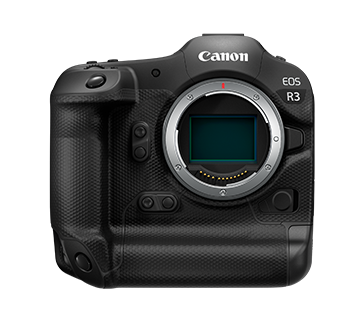
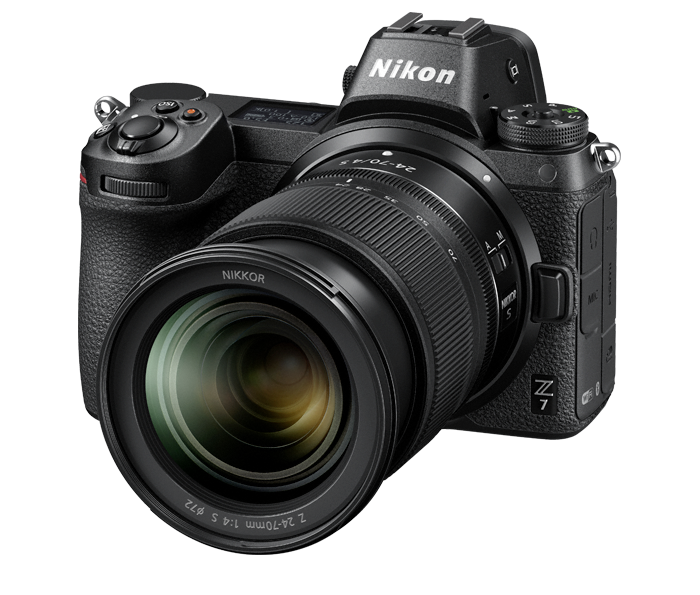
The Canon EOS R3 and Nikon Z7 are two premium full-frame mirrorless cameras that attract enthusiasts and professionals alike. These models are often compared due to their advanced specifications, build quality, and capabilities that cater to various photography styles. Potential buyers might be photographers looking for high-resolution images or fast autofocus performance, and the stark differences in megapixels and frames per second can heavily influence their decision. While both cameras offer impressive attributes, key differentiators like sensor resolution, autofocus capabilities, and video performance set them apart.
Specifications Comparison
Detailed Comparison
Image Quality
Image quality is a crucial factor for photographers, and both the Canon EOS R3 and Nikon Z7 excel in different ways. The Nikon Z7 boasts a 46-megapixel sensor, providing higher resolution images with detailed textures, which is beneficial for landscape, studio, and commercial photography. Its ISO range of 64-25600 allows for impressive low-light performance, although it expands only to 102400.
On the other hand, the Canon EOS R3 has a 24-megapixel sensor that may seem limiting at first but offers superb performance, particularly in high ISO settings, with an ISO range that expands to 204800. This enables exceptional image quality, even in challenging lighting conditions, making it an appealing option for sports and wildlife photographers who require speed and clarity.
In conclusion, while the Z7's higher resolution is advantageous for detailed imagery, the R3's performance in various light conditions and its overall versatility makes it competitive. The final choice may depend on the primary type of photography one engages in.
Autofocus System
Autofocus is critical in determining the usability of a camera for fast-paced situations. The Canon EOS R3 features an impressive autofocus system with 1053 points, allowing for exceptional tracking and focus accuracy, particularly in dynamic environments like sports events. Its Eye Control AF allows users to control focus points with their eyes, a feature unique to this model.
The Nikon Z7 provides a robust autofocus system with 493 points. While effective, it does not offer the same level of advanced tracking capabilities or the eye control feature found in the R3. For portrait and action photography, where timing is critical, the EOS R3 holds a significant advantage.
Thus, when it comes to autofocus prowess, especially for fast action or moving subjects, the R3's superior point count and advanced features earn it the win in this category.
Video Capabilities
Video quality is increasingly important in modern imaging, and both the EOS R3 and Z7 have their strengths in this area. The Canon EOS R3 excels with its capability to shoot 4K video at 120 frames per second, making it suitable for professional videography, dynamic motion capture, and slow-motion effects that require high frame rates. With its advanced stabilization offering 8 stops, the R3 is a strong contender for handheld shooting.
In contrast, the Nikon Z7 can shoot 4K video at up to 30 frames per second, which is sufficient for many users but falls short compared to the R3's capabilities. Its stabilization system, while competent at 5 stops, is not as effective as that of the R3, possibly resulting in less smooth footage during handheld shooting.
Overall, for video production where frame rate and stabilization are paramount, the Canon EOS R3 clearly takes the lead.
Build & Ergonomics
Both cameras are well-built and feature weather sealing, providing durability for outdoor photography. The Canon EOS R3 is larger and heavier at 1015g, which might be a concern for users needing a lightweight option. However, its dimensions lead to a well-proportioned grip, facilitating better handling during extended use.
On the other hand, the Nikon Z7 is lighter at 675g and slightly smaller, potentially making it more appealing for travel and on-the-go photographers. Its ergonomic design fits comfortably in hand, although some users may prefer the heft and sturdiness of the R3 for professional work.
Ultimately, the choice between the two may come down to personal preference regarding handling and weight during lengthy shoots.
Battery & Storage
Battery life is an often-overlooked yet crucial aspect when considering cameras for extended use. The Canon EOS R3 offers impressive battery life, rated for approximately 760 shots per charge, allowing for longer shoots without the need to frequently swap batteries.
In contrast, the Nikon Z7's battery life is rated at around 330 shots, which is considerably lower and might necessitate carrying spare batteries for longer sessions. Additionally, the R3 can shoot at a maximum of 30 frames per second for bursts, which can be a significant advantage for action photography.
When it comes to overall battery performance and consistent use, the Canon EOS R3 stands out as the better option.
Value for Money
The Canon EOS R3 is priced at $5999, reflecting its high-end specifications and targeted at professional users who value its advanced features and capabilities in various photographic disciplines. This camera is designed for those who need top-tier performance, especially in fast-paced environments.
The Nikon Z7, priced at $3399, offers a more accessible premium option with extremely high resolution and solid performance. While it lacks some high-end features of the R3, it still delivers excellent image quality and functionality that appeals notably to enthusiasts and semi-professionals.
Ultimately, while the R3 may offer superior performance in specific aspects, the Z7 provides intrinsic value for users whose needs may not require the highest-end function, making it a better choice for many casual to serious photographers.
Our Verdict
In this comprehensive comparison, the Canon EOS R3 emerges as the overall winner due to its superior autofocus capabilities, video performance, and battery life. It is well-suited for professional photographers engaged in dynamic or complex environments who can maximize its advanced features. Conversely, the Nikon Z7 excels in image resolution and provides excellent value for those focused on high-resolution stills without requiring the advanced capabilities of the R3. Ultimately, your choice should reflect your primary usage needs and budget.