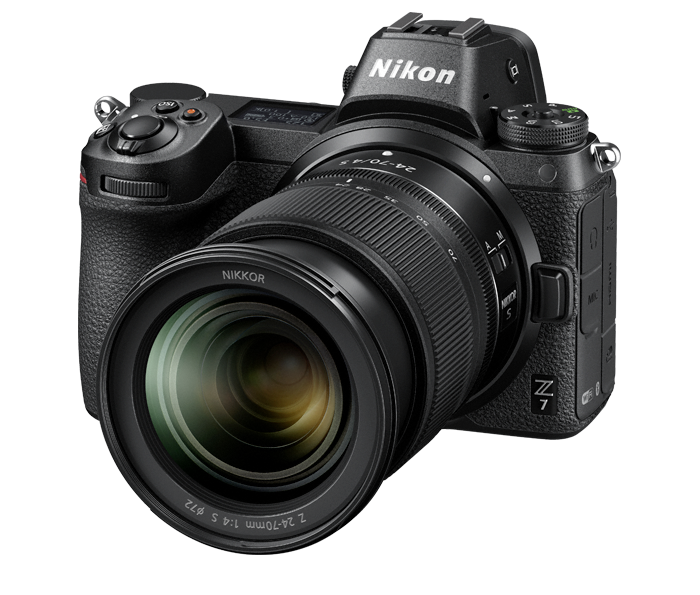

The Nikon Z7 and the Sony A9 III are two prominent contenders in the world of full-frame mirrorless cameras, targeting professional photographers and serious enthusiasts. Both brands have established a strong reputation for quality, reliability, and advanced technology, making these models common choices for those looking to invest in high-performance equipment. Key differentiators such as sensor size, resolution, autofocus capabilities, and video features create distinct advantages that might appeal to different types of users. The Nikon Z7 is popular among landscape and portrait photographers, while the Sony A9 III is favored by action and sports shooters due to its incredible burst shooting capabilities and autofocus performance.
Specifications Comparison
Detailed Comparison
Image Quality
The Nikon Z7 boasts an impressive 46-megapixel sensor, delivering exquisite image quality that is particularly beneficial for print work and detailed landscape photography. Its full-frame sensor size of 35.9 x 23.9 mm allows for excellent dynamic range and low-light performance, especially at lower ISO settings. This camera performs extremely well in scenarios that demand high detail retention, making it a strong contender for photographers who prioritize image fidelity.
On the other hand, the Sony A9 III, while having a lower resolution of 25 megapixels, utilizes a sensor size of 36 x 24 mm, which still provides high-quality images with slightly enhanced low-light capability compared to its sibling, the Z7. The A9 III's images are sharp and vibrant, but the lower resolution may not satisfy those who need maximum detail. In varied shooting conditions, particularly in fast-paced environments, the A9 III's image quality remains consistent and reliable.
In summary, while the Z7 takes the lead in sheer resolution, the A9 III's images still hold their own in typical shooting scenarios. Thus, image quality comes down to the specific needs of the shooter with a preference for resolution vs. overall quality.
Autofocus System
In terms of autofocus, the Sony A9 III has a clear advantage with its impressive 693 phase-detection points offering nearly double the coverage across the frame. The A9 III is designed for speed and precision, making it particularly effective for sports and wildlife photography. Its ability to track fast-moving subjects at an astounding 120 frames per second provides a major edge in situations where timing is critical.
Conversely, the Nikon Z7 features a solid 493 autofocus points that are effective but can sometimes struggle in fast-moving scenarios compared to the A9 III. While the Z7's autofocus is highly regarded for its accuracy and ease of use, especially in still and slower-moving situations, shooters who frequently shoot action shots may find the performance lagging in comparison to the A9 III.
Thus, while both systems are robust, the A9 III's advanced tracking and speed make it the clear winner for those who prioritize autofocus performance.
Video Capabilities
When it comes to video capabilities, the Sony A9 III outshines the Nikon Z7 by offering 4K recording at 120 frames per second, which opens up creative possibilities for slow-motion footage and high frame rate work. This feature is particularly appealing to video creators looking to capture dynamic scenes with smooth motion. Moreover, the A9 III supports 10-bit 4:2:2 recording, providing extensive color depth and flexibility in post-production.
In contrast, the Nikon Z7 supports 4K video recording at 30 frames per second, which is adequate for many videographers but doesn't match the high frame rate of the A9 III. Additionally, while the Z7 does offer excellent image quality for video, it lacks some of the advanced video features that would be attractive to content creators seeking more versatile recording options.
Overall, the A9 III's superior video capabilities make it a better choice for videographers and hybrid shooters who prioritize advanced video features.
Build & Ergonomics
Both the Nikon Z7 and the Sony A9 III feature robust build quality and ergonomics to cater to professional use. The Z7 has a weather-sealed body designed to withstand harsh conditions, which is a significant advantage for outdoor photographers. Its grip is designed for comfort during extended use, giving it an edge in usability.
The A9 III, while weighing slightly less at 617g compared to the Z7's 675g, offers a slightly more bulkier design with an ergonomic layout. However, its body is also weather-sealed, ensuring it can stand up to challenging environments. Photographers who frequently shoot in adverse weather will appreciate both models for their durability. One unique aspect of the A9 III is the customizable buttons and dials that can enhance workflow, especially for those in fast-paced environments.
In this regard, both cameras are respectable, providing comfort and durability for professional use, leading to a tie in this category.
Battery & Storage
Battery life is an important consideration for any photographer. The Nikon Z7 offers a battery life of approximately 330 shots, which may require photographers to carry spare batteries during extensive shooting sessions, particularly in demanding conditions. This may be less than ideal for those engaging in long shoots without the opportunity to recharge.
In contrast, the Sony A9 III features a more robust performance with extended battery life that allows for up to 528 shots per charge. This extended life is particularly beneficial for event and wildlife photographers, where lengthy shooting sessions can be common. Additionally, both cameras support dual card slots, but the A9 III accepts CFexpress Type A cards for faster write speeds, which can be advantageous in high-speed shooting scenarios and video.
Overall, the A9 III is the clear winner in terms of battery performance, making it more suitable for all-day shooting without constant battery management.
Value for Money
Pricing is another crucial factor when considering these two models. The Nikon Z7 retails at approximately $3399, which might seem high but is indicative of its features and performance, especially the high-resolution sensor that appeals to a niche of photographers needing detailed images and prints. Its value can be justified for landscape and studio photographers looking for maximum fidelity.
Conversely, the Sony A9 III, released in 2023, commands a premium price as well, reflecting its advanced features such as higher maximum burst rates and video capabilities. While both cameras are on the higher end of the price spectrum, the A9 III offers slightly more versatility in performance, making it better suited for both photographers and videographers.
When considering overall value, the perspective of the user will dictate choice; however, the A9 III's versatility provides a good rationale for its higher price tag.
Our Verdict
In the overall comparison, the Sony A9 III emerges as the winner due to its superior autofocus performance, video capabilities, and battery life, making it a better choice for fast-paced and dynamic shooting environments. While the Nikon Z7 excels in image resolution and is better suited for detailed photography tasks, the versatility and features of the A9 III cater to a broader audience, including action photographers and videographers. Therefore, those involved in sports, wildlife, or hybrid shooting should gravitate towards the Sony A9 III, while landscape and portrait photographers may find the Nikon Z7's high resolution and image quality more aligned with their needs.
Nikon Z7
Sony A9 III
Also Compare
Frequently Asked Questions
Is the Nikon Z7 better for landscape photography?
Yes, the Nikon Z7 offers a higher megapixel count, which results in more detailed images suitable for landscape photography, making it ideal for those needing maximum resolution for large prints.
Which camera is better for sports photography?
The Sony A9 III is better suited for sports photography due to its advanced autofocus system and high burst shooting capabilities, allowing for better subject tracking and decisive action shots.
How does battery life compare between the two cameras?
The Sony A9 III has superior battery life, rated at approximately 528 shots per charge, compared to the Nikon Z7's 330 shots, making it more ideal for long shooting sessions.
Can the Nikon Z7 shoot videos?
Yes, but it is limited to 4K at 30p. If you need advanced video features like higher frame rates, the Sony A9 III would be the preferred choice.
What are the key differences in weight and dimensions?
The Nikon Z7 is slightly heavier at 675g, with dimensions of 134 x 101 x 68 mm, while the Sony A9 III is lighter at 617g and has measurements of 136 x 97 x 83 mm. Both are ergonomically designed but feel different in hand.