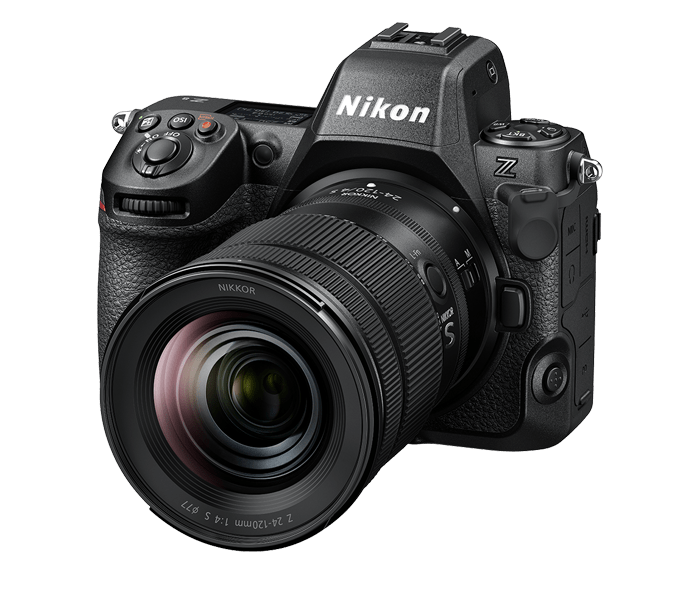

The Nikon Z8 and Sony A9 III are two high-performance mirrorless cameras that are often compared by photographers and videographers alike. Both models were released in 2023 and offer exceptional features, making them suitable for professional use and advanced amateur photography. However, buyers often find it challenging to choose between them due to their contrasting strengths, particularly in areas such as image quality, autofocus capabilities, and stabilization systems. This comparison highlights the key differentiators to help prospective buyers make an informed decision based on their specific needs and shooting styles.
Specifications Comparison
Detailed Comparison
Image Quality
When it comes to image quality, the Nikon Z8 boasts a 46-megapixel full-frame sensor, significantly outperforming the Sony A9 III, which features a 25-megapixel sensor. This means that the Z8 can produce larger prints and allows for more cropping flexibility when composing images post-capture. The Z8's higher resolution is particularly advantageous for landscape, fashion, and commercial photographers who require detail and sharpness. Additionally, the Z8's sensor design and processing give it an edge in low-light performance, providing better noise control at high ISO settings.
Conversely, the Sony A9 III, with its 25-megapixel sensor, may not deliver the same level of detail in large prints, but it does provide excellent color accuracy and dynamic range. This is beneficial for sports and event photographers who prioritize fast burst shooting and capturing fleeting moments. The A9 III also leverages its robust processing powers to deliver images with vibrant colors and impressive tonal range, though it cannot match the high-resolution detail of the Z8.
In practical terms, the Z8 users might notice that they can achieve more detail in their images, while A9 III users may appreciate the snappiness and color science of their shots. Hence, for dedicated image quality enthusiasts, the Nikon Z8 is the clear winner here.
Autofocus System
The autofocus systems of the Nikon Z8 and Sony A9 III are both impressive, but they are designed with slightly different priorities. The Nikon Z8 features 493 autofocus points, allowing for quick and accurate focusing across a broad area of the frame. This extensive coverage is particularly useful for photographers capturing moving subjects, such as wildlife or sports. The advanced algorithms of the Z8 also enhance subject tracking capabilities, making it suitable for various shooting conditions.
On the other hand, the Sony A9 III excels in speed, boasting a max burst shooting rate of 120 frames per second, thanks in large part to its advanced eye-tracking autofocus system. The A9 III focuses on ensuring that fast-moving subjects remain in clear focus with tremendous speed, making it ideal for action photography. The autofocus performance can also be fine-tuned through customizable settings, allowing professional photographers to tailor it to their specific needs.
While the Z8's autofocus points may be more comprehensive in coverage, the A9 III's rapid identification and tracking capabilities can be considered more efficient for fast-paced situations. Thus, both cameras excel in their ways, creating a close competition in this category. Depending on whether speed or coverage is prioritized, the winner could vary.
Video Capabilities
Both cameras are designed for high-end videographers, and each offers 4K video recording at up to 120 frames per second. This makes them both excellent choices for high-frame-rate video projects. However, the Nikon Z8 benefits from its higher resolution sensor, which not only provides unparalleled detail in 4K recording but also allows for more flexibility in post-production when cropping in on footage. Additionally, the Z8's inclusion of advanced video codecs supports higher bit rates, which can enhance the final video quality.
The Sony A9 III, while equally capable in 4K shooting, does stand out in areas such as heat management, allowing for longer recording durations without overheating. This makes it more suitable for extended filming sessions, such as events or documentaries. Moreover, Sony's established video ecosystem includes a wide array of lenses and accessories optimized for video work, benefiting filmmakers looking for comprehensive solutions.
Considering the strengths of both models, each caters to a different focus in video production, depending on whether resolution and post-production flexibility or heat management and extended runtime are prioritized. Hence, while both offer superb video features, the choice can depend on specific project requirements.
Build & Ergonomics
In terms of build quality, both the Nikon Z8 and Sony A9 III are weather-sealed, making them reliable options for outdoor shooting in various climatic conditions. The Z8, however, is heavier at 910 grams compared to the 617 grams of the A9 III, which might be a consideration for photographers who need a lighter setup for long shooting sessions.
The ergonomics of both cameras are well-considered; the Z8 features a larger grip that provides comfort during prolonged usage, paired with a larger control layout, which may appeal to traditional DSLR users transitioning to mirrorless. On the flip side, the more compact A9 III may appeal to those seeking a more streamlined, portable solution, especially for dynamic environments like sports or street photography.
In essence, both cameras are thoughtfully designed for their purposes, with the Z8 focusing on comfort and grip, while the A9 III emphasizes portability and lightweight design, making this a subjective choice depending on individual preferences and shooting styles.
Battery & Storage
Battery life is another critical factor in choosing a camera, and the Nikon Z8 outperforms the Sony A9 III here, offering a respectable battery life of approximately 340 shots per charge. This capability can be a significant advantage during extended shooting sessions where changing batteries frequently is impractical.
Conversely, the A9 III benefits from its use of Sony's latest battery technology which enables a higher burst of shots at high frame rates before depleting, although rated battery life in actual shots is lower than the Z8. Furthermore, the A9 III supports dual CFexpress Type A card slots, allowing for faster writing speeds, which is a plus for video shooters, while the Z8 also supports dual card slots but with the standard CFexpress Type B format, giving it slightly better write speeds for high-resolution video and burst modes.
Both cameras, therefore, have strengths in battery and storage, but if prioritizing battery longevity and the ability to shoot more without interruptions, the Nikon Z8 has a clear advantage.
Value for Money
Evaluating value for money, the Nikon Z8 is priced at around $3999, reflecting its high-resolution sensor and advanced features suitable for professionals. Buyers looking for the utmost image quality and versatility for high-end photography and videography may find this price point justified.
In contrast, the Sony A9 III, also appealing to high-end users but at a lower resolution, may be considered a more economically viable option for those mainly focused on speed and performance in action-oriented photography. Its impressive burst rate at a slightly lower price still offers great value for professional sports and wildlife photographers who emphasize speed over resolution.
Both cameras justify their prices with respective advantages, although the Nikon Z8's higher resolution certainly commands a premium. Buyers should weigh their priorities-resolution or speed-when considering value here.
Our Verdict
Overall, the Nikon Z8 emerges as the winner between these two high-performance cameras, primarily due to its exceptional image quality, superior resolution, and commendable battery life. Those whose primary focus is on capturing high-detail images in various settings will find the Z8 a worthy investment. Meanwhile, the Sony A9 III is excellent for those needing high-speed performance and reliability in fast-paced environments, especially for sports and action photography. Each camera serves its niche well, but for those who need versatility in both high-quality images and advanced video capabilities, the Nikon Z8 offers a compelling overall package.
Nikon Z8
Sony A9 III
Also Compare
Frequently Asked Questions
Which camera is better for wildlife photography?
The Nikon Z8, with its higher resolution and extensive autofocus points, is generally better for wildlife photography where image detail and tracking moving subjects are critical.
Is the Sony A9 III better for action shots?
Yes, the Sony A9 III excels in action shots due to its rapid burst shooting capability and advanced autofocus system, making it perfect for fast-paced environments.
How do the video capabilities compare?
Both cameras offer 4K recording at up to 120fps. However, the Z8 provides higher resolution and better post-production flexibility, while the A9 III offers prolonged runtime without overheating.
Which camera is more portable?
The Sony A9 III is more portable due to its lighter weight, making it easier to carry for longer periods, particularly in dynamic shooting conditions.
What about lens options?
Both systems have strong lens ecosystems, but Sony may have a slight edge due to its longer-standing presence in the mirrorless market, offering a more extensive range of dedicated video lenses.