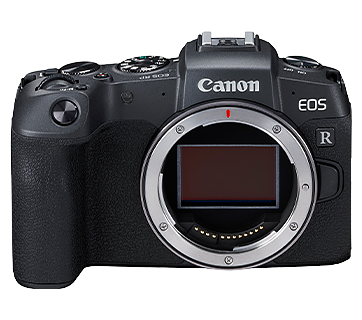

The Canon EOS RP and the Sony A9 II are two compelling mirrorless cameras that appeal to different segments of the photography market. While both are full-frame systems released in 2019, they cater to distinct user needs. The Canon EOS RP is a more affordable entry into the full-frame mirrorless ecosystem, making it attractive for beginners or enthusiasts looking for a lightweight, compact option. On the other hand, the Sony A9 II is geared towards professionals and serious sports or wildlife photographers who require superior speed and performance under demanding situations. Factors such as autofocus performance, burst rate, ergonomics, and video capabilities differentiate these models significantly.
Specifications Comparison
Detailed Comparison
Image Quality
Both cameras offer impressive image quality, but they do have differences that might influence a buyer's decision. The Canon EOS RP features a 26-megapixel sensor and performs exceptionally well at low ISO settings, producing vibrant colors and good dynamic range. In contrast, the Sony A9 II, with its 24-megapixel sensor, also provides remarkable image quality, particularly in low-light conditions. The A9 II offers a slightly better high ISO performance, making it a preferred option for photographers working in challenging lighting environments.
Dynamic range and color accuracy in both cameras are commendable, but they can be influenced by the choice of lenses. Users may notice that high-contrast scenes are better handled by the A9 II's advanced processing. For those who primarily work in controlled environments, the EOS RP's images will likely meet their needs just fine. Ultimately, while both perform admirably, the A9 II may have a slight edge due to its superior noise handling in high ISO ranges.
There is a small yet noteworthy difference in the effective pixel counts, where the EOS RP slightly outperforms the A9 II by a factor of 2 megapixels. Still, for most users, this difference might not be noticeable in everyday photography. The choice between these two may come down to personal preferences regarding color science and how they enhanced their images in post-production, with many photographers divided on which system provides more satisfying results.
Autofocus System
The autofocus capabilities are among the most notable differentiators between the EOS RP and the A9 II. The Canon EOS RP employs a Dual Pixel AF system with 4,779 focus points, offering excellent tracking and accuracy for static and moving subjects. While this system is robust for a system in its price range, it simply cannot compete with the advanced autofocus capabilities of the Sony A9 II, which features a Fast Hybrid AF system with a staggering 693 autofocus points. This not only ensures faster initial acquisition but also better tracking for high-speed subjects, especially in sports and wildlife photography.
The A9 II's autofocus also benefits from Real-time Eye autofocus and Real-time Tracking, offering cutting-edge features that significantly enhance portrait and action photography. The ability of the A9 II to lock onto moving subjects seamlessly makes it a preferred choice among professionals who engage in dynamic shooting environments.
In everyday scenarios, users of the EOS RP will find its autofocus system adequate, but those who require the highest performance in action scenarios, like sports or fast-moving wildlife, will find the A9 II to be far superior. Therefore, while both systems provide solid performance, the A9 II's technology leads to a marked difference in ease and reliability during high-pressure shoots.
Video Capabilities
When it comes to video performance, the Sony A9 II outshines the Canon EOS RP, especially for videographers looking for higher frame rates and additional features. The A9 II supports 4K video recording at up to 30 frames per second, providing smoother motion and more versatility for different types of video projects. It also includes advanced features like S-Log3/2 color profiles, which are highly beneficial for color grading in post-production.
In comparison, the Canon EOS RP limits video recording to 4K at only 24 fps, which may be restricting for those seeking more dynamic storytelling options. Additionally, the EOS RP lacks in-body image stabilization, meaning that users must rely on stabilized lenses or external stabilization equipment to achieve smoother footage, whereas the A9 II has 5.5 stops of in-body stabilization that enhances handheld shooting.
Overall, users focused on video production will likely find the A9 II's capabilities exceed those of the EOS RP, making it a better investment despite its higher cost. Those less concerned with video might appreciate the EOS RP, but its limitations in this area are significant when compared to its competitor.
Build & Ergonomics
The Canon EOS RP is lighter and more compact, making it a highly portable option with a total weight of 485g. This makes it an ideal choice for travel and street photography, where carrying less weight is essential. Its dimensions contribute to a solid grip and a user-friendly interface that many beginners may find approachable.
In contrast, the Sony A9 II weighs a heftier 678g, which may fatigue some users over long shoots. However, this additional weight comes with benefits; the A9 II is weather-sealed, providing greater durability and reliability in challenging environments. Its build quality reflects its more professional target audience, instilling confidence in its performance in adverse conditions.
The layout and ergonomics of both cameras differ significantly; while the EOS RP is designed for simplicity, the A9 II offers more customizable buttons and features aimed at enhancing workflow efficiency for professionals. Ultimately, if portability and ease of use are a priority, the EOS RP stands out. However, the A9 II offers advantages in durability and features that cater to serious photographers who often work under tougher conditions.
Battery & Storage
Battery life is another crucial aspect when comparing these two systems. The Canon EOS RP offers approximately 250 shots per charge, which is relatively low for a modern mirrorless camera. This shorter battery life can be a concern for users who plan to shoot for extended periods, necessitating the need for spare batteries or frequent recharging during outings.
In contrast, the Sony A9 II excels in battery performance, delivering around 690 shots per charge, which significantly outperforms the EOS RP. This advantage allows A9 II users to concentrate on their shooting rather than worrying about battery management. It's particularly beneficial for event and wildlife photographers who need to capture many images without interruption.
Both cameras utilize dual card slots, which is helpful for those needing extensive storage options. However, given the demands of professional photography, the A9 II's stamina gives it a clear advantage in this category. Users needing reliable performance over long sessions will favor the A9 II for its extended battery life, whereas the EOS RP is less ideal under similar circumstances.
Value for Money
When considering the price, the Canon EOS RP is priced at around $1,299, making it one of the most affordable full-frame mirrorless options available, which greatly appeals to entry-level photographers looking to step up their game without breaking the bank. The value it offers is considerable, given its capabilities compared to its rivals in the same price range.
Conversely, the Sony A9 II comes in at a significantly higher price point of approximately $4,500. This premium reflects its advanced features tailored toward professionals who require cutting-edge technology and performance. The increased investment in the A9 II matches its capabilities, but it may put off casual or entry-level users not ready for such an investment.
For buyers who need a versatile camera without the need for high-speed continuous shooting or extensive video capabilities, the EOS RP is a fantastic value. However, for serious professionals needing superior autofocus, battery life, and video performance, the A9 II justifies its higher price with its advanced features and capabilities. Therefore, while the EOS RP is a great entry point, the A9 II represents a significant investment worth it for pros.
Our Verdict
The Sony A9 II ultimately wins as the more feature-rich, high-performance camera, particularly suited for professionals who require superior autofocus, video capabilities, and battery life. While the Canon EOS RP excels in value and portability, catering well to beginners and hobbyists, the A9 II shines in fast-paced environments, making it indispensable for those in need of a reliable workhorse under demanding shooting conditions. Thus, prospective buyers should weigh their specific needs: a lightweight, affordable option in the EOS RP or the robust, high-tier capabilities of the A9 II.
Canon EOS RP
Sony A9 II
Also Compare
Frequently Asked Questions
Which camera is better for wildlife photography?
The Sony A9 II is superior for wildlife photography due to its faster autofocus system, higher frame rates, and better battery life.
Is the Canon EOS RP suitable for professional use?
While the Canon EOS RP can be used for professional work, it may not be as reliable for high-speed shooting or extensive video projects compared to the Sony A9 II.
How does low-light performance compare?
The Sony A9 II generally performs better in low-light conditions, thanks to its broader ISO range and superior noise handling compared to the EOS RP.
What is the advantage of in-body stabilization?
The in-body stabilization in the A9 II minimizes camera shake and allows for clearer handheld shots at slower shutter speeds, making it advantageous for both photography and videography.
Which camera has better build quality?
The Sony A9 II offers better build quality with weather sealing, making it more suitable for use in adverse conditions compared to the EOS RP.