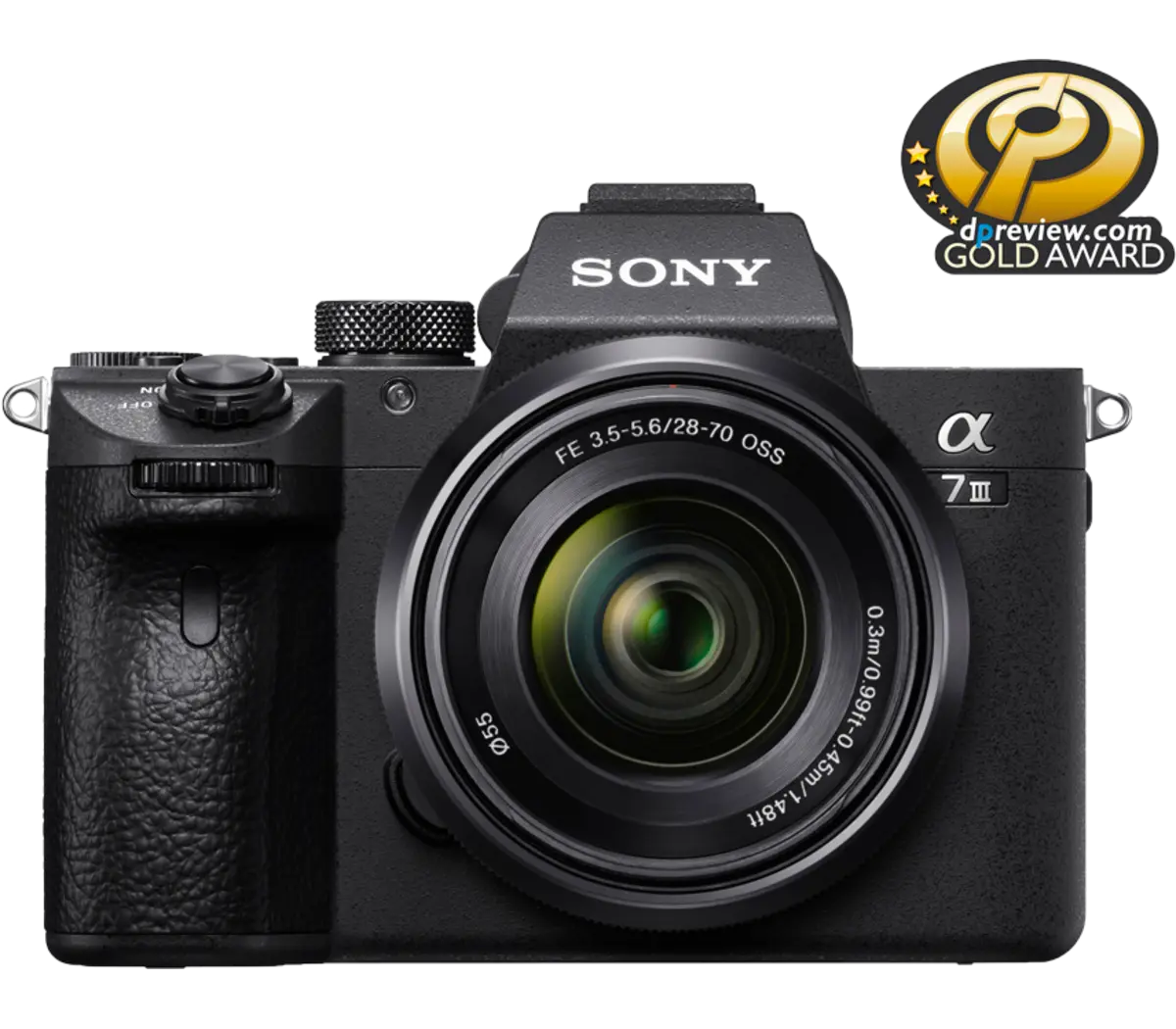

The Sony A7 III and Sony A9 II are both flagship mirrorless cameras from Sony, embodying the advancements in digital photography technology. They cater to different segments of the photography market but are often compared due to their similar sensor resolutions and full-frame capabilities. Photographers and videographers wanting to invest in high-quality equipment may find themselves deliberating between these two models, particularly those who prioritize performance in autofocus and speed versus those seeking an all-around reliable option. The primary differentiators between these two models are their autofocus capabilities, shooting speed, and pricing, which significantly influence their applications in different scenarios.
Specifications Comparison
Detailed Comparison
Image Quality
Both the Sony A7 III and the Sony A9 II feature 24MP full-frame sensors, producing excellent image quality with impressive dynamic range and low-light performance. The A7 III, launched in 2018, delivers superb results across a wide ISO range of 100 to 51200, while the A9 II expands on this by offering an expandable ISO down to 50 and up to 204800, making it more versatile in low-light situations. However, in typical real-world scenarios, both cameras produce outstanding results under various lighting conditions, making a direct winner hard to determine.
While both cameras capture beautiful images, photographers requiring minimal noise at extremely high ISO settings might lean towards the A9 II due to its broader ISO range. On the other hand, users of the A7 III may find that its image quality is more than sufficient for most applications, especially considering its significantly lower price point. Both models also benefit from Sony's renowned color science and post-processing capabilities, providing dense and vibrant colors along with excellent detail retention, particularly in RAW format.
In conclusion, the image quality of both models is very high, and users will achieve satisfying results regardless of the choice. However, slight advantages in ISO performance and versatility with the A9 II may appeal to professionals working in challenging lighting situations.
Autofocus System
Both the Sony A7 III and the A9 II are equipped with an impressive autofocus system featuring 693 phase detection points, offering fast and accurate focusing performance. However, the A9 II takes the lead with its enhanced autofocus capabilities, which include improved algorithms for tracking fast-moving subjects, making it more suited for sports and wildlife photography. Additionally, the A9 II leverages its ability to capture up to 20 frames per second (fps) in continuous shooting, which is a game-changer for capturing fleeting moments.
The A7 III, while also capable of 10 fps, still falls behind when it comes to handling rapid-fire shooting scenarios, where the A9 II's faster burst rate is critical in professional sports photography. Moreover, the A9 II features an advanced real-time Eye-AF for both humans and animals, ensuring precision even in fast-paced settings, whereas the A7 III, while competent, does not quite match the A9 II's responsiveness.
Given these advancements in focus tracking and speed, the A9 II emerges as the superior choice for photographers who require the utmost in autofocus performance, particularly in high-action environments.
Video Capabilities
Both the A7 III and A9 II are capable of recording in 4K at 30 fps, making them a solid choice for videographers. However, the A7 III has some advantages with its full pixel readout in 4K, which provides high-quality video output without pixel binning, leading to impressive detail and reduced moiré.
Conversely, while the A9 II is designed primarily for stills and sports, its video capabilities, while adequate, do not stand out in the same way, with less emphasis on video-centric features. The A7 III also supports S-Log3, which enables a wider dynamic range and greater flexibility in post-production, catering to video professionals looking for high-quality footage. The A9 II, in contrast, lacks some of these advanced video features.
Given the needs of video creators, along with the broader array of options the A7 III offers for videography, the A7 III stands out as the better option overall for those focused on video content.
Build & Ergonomics
Both the A7 III and A9 II come in a robust, weather-sealed body, ensuring durability in various shooting conditions. They share similar dimensions, with the A9 II being slightly larger and heavier (678g vs 650g). The grip on the A9 II is more substantial, making it feel more comfortable during longer shoots, especially for those using heavier lenses.
In terms of controls, the A9 II boasts an improved interface and a more responsive touchscreen, enhancing user experience while navigating settings or reviewing shots. However, the differences in build quality are subjective, as both models provide excellent ergonomics and handling, satisfying the needs of professionals.
Ultimately, while the A9 II might feel a bit more refined in terms of user interaction and tactile comfort, most users will find both cameras equally sufficient, favoring personal preference.
Battery & Storage
The Sony A7 III has a slight edge in battery life with a rated 710 shots per charge, compared to the A9 II's 690 shots. This difference may seem minimal; however, it can be significant during long shooting days where every shot counts. Both cameras utilize Sony's robust NP-FZ100 battery, ensuring good endurance in the field.
When it comes to storage, both cameras offer dual card slots, allowing for simultaneous image saving, enhanced reliability, and storage options, essential for professional use. Both use SD cards but would likely benefit from higher-speed models, particularly in terms of writing speed when shooting in burst mode.
Considering the balance in battery performance and nearly identical storage capabilities, this aspect sees both cameras performing admirably, favoring longevity and flexibility.
Value for Money
At a retail price of $2000, the A7 III is an attractive option for professionals and enthusiasts alike, providing exceptional performance in both stills and video at a fraction of the price of the A9 II. The A9 II, priced at approximately $4500, offers superior performance in specific areas, such as continuous shooting speed and autofocus precision, which are crucial for high-end sports and wildlife photography.
For photographers primarily focusing on general shooting, landscapes, or portraits, the A7 III presents a better value by delivering nearly equivalent image quality without stretching the budget too far. The A9 II is better suited for those who need cutting-edge technology and can justify the price tag based on the specialized requirements of their work.
In summary, if value is a key factor and the budget is limited, the A7 III is the clear winner. If the user's needs align with the specialized features of the A9 II, the higher cost can still be justified.
Our Verdict
While both the Sony A7 III and A9 II have their strengths, the A7 III emerges as the overall winner due to its exceptional value for money, impressive video capabilities, and solid overall performance in various shooting scenarios. It is an ideal choice for photographers who want high-quality imagery without the premium price tag. The A9 II, however, is tailored for professionals who demand the fastest autofocus and the highest frame rates for sports or wildlife photography, making it a worthwhile investment for those who can leverage its strengths.