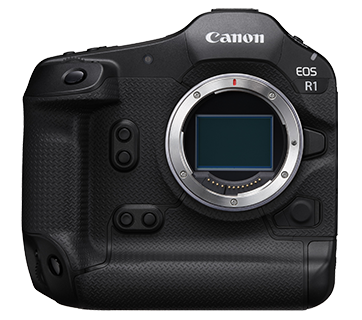
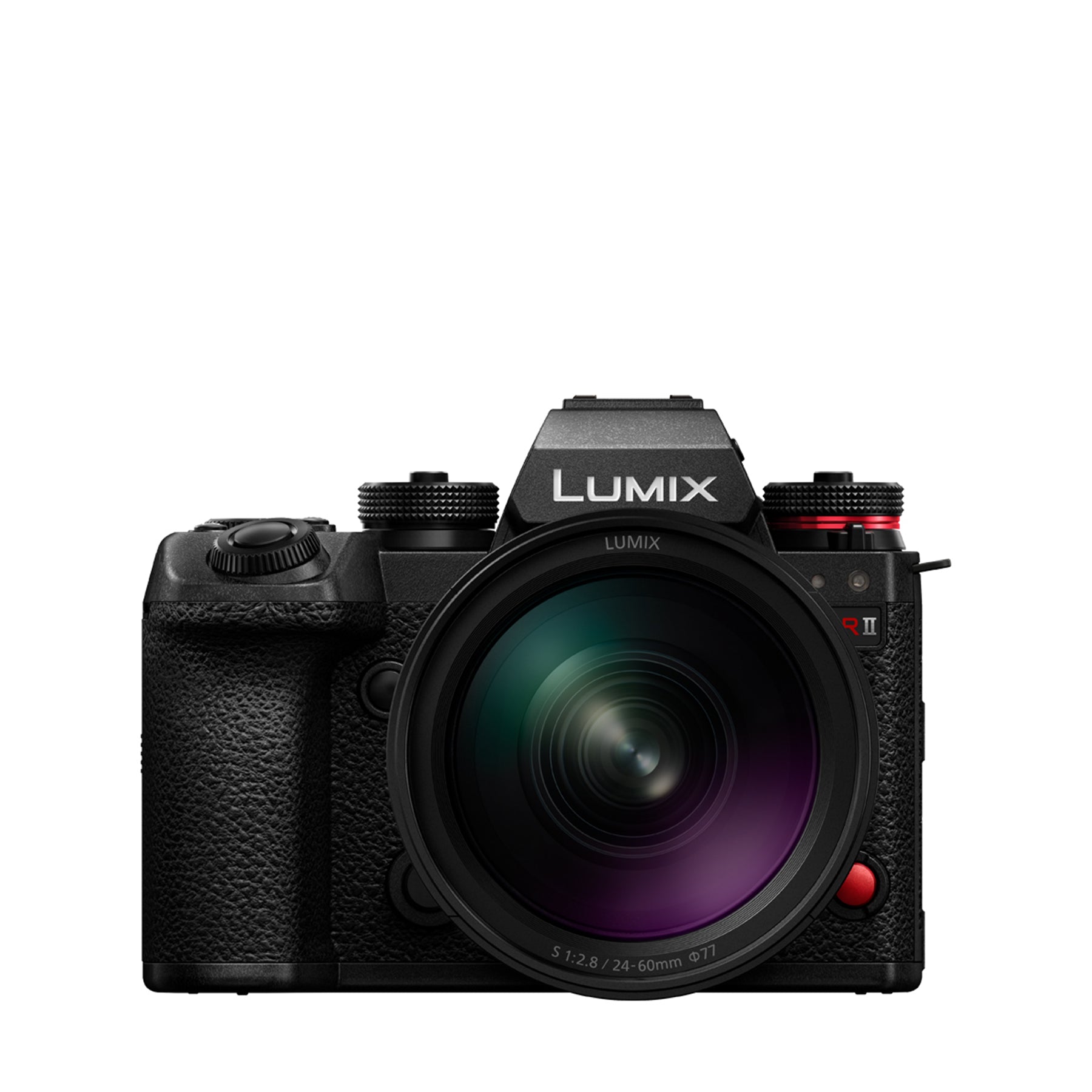
The Canon EOS R1 and Panasonic S1R II are both modern full-frame mirrorless cameras that cater to professional photographers and videographers. Due to their high performance and advanced features, they are frequently compared, especially by those looking to invest in a versatile camera system. The key differentiators between these two models lie in their sensor specifications, autofocus capabilities, video resolutions, and overall build quality. This makes them attractive to diverse user groups, ranging from portrait and landscape photographers to action and wildlife shooters.
Specifications Comparison
Detailed Comparison
Image Quality
The Canon EOS R1 features a 24-megapixel full-frame sensor that delivers superb image quality with great dynamic range and color accuracy, making it an ideal choice for portrait and landscape photographers. Its relatively lower megapixel count allows for better performance in low-light conditions and faster continuous shooting, which can be a significant advantage in fast-paced environments. The advanced image processing ensures images come out sharp and vibrant, benefitting from Canon's long history of developing high-quality sensors.
In contrast, the Panasonic S1R II is equipped with a higher resolution 44.3-megapixel sensor. This provides exceptional detail and is particularly beneficial for large prints or extensive cropping without loss of quality. Photographers focused on fine arts or landscapes may appreciate the higher resolution, allowing for greater flexibility in post-processing workflows. However, the higher pixel count may introduce more noise in low-light scenarios when compared to the Canon.
Both cameras utilize excellent image processing engines, but the noticeable difference in resolution could tilt the scale for certain users. Ultimately, it depends on the primary use case: action vs. detail-oriented photography.
Overall, while the Canon EOS R1 offers superior low-light performance, the Panasonic S1R II shines in detail reproduction.
Autofocus System
The Canon EOS R1 boasts an impressive autofocus system with 4897 autofocus points, which utilizes advanced technologies for fast and accurate focusing. The high number of autofocus points ensures comprehensive coverage across the frame, a critical feature for capturing swiftly moving subjects in sports or wildlife photography. Canon's Dual Pixel AF technology allows for smooth and accurate tracking, enhancing performance in dynamic shooting scenarios. This fits perfectly for photographers who need quick focus acquisition in challenging environments.
On the other hand, the Panasonic S1R II also has a robust autofocus system, though with a lesser number of points than the Canon. However, it incorporates contrast-detection with a depth-from-defocus system, which can be quite effective in many scenarios but may occasionally fall short of the speed and reliability seen in Canon's implementation, especially under low light.
For those who prioritize action photography or shooting in unpredictable scenarios, the EOS R1's autofocus system may be a more reliable option. Nevertheless, for many users, both systems are effective, but the Canon clearly stands out for autofocus capability.
Given these considerations, the advanced autofocus capabilities of the EOS R1 make it more suitable for photographers requiring utmost performance in tracking moving subjects.
Video Capabilities
The Canon EOS R1 is positioned as a leading hybrid camera, featuring exceptional video specifications that can fulfill the needs of professional videographers. It supports up to 8K video recording at 30 frames per second and 4K video at 120 frames per second, providing users with significant flexibility regarding resolution and frame rates. This allows for slow-motion capabilities and high-resolution content creation, essential for filmmakers and content creators.
Similarly, the Panasonic S1R II excels with solid video specs, also providing 8K recording capabilities, but without the same frame rate flexibility of the Canon. This is a crucial point for videographers who may desire higher frame rates for dramatic effects. However, it lacks a clear edge over the Canon in terms of overall features like in-body stabilization, which is somewhat ambiguous but reliable.
In practical use, while both cameras cater to video production, the Canon EOS R1 takes a slight edge, particularly for users who need advanced features in rapidly changing video environments.
For these reasons, if video performance is a primary concern, the Canon EOS R1 is ultimately more suited to high-end video production needs.
Build & Ergonomics
In terms of build quality, the Canon EOS R1 is designed with a professional layout, including weather sealing to protect against challenging environments and making it suitable for outdoor photography. With dimensions of 158 x 150 x 87 mm and a weight of 1115 grams, it has a substantial feel, enhancing the grip and stability for prolonged use. The touchscreen display of 3.2 inches, combined with 2,100,000 dots, delivers an appealing interface for navigation and reviewing scenarios.
The Panasonic S1R II, while also well-made, offers a similar degree of weather sealing and ergonomics, but it weighs slightly more and has a bulkier body that some users might find less comfortable for extended periods. However, both cameras provide thoughtful button layouts and good access to essential controls which are crucial for professional-grade usage.
Overall, while both models offer solid ergonomics and build quality suitable for professionals, many users may prefer the feel and design of Canon due to its slightly better balancing and user-friendly interface, especially in demanding shooting environments.
Taking into account these factors, the Canon EOS R1 outshines in regards to ergonomic design and feel.
Battery & Storage
Battery performance is an essential aspect for many photographers, especially when working in environments where charging is not feasible. The Canon EOS R1 features a substantial battery life rated for up to 700 shots, which is commendable for a high-performance mirrorless camera. Moreover, it supports dual card slots, allowing for extensive storage options, which can be a game changer during important shoots where flexibility is crucial.
The Panasonic S1R II also offers dual card slots, a significant plus for professional users who require redundancy or extensive storage. However, its battery life hovers around 370 shots, which may not stretch as far as the Canon under similar usage conditions. This could lead to logistical issues during long shooting events or when traveling.
While both systems provide useful features in terms of storage and backup, the Canon EOS R1 takes the lead with superior battery life and management capabilities, making it more suitable for extensive shooting sessions.
In summary, the Canon's better battery performance is a substantial advantage for individuals who need reliability during extended shoots.
Value for Money
In terms of pricing, the Canon EOS R1 retails at approximately $6299, positioning it as a premium offering in the market. For users seeking uncompromised performance across photography and videography, this price point might justify the investment, considering its specifications and advanced features.
The Panasonic S1R II, while also a high-end camera, typically comes at a lower cost than its Canon counterpart. With a price that reflects its high-resolution capabilities and video features, it might appeal more to photographers focused solely on still images or those who prioritize saving on initial costs without diverting from quality.
That said, the overall value proposition depends significantly on user needs. For professionals that require the absolute best features and can capitalize on the sophisticated functionalities of the EOS R1, the investment could be well warranted. Conversely, the S1R II makes a compelling case for those who need excellent image quality without the bells and whistles associated with high-end video capabilities.
When examining value for money, while the Canon demands a higher upfront investment, it may ultimately provide better return value in terms of feature set for pros, whereas the S1R II excels as an overall value option for still photographers.
Our Verdict
Overall, the Canon EOS R1 emerges as the winner in this comparison, excelling in key areas such as autofocus speed, battery life, and video capabilities, making it ideal for professionals who need top-tier performance across photography and videography. While the Panasonic S1R II offers outstanding image resolution and value for those focused on high-quality stills, users best suited to the EOS R1 will appreciate its comprehensive feature set and reliability in varied shooting conditions. Each model has its strengths, but for versatility and all-around performance, the Canon EOS R1 stands out.