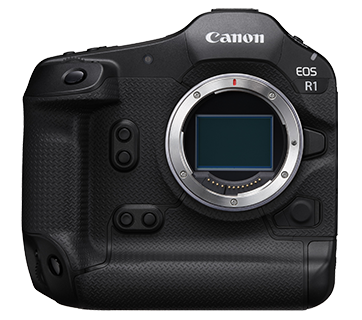
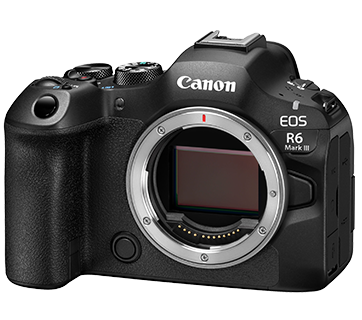
The Canon EOS R1 and Canon EOS R6 Mark III represent two highly anticipated full-frame mirrorless cameras in Canon's RF-mount lineup, aimed at different segments of professional and enthusiast photographers. The EOS R1 is positioned as Canon's flagship, designed for the most demanding sports, wildlife, and press photographers who require uncompromising performance and ruggedness. Meanwhile, the EOS R6 Mark III (hypothetical successor to the R6 Mark II) targets advanced enthusiasts and working pros who seek a balance of high-speed performance, versatile video features, and portability at a much more accessible price.
Buyers often compare these cameras when considering a step up in Canon's system, especially if they shoot both stills and video, value speed, or want robust autofocus. The choice often comes down to a mix of budget, need for absolute pro features, and practical considerations like size or weight. Key differentiators include the R1's top-tier build, potentially superior ergonomics and controls, and the R6 Mark III's combination of powerful specs in a lighter, more affordable package.
Specifications Comparison
Detailed Comparison
Image Quality
Both cameras share a full-frame sensor design with very similar dimensions: the R1 uses a 24-megapixel full-frame sensor (36 x 24 mm), while the R6 Mark III's sensor is 35.9 x 23.9 mm. While resolution is the same, the R6 Mark III is likely to utilize a next-generation sensor and processor, given its newer release (2025). This could result in slight improvements in dynamic range or noise performance, especially considering its expanded ISO capability up to 204800. However, the R1 is designed with utmost image quality in mind for demanding professional work, likely focusing on consistent color, high reliability, and robust RAW output, while the R6 Mark III may push for versatility between stills and video.
For pure print or commercial use, the R1's files are expected to offer more latitude for post-processing due to more advanced internal data pathways, bit depth, or color science. The R6 Mark III, though, may be more forgiving for high ISO work, especially given its ISO range advantage on specification.
That said, in real-world use, both will produce outstanding images suitable for professional use. The differences will be marginal unless pushed to extremes-such as the highest ISO settings or when maximum color grading flexibility is needed.
Autofocus System
Both the EOS R1 and R6 Mark III feature an impressive 4897 autofocus points, reflecting Canon's best-in-class Dual Pixel CMOS AF technology. The R1, as a flagship, is expected to bring performance advantages: faster acquisition, superior tracking, and more advanced algorithms for subject recognition, especially for fast-moving targets like athletes or wildlife. Pro bodies like the R1 also tend to have dedicated processors or AI-driven autofocus assistance, boosting reliability in chaotic or extreme conditions.
The R6 Mark III will almost certainly inherit Canon's advanced subject tracking features, with excellent eye detection and animal detection, and benefit from newer hardware. Its autofocus should be extremely capable and more than sufficient for most uses, including sports and wildlife. Yet, the R1's pro focus on continuous AF reliability under pressure, even in the harshest environments, will edge it ahead, particularly for those whose work demands perfection.
For enthusiasts and semi-pros, the differences may be subtle, but working pros will appreciate the R1's extra robustness and speed.
Video Capabilities
Video is increasingly important in today's mirrorless era. The R6 Mark III pulls ahead on specs: it supports 4K video recording at up to 120p, which is ideal for slow-motion and high-production-value projects. While the R1's video specs aren't fully detailed here, Canon's professional flagships typically prioritize reliability and minimal rolling shutter over cutting-edge frame rates; unless the R1 adds surprise video features, the R6 Mark III's capabilities seem broader for creators.
Additionally, the R6 Mark III's greater in-body image stabilization rating (8.5 stops vs the R1's 8 stops) benefits handheld filming. Both offer high-quality screens, but the R1's is slightly larger and crisper, helpful for critical focus during shooting.
Ultimately, for hybrid shooters or those prioritizing slow-motion or flexible 4K video, the R6 Mark III will be the better choice. Professionals who need rock-solid reliability, heat management, and pro video workflows may still prefer the R1's robust build, but on headline specs the R6 Mark III wins.
Build & Ergonomics
The R1 is substantially larger and heavier (1115g vs 699g), highlighting its professional, weather-sealed chassis and integrated vertical grip-ideal for long shoots and rugged use. Pro photographers who value ultimate durability, all-day handling, and extensive controls will favor the R1. Its 3.2" screen with 2.1 million dots also trumps the R6 III's 3.0", 1.62 million dot display for reviewing images and setting up shots in bright conditions.
On the other hand, the R6 Mark III is far more compact and portable-at just 699g, it's almost 40% lighter, making it appealing for travel, event coverage, or handheld shooting all day. It's also weather sealed, so handles adverse conditions well, though not to the same extremes as the R1.
For ultimate reliability, comfort with big lenses, and the best displays, the R1 is clearly ahead. But for those prioritizing a lighter kit, the R6 Mark III offers significant ergonomic benefits.
Battery & Storage
While detailed battery specs aren't listed, Canon's flagship bodies like the R1 typically utilize much larger batteries, yielding more shots on a single charge-crucial for professional sports, news, or remote fieldwork where changing batteries can mean missed moments. Such cameras also often feature dual card slots (with a mix of CFexpress and UHS-II SD), supporting fast write speeds, redundancy, and in-camera backup, all essential for critical work.
The R6 Mark III, as an enthusiast/prosumer body, generally supports smaller batteries (e.g., LP-E6 series) and will offer excellent but less extensive shooting endurance. Storage options are usually dual UHS-II slots, which are very capable but not as fast as the CFexpress standard on the R1.
For shooters needing maximum uptime, instant file backup, or the fastest performance, the R1 is the preferred choice. However, for most advanced users, the R6 Mark III is likely more than sufficient in battery and storage needs.
Value for Money
The EOS R1's $6299 price tag is justified by its flagship build, pro ergonomics, reliability, and maximum performance. For working professionals whose income depends on their camera's toughness and speed, this investment is often necessary. The R1's advanced systems, likely including top-of-the-line shutter life, weather sealing, and service support, further enhance its long-term value for select users.
The R6 Mark III, at $2799, offers a remarkable set of features-blazing fast burst rates (40 fps), advanced video modes, class-leading autofocus, and superb stabilization-at less than half the price. For the vast majority of photographers and hybrid shooters, the R6 Mark III brings flagship-level performance within reach. Its value proposition is nearly unbeatable unless absolute pro build and speed are critical.
Ultimately, the majority of serious enthusiasts and professionals who do not need the R1's extremes will find the R6 Mark III to deliver far better value for money.
Lens Ecosystem
Both the Canon EOS R1 and the R6 Mark III use the RF lens mount, granting access to an expanding range of native RF lenses and, via adapters, the vast lineup of EF lenses. This makes both bodies equally versatile in lens options. Professional shooters will benefit from the fast telephotos and wide primes available in the RF system, while enthusiasts can enjoy compact, portable glass tailored to lighter bodies like the R6 Mark III.
Canon's ongoing investment in RF glass ensures future growth and long-term support for both bodies. Given equal compatibility, this is a clear tie.
Our Verdict
Choosing between the Canon EOS R1 and the Canon EOS R6 Mark III is a matter of aligning your specific needs and budget with what each camera does best. The R1 prevails in ultimate build quality, ergonomics, and reliability, making it the natural choice for sports, wildlife, and press professionals who cannot compromise on speed, durability, or backup options. Its autofocus and image quality are engineered for the highest level of professional use, and its larger, more refined display and controls only sweeten the deal. Yet, the R6 Mark III's technical prowess-especially in video-brings flagship-level specs to the masses at a fraction of the price. For hybrid shooters, enthusiasts, event photographers, and most working pros, the R6 Mark III delivers astonishing value, exceptional speed, and versatile performance in a portable package. It is the smarter investment for those who do not demand the last word in ruggedness or the extensive pro-oriented features of the R1. Both cameras are outstanding; your winner depends on your individual needs.
Canon EOS R1
Canon EOS R6 Mark III
Also Compare
Frequently Asked Questions
Which camera is better for sports or wildlife photography?
The Canon EOS R1 is the superior choice for sports or wildlife due to its pro-grade ergonomics, likely superior buffer and battery life, ruggedness, and autofocus reliability under pressure. However, the R6 Mark III remains highly capable for enthusiasts or pros who do not need the R1's extremes.
Is the image quality noticeably better on the EOS R1 compared to the R6 Mark III?
While both offer exceptional image quality with 24MP full-frame sensors, the R1 may have a slight edge in color accuracy, dynamic range, and RAW flexibility due to its flagship engineering. For the vast majority of uses, image quality differences will be subtle; only in extreme professional applications will the R1's files provide a significant advantage.
Which camera is better for video work?
The EOS R6 Mark III is technically superior for video, offering 4K at up to 120p and slightly better in-body stabilization, making it ideal for hybrid shooters and creators who require slow-motion, high-resolution footage. The R1 will offer better heat management and recording reliability for extremely long sessions, but the R6 Mark III's headline specs lead for most videographers.
How significant is the difference in build quality and durability?
The R1 is built to the highest standard, designed for intensive professional use and all weather conditions, with advanced sealing, longevity, and a larger body for balanced handling with big lenses. The R6 Mark III's build is excellent and weather-sealed but more lightweight and not as robust, better suited for portability than extreme durability.
Is the price difference between these cameras justified?
For professionals who need the absolute best in reliability and speed, the R1's premium is justified by its ruggedness, advanced autofocus, larger battery, and pro controls. However, for the majority of photographers, the R6 Mark III offers nearly all the essential features and performance at less than half the cost, making it a much better value for general use.
Are there any limitations in lens compatibility between the R1 and R6 Mark III?
No, both cameras use the Canon RF mount and have access to the full suite of RF and adapted EF lenses. Lens options, autofocus performance, and compatibility are equal between the models.