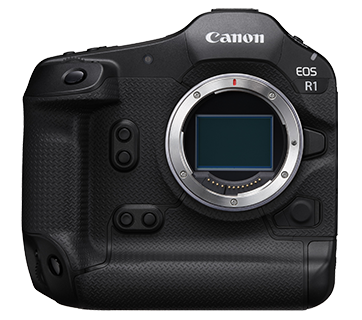

The Canon EOS R1 and Sony A9 III are two of the most advanced mirrorless cameras available, frequently compared by professionals and enthusiasts alike. Both cameras serve high-performance needs, making them appealing options for sports photographers, wildlife enthusiasts, and videographers seeking cutting-edge technology. The main differentiators that buyers should consider include autofocus capabilities, video performance, weight and design ergonomics, and overall value for money. With both cameras catering to slightly different user needs, it's important to analyze their specifications closely to understand which one may be the better fit.
Specifications Comparison
Detailed Comparison
Image Quality
Both the Canon EOS R1 and Sony A9 III feature full-frame sensors, delivering high-resolution images with exceptional detail. The Canon EOS R1 has a resolution of 24 megapixels, while the Sony A9 III offers slightly more at 25 megapixels. In practical terms, both resolutions are more than adequate for most professional applications. However, Canon's color science has traditionally offered pleasing skin tones and vibrant images straight out of the camera, which can be particularly appealing for portraitists and commercial photographers. On the other hand, the Sony A9 III benefits from superior dynamic range, especially in high-contrast scenarios where highlights and shadows can be challenging. In low-light situations, both cameras exhibit impressive performance, but the Sony may have a slight edge due to its more efficient noise reduction algorithms, resulting in clearer images at higher ISO levels.
Autofocus System
The autofocus capabilities in the Canon EOS R1 are extraordinary, offering an unparalleled 4,897 autofocus points, making it one of the most advanced systems on the market. This system excels especially in tracking fast-moving subjects, making it ideal for sports photography. In contrast, the Sony A9 III has a robust autofocus as well, but has fewer points and thus may not track subjects as easily under complex situations. However, the A9 III boasts an impressive maximum frame rate of 120 FPS, which allows it to capture rapid sequences of action. This advantage works synergistically with its fast autofocus system, providing quick focus acquisition that is highly responsive during shooting. Thus, while both systems are excellent, the EOS R1 takes the lead due to its sheer number of points and precision.
Video Capabilities
Video capabilities are a crucial feature for many modern photographers and content creators. The Sony A9 III shines with its ability to shoot 4K video at a maximum of 120 frames per second, providing high-quality slow-motion sequences that are invaluable for action and sports videography. Additionally, it supports advanced video features, such as S-Log3 for enhanced dynamic range and color grading flexibility. Conversely, while the Canon EOS R1 offers excellent video quality, its primary selling points lie more in its photography capabilities than in its video performance. It is also capable of recording high-resolution video, yet it does not match the A9 III in frame rate for 4K. For those focused primarily on video, the A9 III is the clear winner.
Build & Ergonomics
In terms of build quality, both cameras are robust and weather-sealed, making them suitable for challenging shooting environments. The Canon EOS R1 is slightly bulkier and heavier at 1,115 grams compared to the 617 grams of the Sony A9 III. This weight difference could be significant for photographers who are on the move or shooting for prolonged periods. The EOS R1 has a larger grip, which may provide a more secure hold for users, but the A9 III's compactness makes it easier to carry. Both cameras feature LCD screens with comparable sizes of 3.2 inches, although the Canon's screen offers 2,100,000 dots for slightly higher resolution. Consequently, while both are well-built, preferences may depend on personal comfort and shooting style.
Battery & Storage
The Canon EOS R1 is equipped with a powerful battery that allows for extensive shooting sessions, especially helpful for high-performance tasks like sports photography. However, it weighs more, which some users might find cumbersome. In terms of storage, the Canon supports dual CFexpress cards, enabling faster write speeds for high burst shooting, whereas the Sony A9 III utilizes dual slots for SD cards. Although both provide redundancy, those who prioritize the fastest write speeds may lean towards the Canon. Ultimately, for users who prioritize longer shoot times without needing to regularly change batteries, the R1 has an advantage, while the storage format in the A9 III is more common for casual users.
Value for Money
Pricing is a significant deciding factor when considering these two high-end models. The Canon EOS R1 retails for around $6,299, which is a premium price reflecting its advanced features. In contrast, while the price of the Sony A9 III may vary, it is generally lower, offering a more accessible entry point for those seeking high performance without the premium of the latest technology. Buyers must consider the total value proposition of what each camera offers alongside its price. For instance, for those whose primary focus is photography, the EOS R1's pricing may be justified, but for videographers and hybrid shooters, the A9 III presents a compelling balance of cost against features.
Our Verdict
Overall, the Canon EOS R1 excels in autofocus precision and robust battery performance, making it a top choice for photographers focused on capturing fast action with maximum detail. Meanwhile, the Sony A9 III offers superior video capabilities and a more cost-effective solution for those who may not need the advanced features of the R1. Each camera has distinct strengths that cater to specific types of users, leading to a tie in this comparison as both excel in their respective domains, appealing to different user priorities.