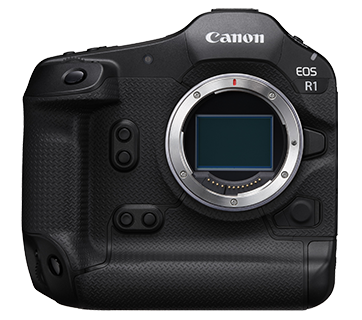

The Canon EOS R1 and Sony A7S III are two flagship mirrorless cameras that represent the pinnacle of technology in their respective brands, designed for professional photographers and videographers looking for the best in image quality, performance, and functionality. Both cameras have garnered significant interest due to their advanced features and capabilities, making them common points of comparison for buyers who are serious about their craft. Potential buyers might be choosing between these two models based on their specific needs, such as preference for low-light performance, video resolution, or shooting versatility.
Specifications Comparison
Detailed Comparison
Image Quality
The Canon EOS R1 features a full-frame sensor with a resolution of 24 megapixels, which allows for detailed image capture and excellent dynamic range. Its larger pixel size compared to the Sony A7S III's 12 megapixels means that the EOS R1 can capture more detail in high-resolution images, especially in bright conditions. Additionally, the Canon's superior sensor enables better color reproduction and reduced noise levels at higher ISO settings. On the other hand, the A7S III is optimized for low-light performance, with an impressive ISO range that goes up to 409600, allowing it to perform superbly in challenging lighting conditions, although it may sacrifice some detail for lower-res images.
Autofocus System
When it comes to autofocus, the Canon EOS R1 boasts a staggering 4897 autofocus points, providing extensive coverage across the frame for superior accuracy and tracking. This expansive system is particularly advantageous in fast-paced shooting scenarios such as wildlife or sports photography. Comparatively, the Sony A7S III has 759 autofocus points, which is still exceptional, especially combined with its hybrid focus architecture that excels in video autofocus. While both systems offer impressive performance, the EOS R1's greater number of focus points can give it an edge in versatility, especially in still image capture.
Video Capabilities
The Sony A7S III is renowned for its video capabilities, offering 4K recording at up to 120 frames per second, which is especially favorable for capturing high-frame-rate footage for slow motion. The A7S III also supports 10-bit 4:2:2 internal recording and has excellent heat management for extended recording times. In contrast, while specific video capabilities of the Canon EOS R1 are yet to be revealed prior to its release, the market anticipates that it will feature advanced video specs due to Canon's push in the professional video realm. However, as of now, the proven video performance of the A7S III gives it a distinct advantage.
Build & Ergonomics
Both cameras are built with robust designs and are weather-sealed, making them suitable for outdoor and demanding shooting conditions. The Canon EOS R1 features a slightly bulkier and heavier body at 1115 grams, which may provide a more substantial feel in hand, potentially enhancing stability for larger lenses. The A7S III, at 699 grams, is more lightweight and compact, appealing to videographers and photographers looking for a portable solution. The R1 also includes a larger 3.2" touchscreen with a higher resolution than the 3" display on the A7S III, enhancing usability and clarity for image review and adjustments.
Battery & Storage
For battery life, the Sony A7S III is rated at approximately 600 shots, which is competitive for a mirrorless camera and allows for extended shooting sessions without frequent recharging. Battery life of the Canon EOS R1 is yet to be confirmed, but it is generally expected to be on par or slightly better due to advancements in power efficiency in newer models. Storage capabilities might also favor the A7S III as it supports CFexpress Type A cards alongside SD UHS-II cards, giving it potential flexibility and speed for video recording. Meanwhile, the EOS R1's storage options remain to be detailed, leaving a bit of uncertainty in comparison.
Value for Money
The Canon EOS R1 is positioned at a premium price point of $6299, reflecting its high-end features and targeting professional users requiring advanced capabilities. In contrast, the Sony A7S III at $3499 presents a more affordable option for both enthusiasts and professionals, especially for those primarily focused on video work. While the R1's higher cost could be justified by certain features and performance benefits, the A7S III offers excellent value, especially considering its established reputation in video production and low-light performance. Buyers' decisions may hinge on specific needs against their budget constraints.
Our Verdict
Overall, while the Canon EOS R1 wins in categories such as image quality, autofocus system, and build quality, the Sony A7S III excels in video capabilities and offers better value for money. The choice ultimately depends on the individual needs of the photographer or videographer. If you prioritize high-resolution image capture and an extensive autofocus system, the EOS R1 is the clear winner. However, for those looking for the best video performance and a more budget-friendly option, the Sony A7S III stands out as a top choice.
Canon EOS R1
Sony A7S III
Also Compare
Frequently Asked Questions
Which camera is better for low-light photography?
The Sony A7S III is better suited for low-light photography due to its lower megapixel count and extended ISO range, allowing for optimal performance in dark conditions.
How do the video capabilities compare?
The Sony A7S III offers 4K recording at up to 120 fps, making it ideal for videographers, while the Canon EOS R1's video features are yet to be fully revealed.
What about battery life?
The Sony A7S III has a rated battery life of approximately 600 shots, while the Canon EOS R1's battery life has not been disclosed yet, but expectations are high.
Which camera is more durable?
Both cameras are weather-sealed and built with durability in mind, although the heavier build of the Canon EOS R1 may provide a sturdier feel.
Are the lens ecosystems comparable?
The Canon EOS R1 uses the RF mount, which is growing rapidly, while the Sony A7S III utilizes the E mount, known for its extensive selection of both native and third-party lenses.