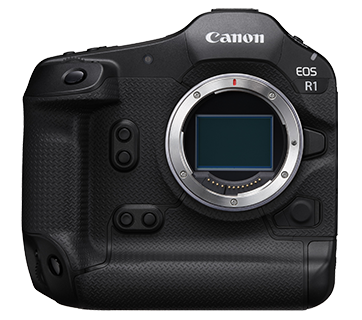
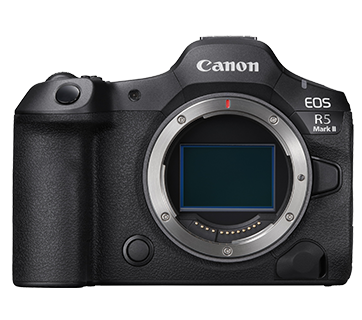
The Canon EOS R1 and Canon EOS R5 Mark II represent two of Canon's flagship models in the mirrorless segment, targeting professional photographers and serious enthusiasts alike. While both cameras share a full-frame sensor and Canon RF mount, they cater to different needs and priorities. The R1 is designed for sports and wildlife photography with its advanced autofocus system and improved burst rate, while the R5 Mark II appeals to those prioritizing high-resolution imaging and versatility across various shooting scenarios. As both models were released in 2024, the comparison between them is timely for potential buyers evaluating top-tier mirrorless options.
Specifications Comparison
Detailed Comparison
Image Quality
When assessing image quality, the Canon EOS R5 Mark II has an advantage due to its 45-megapixel sensor compared to the R1's 24-megapixel offering. This elevated resolution allows the R5 Mark II to capture more intricate details, making it ideal for high-resolution prints and cropping flexibility. Both cameras provide impressive color accuracy and dynamic range thanks to Canon's advanced processing capabilities, but the additional pixel count in the R5 Mark II certainly gives it a clearer edge for landscape and studio photography.
In practical terms, while the R1's lower resolution might limit cropping options, it can produce excellent image quality at high ISO settings, thanks to enhanced noise control mechanisms. Thus, for photographers who frequently work in low-light conditions or need speed over resolution, the R1 doesn't fall behind significantly. However, the R5 Mark II's ISO range of 100-51200 provides extensive flexibility in various lighting situations, further solidifying its versatility.
Overall, the R5 Mark II is suited for users requiring the highest level of image detail, while the R1 may appeal to those who prioritize performance and speed alongside decent image quality.
Autofocus System
The autofocus system in the Canon EOS R1 is noteworthy, featuring an astonishing 4897 autofocus points, which provides comprehensive coverage and accuracy - particularly useful in fast-paced shooting environments like sports or wildlife photography. This extensive AF system benefits from Canon's latest AI tracking technology, significantly improving subject detection and tracking over previous iterations.
On the other hand, the Canon EOS R5 Mark II boasts an even higher number of autofocus points at 5850, providing an edge on paper. This extensive AF point array ensures that subjects can be tracked with precision in a variety of scenarios. Additionally, the R5 Mark II's electronic viewfinder enhances tracking capability by providing real-time feedback to the photographer as subjects move.
While both systems are robust, the R5 Mark II's implementation provides more flexibility for different shooting styles. Therefore, for users who primarily focus on action shots or moving subjects, the R5 Mark II showcases a more advanced autofocus system to meet these demands.
Video Capabilities
In terms of video capabilities, the Canon EOS R5 Mark II again shines, supporting a maximum frame rate of 30 fps at 8K resolution. This level of high-resolution video is perfect for filmmakers looking to capture stunning detail, and the ability to shoot in 4K at higher frame rates enhances creative flexibility. The R5 Mark II features advanced video features such as Log profiles and high dynamic range, further positioning it as a video powerhouse.
While the Canon EOS R1 focuses more on still photography performance, it is expected to also handle video well, although specific frame rates, resolutions, and bit rates remain lesser-known compared to its counterpart. This emphasis indicates that R1 may not reach the innovative heights the R5 Mark II has achieved in the video realm.
Overall, for users whose primary interest is videography, the R5 Mark II is the clear choice, offering a host of video features that would satisfy professional filmmakers or content creators.
Build & Ergonomics
The Canon EOS R1 is slightly larger and heavier at 1115g, but its build quality reflects a robust design suited for professional use. It features comprehensive weather sealing, compatible with demanding shooting environments. The ergonomics are well-constructed, ensuring that it handles comfortably for long shoots, even with heavier lenses attached.
In comparison, the Canon EOS R5 Mark II is significantly lighter at 746g, making it more portable without compromising on ruggedness. Its dimensions also allow for easier handling, especially for extended use or when traveling. The high-res 3.2" screen on both models features the same dot resolution; however, the handling experience might differ based on the physical weight and size.
Ultimately, the choice may boil down to user preference-if you favor a more substantial feel for a camera during operation, the R1 might be more appealing, while those who prioritize portability will likely lean towards the R5 Mark II.
Battery & Storage
Considering battery performance, the Canon EOS R5 Mark II offers impressive battery life, with a capacity for approximately 540 shots on a single charge. This longevity is vital for photographers who spend long hours on assignments without the chance for quick recharges or replacements.
Contrarily, while the exact usage metrics for the R1 are not detailed, higher battery demand due to a more robust feature set could lead to shorter life in practice. Both models support dual card slots, further enhancing shooting reliability and storage capacity, especially for critical shoots requiring high volumes of media.
For users focused on long-duration projects or events, the R5 Mark II's extended battery life might appeal more, ensuring less interruption during use.
Value for Money
The pricing of the Canon EOS R1 is higher at $6299, justifying its premium through advanced features tailored towards professional sports and wildlife shooters, particularly where autofocus capability and higher performance are necessary. This model's price may seem justified by its cutting-edge features and specialized performance.
In contrast, the Canon EOS R5 Mark II is priced at $4299, appealing even more to a broader audience due to its well-rounded feature set that serves general photographers and videographers alike. Beyond the lower price, it still offers exceptional image quality, video capabilities, and autofocus features, making it a far more attractive option for those who seek high performance without breaking the bank.
In terms of overall value, the R5 Mark II represents a more balanced option due to its excellent feature set at a competitive price, while the R1 is for specific use cases requiring its unique attributes.
Our Verdict
In conclusion, the Canon EOS R5 Mark II outperforms the Canon EOS R1 in several key areas, especially regarding image quality, video capabilities, and overall value for money. While the R1 excels in autofocus speed and performance, it does not significantly outstrip the capabilities found in the R5 Mark II. For the majority of photographers and videographers, the R5 Mark II will meet or exceed expectations, offering high-resolution imaging and extensive features at a lower price point. The R1 remains a strong contender for those with specific performance needs but the R5 Mark II is likely the smarter choice for most users.
Canon EOS R1
Canon EOS R5 Mark II
Also Compare
Frequently Asked Questions
Which camera is better for action photography?
The Canon EOS R1 is better suited for action photography due to its advanced autofocus system and performance features. However, the R5 Mark II still provides excellent autofocus capabilities, making it a competent option also.
Is the higher resolution of the R5 Mark II worth it?
Yes, if you frequently make large prints, crop images, or require maximum image detail, the higher resolution of the R5 Mark II is definitely advantageous.
Can the R1 shoot high-quality videos?
While the R1 is primarily designed for stills, it can shoot videos; however, the R5 Mark II offers superior video functions, making it a better choice for videographers.
Which is the better camera for travel?
The Canon EOS R5 Mark II is more portable and lightweight, making it the better option for travel photographers seeking a balance of power and convenience.
How do the autofocus systems compare?
The R5 Mark II features a larger number of autofocus points and improved tracking capabilities, giving it a slight advantage over the R1 in fast-moving situations.