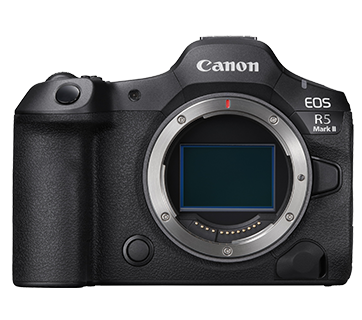
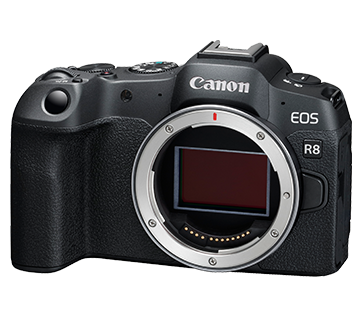
The Canon EOS R5 Mark II and Canon EOS R8 represent two contrasting approaches in Canon's full-frame mirrorless lineup, capturing the interest of both enthusiasts and professionals. The R5 Mark II aims to deliver cutting-edge technology and exceptional image quality, while the R8 focuses on providing great value with robust performance for both photography and videography. Buyers often find themselves torn between these two models based on their specific needs, with the R5 Mark II targeting those requiring superior specifications, and the R8 appealing to those looking for more affordability without significantly sacrificing feature sets. Key differentiators include sensor resolution, autofocus capabilities, video capabilities, and overall weight and dimensions.
Specifications Comparison
Detailed Comparison
Image Quality
When it comes to image quality, the Canon EOS R5 Mark II has a significant edge due to its 45-megapixel sensor compared to the R8's 24-megapixel sensor. The higher resolution of the R5 Mark II allows for more detail capture, making it an ideal choice for landscape photographers and those who require large prints. Additionally, the R5 Mark II has a slightly narrower ISO range of 100-51200, but it is noted for better low-light performance, delivering more noise-free images at higher ISO settings compared to the R8, which has a higher maximum ISO of 102400. Therefore, in terms of maximum detailed image output, the R5 Mark II is superior, delivering exceptional quality even in challenging lighting conditions.
Autofocus System
The autofocus systems of both cameras are robust, but the R5 Mark II features an impressive 5850 autofocus points, allowing for more precise focusing across a wider frame compared to the R8's 1053 autofocus points. This makes the R5 Mark II particularly advantageous for action photography, as it can track subjects more effectively. Furthermore, the R5 Mark II's advanced Dual Pixel CMOS AF ensures quick and accurate focusing even in low-light situations, whereas the R8, while effective, may not match the same level of precision. Consequently, professionals working in dynamic environments would find the R5 Mark II's system beneficial.
Video Capabilities
In video capabilities, both the R5 Mark II and the R8 offer electronic viewfinders and continuous shooting options, but the R5 Mark II excels with superior video specs. It offers high-quality video recording capabilities up to 8K at 30fps, while the R8 supports up to 4K at 60fps. Although the R8's capabilities are admirable for casual work, those aiming for professional-grade video content will appreciate the R5 Mark II's broader selection of resolutions and frame rates, as well as more extensive color gradation options. The R5's stabilization also adds an extra layer of smoothness, enhancing professional usability in video production.
Build & Ergonomics
Both cameras feature a weather-sealed design, making them suitable for outdoor use. However, the R5 Mark II is heavier at 746 grams compared to the R8, which weighs 461 grams, making the R8 more portable and easier to handle for long shooting sessions. The dimensions also reflect this, with the R8 being smaller and more compact. The R5 Mark II possesses a larger screen at 3.2 inches and boasts higher resolution at 2,100,000 dots compared to the R8's 3 inches and 1,620,000 dots. Photographers who prioritize a more substantial grip and screen detail may prefer the R5 Mark II, while those looking for a lighter, more compact option may favor the R8.
Battery & Storage
In terms of battery life, the Canon EOS R5 Mark II provides approximately 540 shots per charge, significantly surpassing the R8's performance, though the specifics of the R8's battery life can vary based on usage. The R5 standard supports high-capacity CFexpress cards in addition to SD UHS-II cards, enabling faster write speeds necessary for high-resolution photos and video. In contrast, the R8 supports only SD cards, which could limit performance in high-speed shooting scenarios or high-resolution video recording. As such, the R5 Mark II offers a clearer advantage for professionals needing high performance in both battery longevity and storage capability.
Value for Money
The Canon EOS R8, priced at $1499, presents a compelling value against the Canon EOS R5 Mark II, which retails at $4299. For amateur photographers and those new to the full-frame mirrorless space, the R8 provides substantial features without a heavy investment, making it an ideal choice for those who value functionality over the highest specifications. While the R5 Mark II delivers advanced capabilities that justify its higher price tag, such as remarkable image quality, superior autofocus, and professional-grade video abilities, many users may find that the R8 sufficiently meets their needs without the additional cost. Therefore, depending on budget and intended use, the R8 may be the more sensible choice for many buyers.
Our Verdict
Overall, the Canon EOS R5 Mark II stands out as the winner when considering its superior image quality, more advanced autofocus system, and higher video capability which suits professional needs exceptionally well. However, the Canon EOS R8 offers significant value and versatility for casual users or those on a budget. In scenarios where top-tier performance is essential, such as professional photography and videography, the R5 Mark II is the clear choice. Conversely, for those seeking an accessible entry point into full-frame photography without sacrificing too much, the R8 makes a strong case.