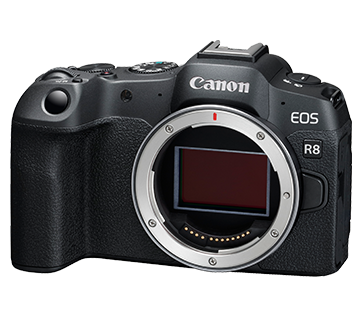
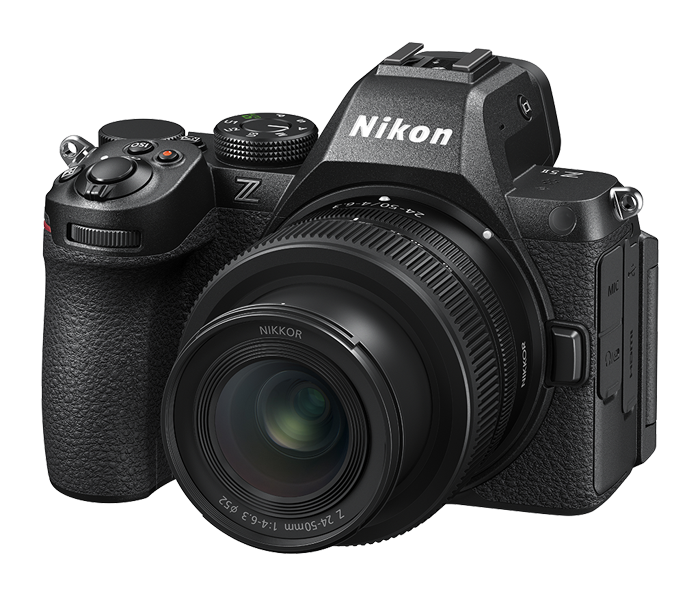
The Canon EOS R8 and Nikon Z5II are two highly regarded mirrorless cameras that cater to different segments of photographers and videographers seeking full-frame performance. Both models offer similar megapixel counts and primary features, making them two common contenders among enthusiasts and professionals. They attract buyers who are evaluating their needs for different styles of photography, like portraits, landscapes, or mixed media, and ultimately deciding based on factors like autofocus performance, video capabilities, ergonomics, and budget considerations.
Specifications Comparison
Detailed Comparison
Image Quality
Both the Canon EOS R8 and Nikon Z5II come equipped with a full-frame sensor, offering 24 megapixels. This resolution is sufficient for most photography needs, delivering sharp images with excellent detail retention. While both sensors have similar performance in low light conditions, Canon's EOS R8 has a broader ISO range of 100-102400, enabling better performance in challenging lighting scenarios. This added flexibility could make it more appealing for event or wildlife photographers who require versatility in varying ambient conditions.
However, the nuanced differences matter less in controlled settings. Both cameras produce rich colors and dynamic range, although the Nikon Z5II may exhibit slightly better dynamic range due to its sensor architecture. Ultimately, the difference is marginal, with both cameras performing admirably under typical circumstances, but the Canon may edge out for high-ISO applications.
Considering all this, the image quality stands strong in both models, with only slight advantages for the R8 in low light and for the Z5II in dynamic range under specific conditions. Therefore, it largely depends on the photographer's priorities.
Autofocus System
The autofocus systems showcase a significant difference between the Canon EOS R8 and Nikon Z5II. The R8 boasts an impressive 1053 autofocus points, with its advanced Dual Pixel technology providing quick and accurate focusing capabilities. This system is particularly advantageous in capturing fast-moving subjects such as during sports photography.
In contrast, the Nikon Z5II's autofocus system operates with 299 points, which, while decent, may not match the vast coverage and speed that Canon has achieved with the R8. However, the Z5II benefits from features like eye detection, which enhances portrait and wildlife photography experiences, but it still falls short in the total number of points compared to the R8.
For users where autofocus performance is critical, especially in fast-paced scenarios, the EOS R8's superior system will likely be more beneficial, giving it the winning edge in this comparison.
Video Capabilities
Both cameras are capable of recording video in 4K at 60p, making them suitable for high-resolution videography. However, the Canon EOS R8 does not feature built-in stabilization, which may be a significant drawback for vloggers or those capturing handheld footage. The absence of stabilization can lead to shaky footage, especially when cinematic movements are required.
The Nikon Z5II, on the other hand, includes a 7.5-stop in-body stabilization feature, which greatly enhances the stabilization of video and allows for more freedom in movement while shooting. This specific feature makes the Z5II a more compelling option for videographers who prioritize smooth recordings.
Overall, while both cameras deliver similar resolutions and frame rates, the built-in stabilization of the Z5II makes it the clear winner for video capabilities, particularly for users planning to shoot dynamic or handheld content.
Build & Ergonomics
When it comes to build quality, both cameras feature weather-sealing, making them robust options for outdoor shooting in various conditions. The Canon EOS R8 is relatively lighter at 461g compared to the Nikon Z5II's 700g, making it easier to carry around for extended periods. The smaller footprint of the R8 also contributes to a more portable travel experience.
In terms of ergonomics, the Nikon Z5II has a slightly larger grip and a 3.2-inch screen with a higher resolution of 2,100,000 dots, providing better visibility in bright conditions. While the Canon features a 3-inch screen with 1,620,000 dots, the difference in resolution may not be significant, but overall usability may tilt in favor of Nikon due to its larger size and integrated stabilization.
In essence, the choice between build and ergonomics may come down to individual preference, but the lighter weight of the Canon EOS R8 may offer an appeal for travelers and casual shooters.
Battery & Storage
Battery life is another important consideration, especially for users who plan on shooting for extended periods. The Nikon Z5II offers a battery life of approximately 330 shots, which allows for longer shooting sessions before needing to replace or recharge batteries. In contrast, the Canon EOS R8 does not have a specified battery life, but real-world reports suggest it may also perform comparably in the field.
As for storage, both cameras utilize SD cards, with no major distinctions. They support UHS-II for faster write speeds, helping facilitate quicker transfer processes, which is advantageous when shooting in continuous mode.
Overall, while both cameras may offer decent performance regarding battery, the Z5II's higher calculated battery life provides an advantage, especially for those who prioritize long-duration shoots.
Value for Money
In terms of pricing, the Canon EOS R8 is available at a lower entry point of $1499, compared to the Nikon Z5II's price of $1699. This affordability makes the R8 particularly attractive for those looking to step into full-frame photography without breaking their budget. The lower price, combined with high autofocus performance, offers a compelling value.
On the other hand, the Nikon Z5II brings advanced stabilization technologies and a larger battery life with its pricing. For users who place significant value on video features and battery longevity, the Z5II may justify its higher cost. Additionally, it may have a better resale value due to its perceived robustness and feature set, which can be appealing for future upgrading considerations.
Consequently, while the Canon EOS R8 presents an attractive value proposition, particularly for entry-level full-frame users, the Nikon Z5II may cater better to professionals who prioritize video performance and battery longevity, making this section ultimately nuanced.
Our Verdict
The overall comparison between the Canon EOS R8 and Nikon Z5II reveals strengths and weaknesses in distinct areas, resulting in a tie. The EOS R8 excels in autofocus performance and value for money, making it an excellent choice for those who prioritize speedy focus and affordability. Meanwhile, the Z5II stands out with its superior video capabilities and battery life, appealing to videographers or those who require extended shooting duration. Ultimately, the decision should depend on the user's specific requirements, with both models providing excellent image quality and build quality.
Canon EOS R8
Nikon Z5II
Also Compare
Frequently Asked Questions
Which camera is better for low light photography?
The Canon EOS R8 features a wider ISO range (100-102400), providing greater flexibility in low light conditions, making it potentially better suited for low light photography.
Is stabilization important for videography?
Yes, built-in stabilization is crucial for achieving smooth video footage, especially for handheld shooting. The Nikon Z5II offers 7.5 stops of stabilization, making it a better choice for videographers.
Which camera is more portable?
The Canon EOS R8 is lighter at 461g compared to the Nikon Z5II at 700g, making it a more portable option, especially for travel and outdoor photography.
How do the autofocus systems compare?
The Canon EOS R8 has 1053 autofocus points, giving it an advantage in fast autofocus compared to the 299 points of the Nikon Z5II, making the R8 better for capturing moving subjects.
What is the price difference between the two models?
The Canon EOS R8 is priced at $1499, while the Nikon Z5II is priced at $1699, making the R8 a more budget-friendly choice without sacrificing essential features.