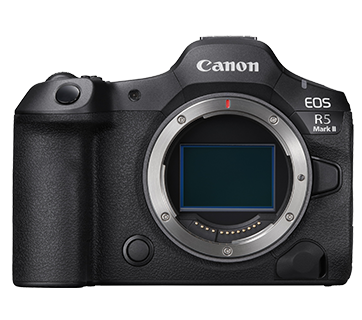
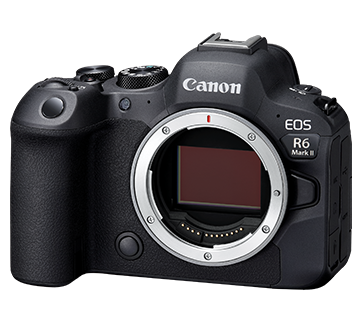
The Canon EOS R5 Mark II and EOS R6 Mark II are two flagship full-frame mirrorless cameras from Canon, designed to cater to the needs of both professional photographers and enthusiasts. While both products share a similar design and build quality, they are tailored for different types of users. The R5 Mark II offers higher megapixels and advanced features that appeal to landscape and studio photographers, while the R6 Mark II provides faster performance and better low-light capabilities, making it an excellent choice for action and event photography. Understanding their differences is essential for potential buyers to make an informed decision based on their specific needs and shooting styles.
Specifications Comparison
Detailed Comparison
Image Quality
The Canon EOS R5 Mark II boasts a higher resolution sensor, offering 45 megapixels compared to the R6 Mark II's 24 megapixels. This significant difference allows for greater detail, cropping flexibility, and high-quality prints, appealing to photographers who prioritize image resolution. In terms of dynamic range and overall image quality, the R5 also tends to deliver superior results, especially in controlled lighting environments. The R6 Mark II, however, has the advantage of superior high ISO performance due to its expanded ISO range, reaching up to 204800 compared to the R5's maximum of 51200. Photographers who frequently work in low-light scenarios may prefer the R6's ability to produce cleaner images at high ISO settings. Overall, while both models deliver excellent image quality, the differences in resolution and ISO performance suggest that the R5 Mark II is better suited for high-resolution needs, while the R6 Mark II excels in low-light conditions.
Autofocus System
Both the Canon EOS R5 Mark II and R6 Mark II feature advanced autofocus systems, but the R5 has an edge with its higher number of autofocus points, totaling 5850, compared to the R6's 4897 points. This extensive coverage enhances the R5's ability to lock focus quickly and accurately across the frame. Additionally, both cameras utilize Dual Pixel CMOS AF II technology, offering reliable subject tracking for moving subjects. The R6 Mark II actually has a higher maximum burst shooting speed at 40 fps, which might benefit sports photographers looking to capture fast action. However, it's essential to note that while the R6 can shoot faster, the more sophisticated autofocus of the R5, combined with its higher resolution, allows for even more precise tracking and focus retention in various scenarios. Therefore, while both options are excellent, the R5's superior autofocus capability paired with high-resolution shooting gives it a slight advantage.
Video Capabilities
Both models excel in video capabilities, but they cater to slightly different user requirements. The R5 Mark II supports 8K video recording, making it a preferred choice for filmmakers needing high-resolution footage for professional projects. It also features advanced video options such as 4K 120p and 10-bit 4:2:2 internal recording, which are particularly appealing for serious videographers. On the other hand, the R6 Mark II can shoot 4K at 60p, which is still excellent for high-quality video, particularly for events or situations that don't require 8K resolution. While both models offer impressive in-body stabilization (8.5 stops for the R5 and 8 stops for the R6), the R6's 4K capabilities may be sufficient for the majority of users, which makes it a more practical option at a lower cost. Thus, video creators may prefer the R5 for its advanced features and higher resolution, while casual videographers might find the R6 more than adequate.
Build & Ergonomics
Both the Canon EOS R5 Mark II and R6 Mark II share identical dimensions and build quality, measuring 138 x 98 x 88 mm and weighing 746 g for the R5 and 670 g for the R6. Both models are weather-sealed, ensuring durability in various environmental conditions. The ergonomic design offers a comfortable grip for long shooting sessions, which is especially beneficial for professional photographers. However, the slight difference in weight might be noticeable for those who plan to carry the camera for extended periods. Both cameras come with electronic viewfinders and vari-angle touch screens, offering flexibility and ease of use for vlogging and photography alike. Given the similar build quality and handling, this category results in a tie as both cameras are equally capable in terms of design and ergonomics.
Battery & Storage
Battery life is another important aspect when comparing these cameras. The Canon EOS R6 Mark II offers a slightly longer battery life at approximately 580 shots compared to the R5 Mark II's 540 shots. However, the R5 is slightly more demanding due to its higher resolution sensor, which can lead to quicker battery depletion during extended shooting sessions. Both cameras support dual card slots, allowing for flexible storage solutions, which is crucial for professional use, particularly during events when backup is necessary. In this category, while the R6's better battery life presents an advantage, the dual card slot capability is equal for both models. Therefore, users should weigh these factors based on their shooting habits and power needs.
Value for Money
Pricing is a crucial factor for potential buyers considering these two cameras. The Canon EOS R5 Mark II is priced at $4299, reflecting its higher resolution and advanced features, making it more suited for professionals seeking superior image quality and extensive capabilities. The R6 Mark II, with a retail price significantly lower, approximately $2999, offers an exceptional value for its performance. It can handle many scenarios effectively, which is appealing for enthusiasts and professionals who may not need the highest specs offered by the R5. Given that both cameras offer outstanding performance relative to their price points, the R6 Mark II clearly stands out as the more affordable and value-oriented option, particularly for those who prioritize functionality over resolution.
Our Verdict
Overall, the Canon EOS R5 Mark II takes the crown for its superior image quality and advanced features, making it the ideal choice for those who require the utmost in detail and performance, especially in studio and landscape photography. However, the Canon EOS R6 Mark II is an excellent option for users who prioritize a more compact camera with high-speed capabilities and versatile shooting options at a more budget-friendly price. Ultimately, the decision hinges on individual needs, with the R5 excelling in resolution-focused tasks and the R6 being a capable all-rounder for a broader audience.
Canon EOS R5 Mark II
Canon EOS R6 Mark II
Also Compare
Frequently Asked Questions
What are the main differences between the R5 Mark II and R6 Mark II?
The Canon EOS R5 Mark II has a 45MP sensor compared to the R6 Mark II's 24MP, offers 8K video recording, and features more autofocus points. The R6 Mark II excels in low-light capabilities with a broader ISO range and is more affordable.
Is the Canon R6 Mark II better for low-light photography?
Yes, the R6 Mark II has superior high ISO performance, making it more suitable for low-light conditions without compromising image quality.
Which camera is better for video production?
The R5 Mark II is better suited for high-end video production with its 8K capabilities and extensive video options, while the R6 Mark II still delivers excellent 4K performance.
How does the battery life compare between the two models?
The R6 Mark II has a slightly longer battery life at 580 shots compared to the R5 Mark II's 540 shots, which may benefit users who shoot extensively without frequent charging.
Which camera offers better value for money?
The R6 Mark II is more affordable and provides great performance for the price, making it an excellent value for enthusiasts and those who don't need the highest specifications offered by the R5.