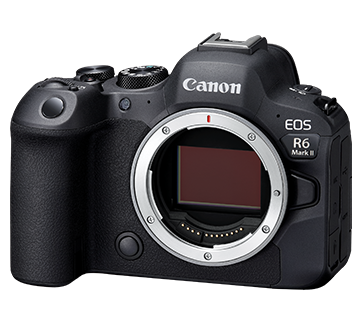
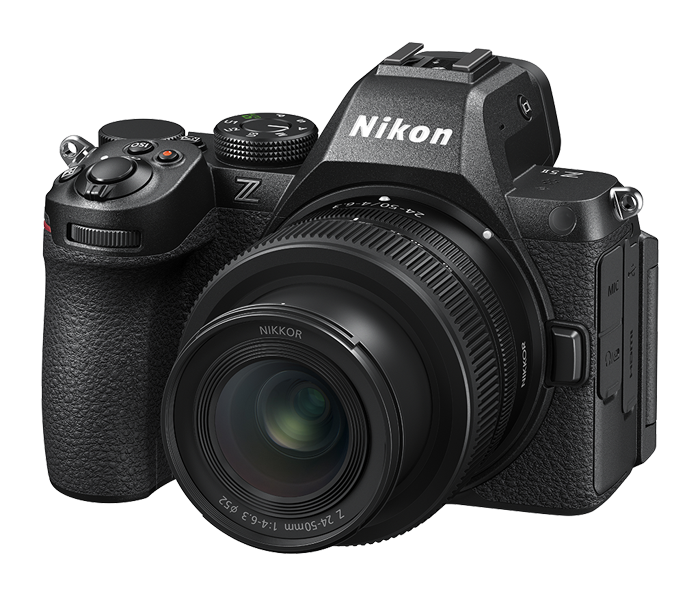
The Canon EOS R6 Mark II and Nikon Z5II are two standout full-frame mirrorless cameras designed to meet the needs of both enthusiasts and professionals. These cameras are often compared because they both offer a captivating blend of high-quality images, robust performance, and impressive features. Photographers looking to upgrade or switch systems might find themselves choosing between these two models based on their specific needs, whether for event photography, wildlife shooting, or video production. Key differentiators include autofocus capabilities, image stabilization, build quality, and the overall user experience, which can greatly influence a buyer's decision.
Specifications Comparison
Detailed Comparison
Image Quality
Both the Canon EOS R6 Mark II and Nikon Z5II boast a 24-megapixel full-frame sensor, resulting in excellent image quality with dynamic range and detail. However, the Canon model offers a native ISO range of 100-102400, expandable to 204800, allowing for better performance in low-light situations. On the other hand, while the Nikon Z5II does not have an expandable ISO range, its sensors are known for producing sharp images with accurate colors, thanks to Nikon's processing algorithms. The difference in noise performance at higher ISO settings can be noticeable, giving Canon an edge for photographers who often work in challenging lighting conditions. Nevertheless, both cameras produce high-quality images suitable for various applications, making this aspect somewhat of a tie in practical use, depending on specific shooting conditions.
Autofocus System
The autofocus system is a critical area for both cameras. The Canon EOS R6 Mark II outshines the Nikon Z5II with an astonishing 4897 autofocus points, compared to the Z5II's 299. This extensive coverage allows for more accurate and reliable tracking of subjects, especially in fast-paced environments. Canon's Dual Pixel autofocus technology is also highly regarded for its speed and accuracy, particularly in continuous shooting modes. While the Nikon Z5II offers a solid autofocus system, it falls behind in the sheer number of points and capabilities. Therefore, for action shots, wildlife photography, or any scenario demanding swift and precise focusing, the Canon EOS R6 Mark II is clearly a better choice.
Video Capabilities
When it comes to video capabilities, both cameras provide 4K video recording at 60 frames per second, which is excellent for videographers. The Canon EOS R6 Mark II, however, also supports high-speed continuous shooting up to 40 fps, making it a preferred choice for capturing fast-moving subjects in video format. Additionally, the R6 Mark II's in-body image stabilization (IBIS) offers 8 stops of stabilization compared to the Z5II's 7.5 stops, which can significantly improve handheld shooting experiences. Both cameras utilize electronic viewfinders that make framing shots a breeze, but the R6 Mark II's performance and features give it a distinct advantage for those prioritizing video work.
Build & Ergonomics
In terms of build quality and ergonomics, both the Canon EOS R6 Mark II and Nikon Z5II are well-constructed with weather-sealing, making them suitable for various environmental conditions. The R6 Mark II weighs slightly less at 670 grams compared to the Z5II's 700 grams, which may factor into portability considerations for photographers on the move. The Canon has dimensions of 138 x 98 x 88 mm, while the Nikon's 134 x 101 x 72 mm design feels more compact. The Z5II features a slightly larger 3.2-inch screen with 2,100,000 dots, providing a resolution advantage over Canon's 3-inch screen with 1,620,000 dots. Therefore, while both cameras are robust, the slight advantages in size and screen resolution go to the Nikon Z5II, making it more ergonomic for prolonged use.
Battery & Storage
Battery life is a crucial aspect for photographers planning longer shoots. The Canon EOS R6 Mark II offers an impressive 580 shots per charge, which is significantly higher than the Nikon Z5II's 330 shots. This difference can be critical in situations where access to power sources is limited. Additionally, both cameras support dual card slots, enhancing storage capabilities. The Canon supports UHS-II SD cards, ensuring faster data write speeds, while Nikon has included compatibility with both UHS-I and UHS-II, which could slow down continuous shooting for those using UHS-I cards. Consequently, for users who need extensive battery life and faster storage performance, the Canon EOS R6 Mark II is the clear winner.
Value for Money
In terms of pricing, the Nikon Z5II is priced at $1699, while the Canon EOS R6 Mark II does not have a specified price. Generally, Canon's mirrorless lineup has been positioned at a slightly higher price point, reflecting its advanced features and specifications. From a value perspective, buyers need to weigh the price against what each camera offers in terms of performance and features. While the Z5II may appeal to budget-conscious buyers looking for a full-frame option with solid capabilities, the R6 Mark II's superior autofocus and video features justify its potentially higher cost for professional users. Thus, while Nikon may have an initial price advantage, Canon may offer better long-term value depending on user needs.
Lens Ecosystem
Both Canon and Nikon have robust lens ecosystems, but Canon's RF lens lineup is considerably more extensive and features many high-performing lenses designed specifically for their mirrorless systems. Canon's lenses often integrate advanced optical technology that enhances overall image quality. Nikon's Z mount system is also impressive and continues to grow, but it has fewer options available compared to Canon at present. Therefore, for photographers who anticipate needing a wide variety of lenses, Canon's ecosystem currently offers a stronger array, particularly in terms of specialty and high-performance lenses. This difference can impact long-term satisfaction and versatility in different shooting scenarios.
Our Verdict
Overall, the Canon EOS R6 Mark II emerges as the winner in this comparison due to its superior autofocus capabilities, battery life, and extensive lens ecosystem, making it a more versatile choice for professional photographers and videographers. While the Nikon Z5II competes well, especially in ergonomics and budget considerations, it lacks some of the advanced features that give Canon an edge for serious performance. Buyers should consider their specific needs, but for those prioritizing speed, video capabilities, and a broader lens selection, the Canon EOS R6 Mark II is the smarter investment.
Canon EOS R6 Mark II
Nikon Z5II
Also Compare
Frequently Asked Questions
Which camera is better for low-light photography?
The Canon EOS R6 Mark II is better for low-light photography due to its superior ISO range, allowing for cleaner images at higher ISO settings compared to the Nikon Z5II.
How do the autofocus systems compare for fast action photography?
The Canon EOS R6 Mark II has a significant advantage with 4897 autofocus points versus the 299 in the Nikon Z5II, making it better suited for fast action photography and tracking moving subjects.
Is one camera better for video than the other?
Yes, the Canon EOS R6 Mark II wins for video capabilities, offering better stabilization, faster continuous shooting rates, and an established reputation in the videography community.
Which camera has better battery life?
The Canon EOS R6 Mark II offers significantly better battery life, rated for 580 shots, compared to the Nikon Z5II's 330 shots, making it a better option for longer shooting sessions.
What about lens selection for each camera?
The Canon EOS R6 Mark II has access to a more extensive selection of RF lenses, which are optimized for mirrorless use, while the Nikon Z5II's lens lineup, though growing, is currently less comprehensive.