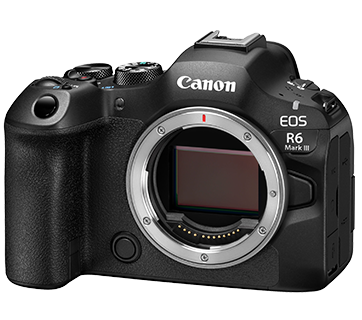

The Canon EOS R6 Mark III and the Sony A9 III are two of the most sought-after full-frame mirrorless cameras available, frequently compared by both enthusiasts and professionals. While both systems offer high-end features, they cater to slightly different user preferences, making the choice between them a crucial decision for photographers and videographers alike. Key differentiators include autofocus capabilities, video performance, and overall design ethos, which can greatly impact a user's shooting experience and preferred photography style.
Specifications Comparison
Detailed Comparison
Image Quality
Both the Canon EOS R6 Mark III and the Sony A9 III utilize full-frame sensors, but there are nuances to consider. The Canon R6 Mark III boasts a sensor size of 35.9 x 23.9 mm with a broad ISO range of 100-102400 (expandable to 204800), enabling excellent low-light performance and versatility. On the other hand, the Sony A9 III features a slightly larger full-frame sensor (36 x 24 mm) with 25 megapixels, which, while capable, may not capture as much detail in low-light environments compared to Canon's expandability, particularly when pushing the boundaries of ISO. Photographers requiring finer image detail might lean towards the Canon for its ISO capabilities.
Autofocus System
The autofocus capabilities of both cameras are impressive, yet there are key differences. The Canon EOS R6 Mark III features an astounding 4897 autofocus points, enabling precise tracking across the frame, which is particularly advantageous in fast-paced shooting scenarios such as wildlife or sports photography. The Sony A9 III also has robust autofocus features but with a slightly lower maximum frame rate at 120 fps; still, it excels in continuous tracking with its advanced Real-time Eye AF technology. For photographers who heavily rely on autofocus performance, the high number of points in the R6 Mark III gives it a significant edge in certain situations.
Video Capabilities
When it comes to video capabilities, both the Canon EOS R6 Mark III and the Sony A9 III excel with 4K video recording at 120 fps. However, the R6 Mark III's standout feature is its superior in-body stabilization, rated at 8.5 stops, which offers additional stability for handheld shooting, particularly during dynamic scenes. The A9 III has a slightly lower stabilization rating of 8 stops. Consequently, for videographers who require smooth footage without the reliance on gimbals, the extra stabilization in the Canon system could be a deciding factor. Both cameras maintain high-quality output, but the usability factors provide the R6 Mark III a slight advantage.
Build & Ergonomics
In terms of build quality and ergonomics, both cameras are well-designed with durability in mind, featuring weather sealing that allows for shooting in adverse conditions. The Canon EOS R6 Mark III measures 138 x 98 x 88 mm and weighs 699 g, which is slightly heftier than the A9 III, which is 136 x 97 x 83 mm and weighs 617 g. This difference can be notable during longer shooting sessions. The layouts are intuitive in both systems, and the A9 III's larger 3.2-inch screen allows for a slightly easier viewing experience, especially in bright environments. Ultimately, the right choice here may come down to personal preference regarding size and shape.
Battery & Storage
Battery life is an important consideration for any photographer, particularly for those who shoot continuously or during long events. The Canon EOS R6 Mark III offers an impressive battery life, enabling longer shooting sessions without frequent swaps. Additionally, it supports dual card slots, providing ample storage that is essential for professional shooters who require redundancy. The Sony A9 III also performs admirably in battery life and features dual card slots as well. In practical terms, both are likely to meet the needs of serious users, warranting a tie in this category, as both options provide ample endurance for extended shooting.
Value for Money
Priced at $2799, the Canon EOS R6 Mark III offers a suite of advanced features that appeal to both professionals and advanced hobbyists. While the Sony A9 III does come with premium features and essentially provides a near-professional level of performance, its construction and capabilities justify its pricing for serious sports and event photographers. Assessing value involves the specific needs of the photographer: those needing an extensive autofocus system may find the R6 Mark III more appealing for its price point, while others might prioritize speed and responsiveness found in the A9 III. This introduces an important consideration in terms of balancing performance against budget.
Our Verdict
Overall, the Canon EOS R6 Mark III emerges as the winner in this comparison, thanks in large part to its exceptional autofocus capabilities, superior in-body stabilization, and flexible ISO performance. These features make it particularly suitable for wedding and event photographers who require quick response times in unpredictable conditions. Conversely, the Sony A9 III is an excellent choice for sports and action photography enthusiasts who prioritize frame rates and quick autofocus over other factors. Ultimately, photographers should consider their specific needs in terms of shooting style, as both cameras hold their ground admirably in the competitive mirrorless landscape.
Canon EOS R6 Mark III
Sony A9 III
Also Compare
Frequently Asked Questions
Which camera is better for low-light shooting?
The Canon EOS R6 Mark III offers an ISO range that expands up to 204800, providing better low-light performance compared to the A9 III, making it the preferred option for low-light photography.
Can both cameras shoot 4K video at high frame rates?
Yes, both the Canon EOS R6 Mark III and the Sony A9 III can shoot 4K video at up to 120 fps, allowing for high-quality video capture in both systems.
Which camera is lighter?
The Sony A9 III is lighter at 617 g, compared to the Canon EOS R6 Mark III, which weighs 699 g. This could matter during long shooting sessions.
What are the main differences in their autofocus systems?
The Canon R6 Mark III boasts 4897 autofocus points for precise tracking, whereas the Sony A9 III is known for its Real-time Eye AF technology. While both systems are effective, Canon's larger number offers more coverage.
How important is in-body stabilization for video shooting?
In-body stabilization is crucial for eliminating camera shake during video capture. The Canon EOS R6 Mark III's 8.5 stops of stabilization provide smoother footage compared to the 8 stops in the A9 III, making it a better option for handheld video work.