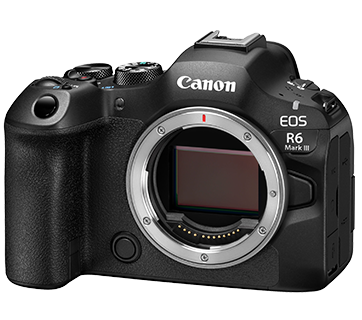
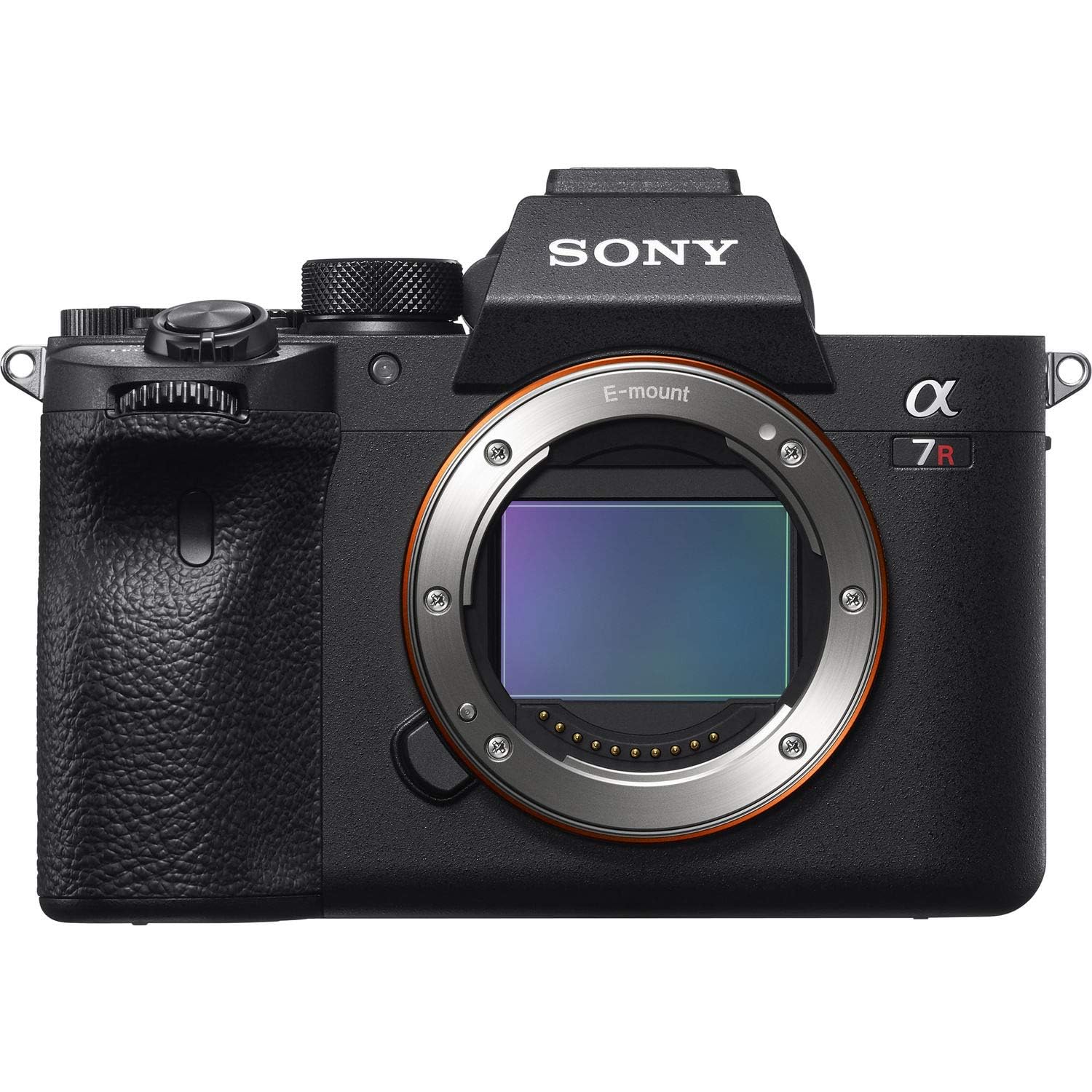
The Canon EOS R6 Mark III and Sony A7R IV are two highly regarded full-frame mirrorless cameras that attract both professional photographers and enthusiasts looking to upgrade their gear. Often compared due to their high performance, both models cater to different styles of photography, from portraits to landscapes, and even high-speed action shots. Buyers may find themselves choosing between the advanced autofocus and higher frame rates of the Canon versus the remarkable image resolution and detailed sensor features offered by the Sony.
Specifications Comparison
Detailed Comparison
Image Quality
Image quality is typically assessed by the sensor capabilities and overall resolution. The Sony A7R IV boasts an impressive 61 megapixels, providing exceptionally high-resolution images suitable for large prints and extensive cropping without loss of detail. In contrast, the Canon EOS R6 Mark III features a lower but still substantial resolution that balances speed and quality, emphasizing versatility over sheer pixel count.
The difference in sensor size also attributes to image quality. While both are full-frame sensors, the slight variations in design (35.9 x 23.9 mm for Canon and 35.7 x 23.8 mm for Sony) play a role in dynamic range and low-light performance. The Canon's native ISO range of 100-102400 (expandable up to 204800) presents a significant advantage for low-light shooting, allowing photographers to capture cleaner images compared to the A7R IV's ISO 100-32000 range (expandable to 50-102800). This makes the Canon a preferred choice for those who frequently shoot in challenging lighting conditions.
Autofocus System
Autofocus capabilities are critical for capturing fast-moving subjects and ensuring sharp images. The Canon EOS R6 Mark III boasts an expansive autofocus system with 4897 points, providing extensive coverage across the frame, which contributes to its rapid and accurate focusing, even in dynamic situations. This is particularly advantageous for sports and wildlife photographers.
On the other hand, the Sony A7R IV, with its 567 autofocus points, still maintains robust performance, especially given its eye-tracking capabilities for both humans and animals. While its autofocus system is slightly less extensive than Canon's, many users praise it for reliability and speed in various shooting conditions. Overall, while both systems are impressive, the Canon's greater number of points and faster shooting speeds give it an edge in autofocus effectiveness.
Video Capabilities
When it comes to video capabilities, the Canon EOS R6 Mark III shines with its ability to shoot 4K at 120 frames per second, making it an excellent choice for videographers looking to create high-quality, slow-motion footage. Its video features are designed for filmmakers, offering extensive in-camera tools and high frame rates that cater to cinematic content creation.
Conversely, the Sony A7R IV offers 4K video but limits it to 30 frames per second, which may not satisfy filmmakers requiring high-speed capture. While its video quality remains high, the frame rate hinder tactile dynamic work. In terms of capabilities, the Canon is decidedly more favorable for videography.
Build & Ergonomics
The build quality of both cameras is excellent, with robust weather sealing that promotes durability in various shooting conditions. The Canon EOS R6 Mark III weighs slightly more at 699 g compared to the Sony A7R IV at 665 g, which may be a consideration for photographers conscious of gear weight during prolonged shoots.
In terms of ergonomics, both models come with electronic viewfinders, but the Canon provides a slightly clearer experience with a higher resolution screen at 1,620,000 dots versus Sony's 1,440,000 dots. The layout and accessibility of controls may also vary with personal preference coming into play, which makes it crucial for buyers to handle both models to discern which feels better in hand. Therefore, the choice here can be subjective based on user comfort and handling.
Battery & Storage
Battery life is an essential factor for photographers who shoot for extended periods without interruption. The Sony A7R IV has an impressive battery life rated for approximately 670 shots, providing reliability during long sessions. In contrast, while the Canon EOS R6 Mark III does not specify a shot count, its energy efficiency has considerably improved with newer technology, yet it may not outpace Sony's longevity in actual usage.
In terms of storage, both cameras support dual card slots, which is beneficial for backup and managing different file types. However, the choice of card compatibility (CFexpress for Canon and SD for Sony) can impact performance with high-speed recording, especially when working with 4K video. Overall, while Sony takes the advantage in battery life, Canon's storage flexibility offers a solid alternative.
Value for Money
Pricing is an important factor when choosing between these two models. The Canon EOS R6 Mark III is priced at $2799, which represents a strong value for the features offered, particularly in video capabilities and autofocus. Its extensive feature set is more geared towards those who frequently shoot both photos and videos, thus providing a robust dual-functional camera.
On the other hand, the Sony A7R IV is priced higher at $3500. Although it excels in image quality with its high-resolution sensor, its video features and autofocus system do not match the competitive edge found in the Canon R6 Mark III. For buyers focused on still photography, Sony's offering may justify the price, particularly for resolution needs, but overall, the Canon emerges as a more appealing option for those seeking multidisciplinary capabilities without as steep an investment.
Our Verdict
The Canon EOS R6 Mark III comes out as the overall winner due to its superior autofocus, enhanced video capabilities, and compelling value proposition. It appeals to a broader audience, particularly photographers and videographers who demand versatility and performance under varied conditions. While the Sony A7R IV is remarkable for its high-resolution imaging, it is somewhat limited in speed and video capabilities. Ultimately, buyers should consider their primary usage-if high-resolution stills are paramount, the A7R IV remains a strong choice but for dynamic versatility, the Canon holds sway.
Canon EOS R6 Mark III
Sony A7R IV
Also Compare
Frequently Asked Questions
Which camera is better for low-light photography?
The Canon EOS R6 Mark III is the superior choice for low-light photography due to its broader ISO range and advanced stabilization system, making it easier to shoot at slower shutter speeds without sacrificing image quality.
Is the Canon EOS R6 Mark III better for video than the A7R IV?
Yes, the Canon EOS R6 Mark III excels in video capabilities, allowing for 4K recording at 120 fps, while the A7R IV is limited to 4K at 30 fps, making the Canon more suitable for videographers.
How do the autofocus systems compare?
The Canon EOS R6 Mark III has a larger number of autofocus points (4897) compared to the A7R IV's 567, providing broader coverage and potentially faster focusing in dynamic situations.
What is the main advantage of the A7R IV?
The main advantage of the Sony A7R IV is its high-resolution 61 MP sensor, which is ideal for photographers requiring detailed images for large prints or extensive cropping.
Which camera offers better value for money?
The Canon EOS R6 Mark III offers better value for money, priced lower while providing advanced features that cater to both photography and videography, unlike the higher-priced Sony A7R IV, which is more geared towards still photography.