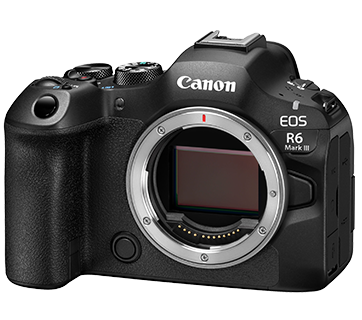
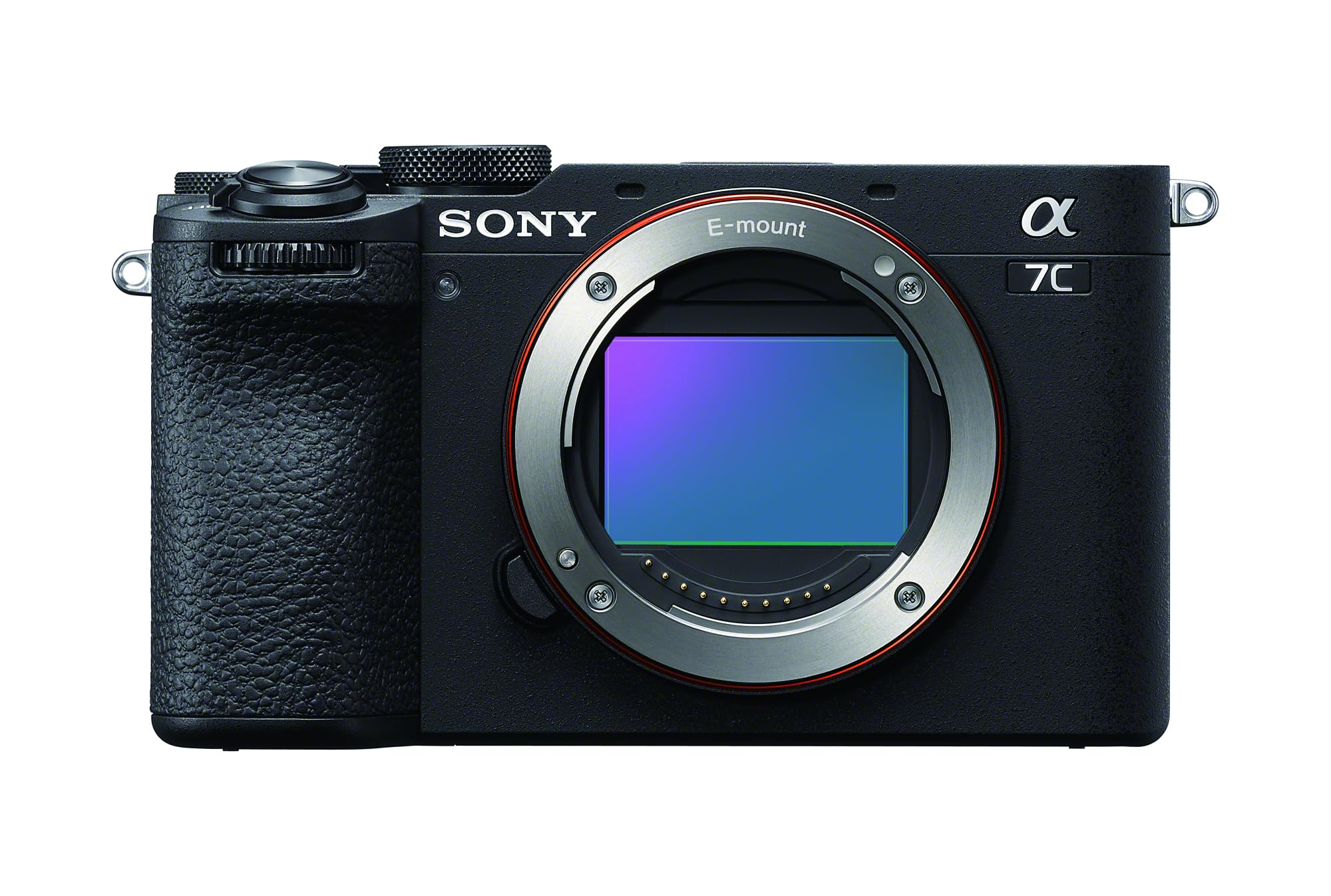
The Canon EOS R6 Mark III and Sony A7C II are two of the most talked-about full-frame mirrorless cameras designed for both photography enthusiasts and professionals alike. Buyers often find themselves choosing between these two models given their robust feature sets, advanced technology, and reputations from their respective brands. The main differentiators lie in their autofocus capabilities, video specifications, image quality, and overall ergonomics, making this comparison crucial for prospective users with specific needs in mind.
Specifications Comparison
Detailed Comparison
Image Quality
The Canon EOS R6 Mark III boasts a full-frame sensor measuring 35.9 x 23.9 mm, offering exceptional low-light performance with an ISO range from 100 to 102400, expandable to 204800. This capability allows for stunning dynamic range and depth, making it ideal for portrait and landscape photography. The sensor design is optimized for high detail retention across various lighting conditions. In contrast, the Sony A7C II features a slightly smaller full-frame sensor size of 35.6 x 23.8 mm, with a resolution of 33 megapixels. While the A7C II also provides an extensive ISO range from 100 to 51200, expandable to 50-204800, the overall image quality in terms of resolution and detail may slightly favor the R6 Mark III in specific scenarios, especially in low light or high-contrast environments. However, both cameras produce excellent image quality, catering to differing photographic styles. Additionally, both systems are capable of generating high-quality JPEG and RAW files, providing ample editing overhead. The R6 Mark III, with its superior low-light performance, combines well with Canon's renowned color science, which many photographers appreciate. Given the exceptional low-light performance and dynamic range of the R6 Mark III, this category is won by Canon.
Autofocus System
The autofocus systems on both the Canon EOS R6 Mark III and Sony A7C II are cutting-edge, but they exhibit different strengths. The R6 Mark III is furnished with a staggering 4897 autofocus points, offering near-complete coverage across the frame. This extensive point array allows for precise subject tracking, benefiting fast-moving scenes or wildlife photography. On the other hand, the A7C II employs 759 autofocus points with phase detection, which is highly effective in various lighting situations. Sony's renowned Real-Time Eye autofocus is impressive, particularly for portrait photography and tracking subjects. While 759 points may appear fewer than Canon's offering, many users find Sony's focusing system to be incredibly reliable, especially in varied conditions. Despite the fewer autofocus points, Sony's A7C II edges into seamless performance, while Canon's R6 Mark III stands out in scenarios needing broader and more detailed coverage. Overall, the Canon's extensive points provide versatility, allowing it to excel in dynamic situations. Due to its wider array of focus points, Canon takes this section.
Video Capabilities
When it comes to video performance, the Canon EOS R6 Mark III shines with its ability to shoot 4K video at up to 120p, making it an excellent choice for filmmakers seeking smooth, high-frame-rate footage. It also offers 10-bit 4:2:2 color sampling internal recording, providing filmmakers and content creators the flexibility to achieve professional-level quality in their projects. Conversely, the Sony A7C II supports 4K video at a maximum of 60p, which, while not as high as the R6 Mark III, still provides good quality video suitable for most creators. Sony cameras are known for their strong video codecs and handling, which provides a solid option for videographers who may prioritize other features outside of frame rate. While both models include electronic stabilization, the R6 Mark III's in-body stabilization system rated at 8.5 stops outperforms the A7C II's 7 stops, resulting in steadier handheld shots, especially in action sequences or lower light environments. For videographers who prioritize high frame rates and stabilization, the R6 Mark III is more appealing, making it the winner in this category.
Build & Ergonomics
Both cameras offer weather-sealed bodies, making them suitable for challenging environments. However, the Canon EOS R6 Mark III is slightly bulkier, weighing 699g, and measures 138 x 98 x 88 mm, providing a more robust grip which many users find comfortable for prolonged use. This is particularly advantageous for those who spend hours shooting in the field. The Sony A7C II, designed for portability, weighs just 514g and is smaller, measuring 124 x 71 x 63 mm. This compactness makes it a great choice for travel and street photography, appealing to photographers who prioritize lightweight gear. However, this can make the handling a bit less stable, especially when using larger lenses. Both models come with electronic viewfinders, but the R6 Mark III's viewfinder resolution is superior, enhancing the overall shooting experience. Additionally, both feature tilting LCD screens for flexible shooting angles, however, the higher resolution on the R6 Mark III's screen improves clarity. Thus, in terms of ergonomics and grip, the R6 Mark III edges out slightly ahead, making it a better choice for long sessions and heavy lens use.
Battery & Storage
Battery life is an essential aspect for photographers, especially those who shoot events or work in remote areas. The Sony A7C II offers impressive battery life, capable of capturing approximately 540 shots on a single charge, thanks to its efficiency in power management. This extended battery life makes it suitable for long shooting sessions without the worry of running out of power. Contrarily, the Canon EOS R6 Mark III, although it has solid power consumption, does not quite match the A7C II in this aspect. Users might find themselves needing to swap batteries more often during extensive shoots, depending on usage requirements. Storage is pretty standard on both cameras, utilizing SD cards. However, the R6 Mark III can leverage CFexpress cards for higher speed and better performance, particularly beneficial when handling 4K 120p video and burst shooting. In terms of battery life and power efficiency, the Sony A7C II takes the lead.
Value for Money
Pricing can be a determining factor for many buyers. The Canon EOS R6 Mark III is priced at $2799, which reflects its superior features, particularly for those invested in high-quality video and photography. While the price point positions it as a premium option, the enhanced capabilities can justify this investment for serious creative professionals. On the other hand, the Sony A7C II is available at $2200, making it a strong contender for those seeking a capable full-frame camera without breaking the bank. Its combination of good features at a more reasonable price appeals strongly to enthusiasts and budding creators. For entry-level users who prioritize compactness and straightforward usability in a full-frame format, the A7C II provides exceptional value. However, for those who require high-end features, the R6 Mark III represents a more top-tier investment with advanced capabilities. In terms of overall value for money with respect to features offered, the Sony A7C II wins this aspect.
Our Verdict
While both cameras offer impressive features catering to different types of photographers and videographers, the Canon EOS R6 Mark III emerges as the overall winner due to its superior autofocus system, high-resolution video capabilities, and exceptional image quality, particularly in low light. However, the Sony A7C II remains an excellent choice for those who prioritize compactness and seek notable battery life without compromising usability. Ultimately, the right choice depends on the specifics of the user's needs, whether prioritizing cinematic video production or portability and cost efficiency.
Canon EOS R6 Mark III
Sony A7C II
Also Compare
Frequently Asked Questions
Which camera has better low-light performance?
The Canon EOS R6 Mark III has superior low-light performance due to its higher ISO capabilities and sensor design compared to the Sony A7C II.
Is the volume of autofocus points important?
Yes, a higher number of autofocus points like those on the R6 Mark III can aid in achieving better focus accuracy, especially on moving subjects.
Which camera is better for video production?
The Canon EOS R6 Mark III wins for video with 4K 120p capabilities, while the A7C II is limited to 4K 60p.
Are both cameras weather-sealed?
Yes, both the Canon EOS R6 Mark III and the Sony A7C II are weather-sealed, making them suitable for various environmental conditions.
How does battery life differ between the two cameras?
The Sony A7C II offers a battery life of approximately 540 shots, which is better compared to the Canon EOS R6 Mark III, requiring more frequent battery changes.