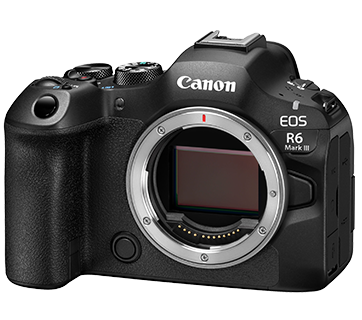
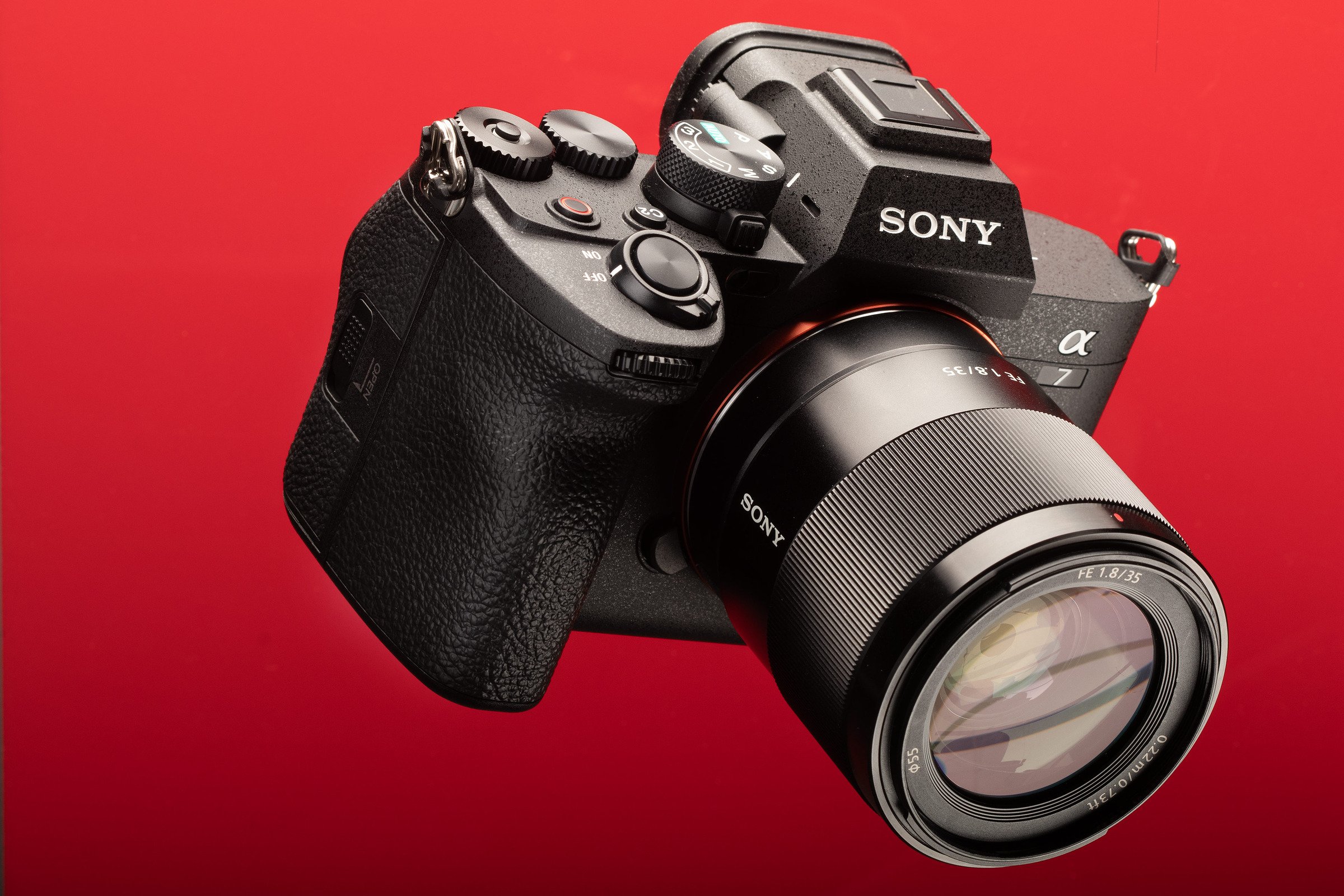
The Canon EOS R6 Mark III and the Sony A7 IV are two standout options in the full-frame mirrorless camera market, appealing to both enthusiasts and professionals alike. These cameras are commonly compared due to their advanced capabilities, strong video features, and exceptional image quality, making them suitable for a wide range of shooting situations. Photographers and videographers are often faced with the decision between these two models, each offering distinct advantages that might cater to different preferences and shooting styles. Key differentiators include autofocus performance, video recording specifications, and ergonomics which can significantly impact user experience.
Specifications Comparison
Detailed Comparison
Image Quality
Both the Canon EOS R6 Mark III and the Sony A7 IV offer impressive image quality, yet they take unique paths to achieve this. The Canon features a full-frame sensor size of 35.9 x 23.9 mm and is capable of ISO range from 100 to 102400, which expands up to 204800, allowing for exceptional low-light performance and high-resolution output. The A7 IV's full-frame sensor size is slightly smaller at 35.6 x 23.8 mm, and also boasts a good ISO range of 100 to 51200 (expandable to 50-204800), but it comes with a higher megapixel count of 33, which may facilitate deeper cropping and higher detail retention in expansive prints.
In real-world usage, both cameras perform exceptionally well in varying lighting conditions, but their output characteristics can differ. The Canon EOS R6 Mark III is often praised for its smooth bokeh and color rendition, making it appealing for portrait and event photography. In contrast, the Sony A7 IV tends to produce slightly sharper images with increased detail due to its higher resolution, which is beneficial for landscape and commercial work. Thus, while both cameras perform admirably, preferences may shift based on the desired use-case scenario.
Autofocus System
Autofocus performance is a critical consideration for continuous shooting scenarios, and here the Canon EOS R6 Mark III shines with its astounding 4897 autofocus points. This advanced system allows for extremely precise focusing capabilities, particularly in dynamic scenes or fast-moving subjects. Canon's Dual Pixel AF technology further enhances this by providing smooth tracking and excellent face/eye detection functionality.
On the other hand, Sony A7 IV also excels with its 759 autofocus points, providing fast and reliable focusing capabilities, particularly in still photography. However, Canon's autofocus system has the edge in terms of overall quantity and tracking performance. Users who prioritize action photography, such as sports or wildlife, may find the Canon's extensive point system more beneficial, whereas Sony's autofocus is robust enough for general-use scenarios. Therefore, while both systems are top-notch, the Canon EOS R6 Mark III is particularly suited for users needing high-performance autofocus.
Video Capabilities
When it comes to video capabilities, the Canon EOS R6 Mark III significantly outperforms the Sony A7 IV. It supports 4K video recording at a stunning 120 frames per second, which not only allows for high-quality footage but enables smooth slow-motion effects that videographers find invaluable. Additionally, Canon implements robust in-body stabilization (8.5 stops) which is instrumental in achieving steady shots during handheld shooting.
Conversely, the Sony A7 IV is limited to 4K 60p video recording, which is still very capable but falls short of the R6 Mark III's offerings. Its in-body stabilization sits at 5.5 stops, which is competent but may struggle more in action-oriented video shooting, thereby potentially requiring additional stabilizing equipment for the best results. In conclusion, if video performance is a critical aspect of your decision, the Canon EOS R6 Mark III takes the lead.
Build & Ergonomics
When evaluating build quality and ergonomics, both models are well-constructed and weather-sealed, suitable for challenging environments. The Canon EOS R6 Mark III measures 138 x 98 x 88 mm and weighs 699g, making it slightly bulkier, which some users may find beneficial for stability.
On the flip side, the Sony A7 IV is more compact at 131 x 96 x 80 mm and lighter at 659g, lending itself to portability without sacrificing significant performance. The design aspects include ergonomic grips and layouts favoring usability, which can affect shooting comfort during extended use. Users who prioritize a lightweight and compact design may lean towards the A7 IV, while those who appreciate a more substantial body may prefer the R6 Mark III. Both cameras offer excellent build quality, yet personal preference on handling will dictate the better option for a given user.
Battery & Storage
Battery life is an essential factor for photographers and videographers who shoot extensively. The Sony A7 IV boasts a battery life of approximately 580 shots per charge, which is commendable for a mirrorless camera in its class. This endurance is crucial during long shoots or when traveling, reducing the need for frequent battery changes.
In contrast, while the Canon EOS R6 Mark III does not specify battery life in terms of shots, it utilizes a similar battery technology. Nevertheless, the Canon's overall system may drain the battery faster due to its high-performance capabilities, especially when utilizing its advanced video features. Storage options are comparable for both systems, with both allowing for dual card slots which accommodate SD and CFexpress cards for flexibility in storage and performance. Based on the documented battery life, the Sony A7 IV has a slight advantage here.
Value for Money
In terms of pricing, the Canon EOS R6 Mark III retails at $2799, positioned as a premium offering. This pricing might reflect its superior features, especially in video capabilities, AF performance, and stabilization, making it a worthwhile investment for professionals and serious videographers seeking advanced functionality.
The Sony A7 IV, at $2499, presents a more budget-friendly option while still delivering high quality and performance. For users who prioritize photography or have simpler video needs, this could represent a better price-to-performance ratio. The decision here often comes down to personal needs - users keen on video and high-end specifications may prefer the R6 Mark III, whereas those who need a less expensive camera without the utmost focus on video technology may opt for the A7 IV. Therefore, value will hinge on individual priorities.
Our Verdict
Overall, the Canon EOS R6 Mark III emerges as the winner due to its superior autofocus system, advanced video capabilities, and impressive stabilization, making it a robust choice for creatives focused on high-quality video and action photography. Users seeking cutting-edge features will find their needs met with the R6 Mark III. However, the Sony A7 IV stands out as a more accessible option, offering solid performance for photography while saving money. For those who prioritize battery life and a compact design, the A7 IV serves as a fantastic alternative.