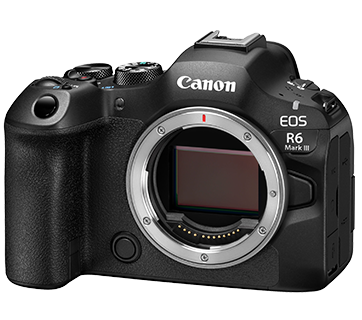
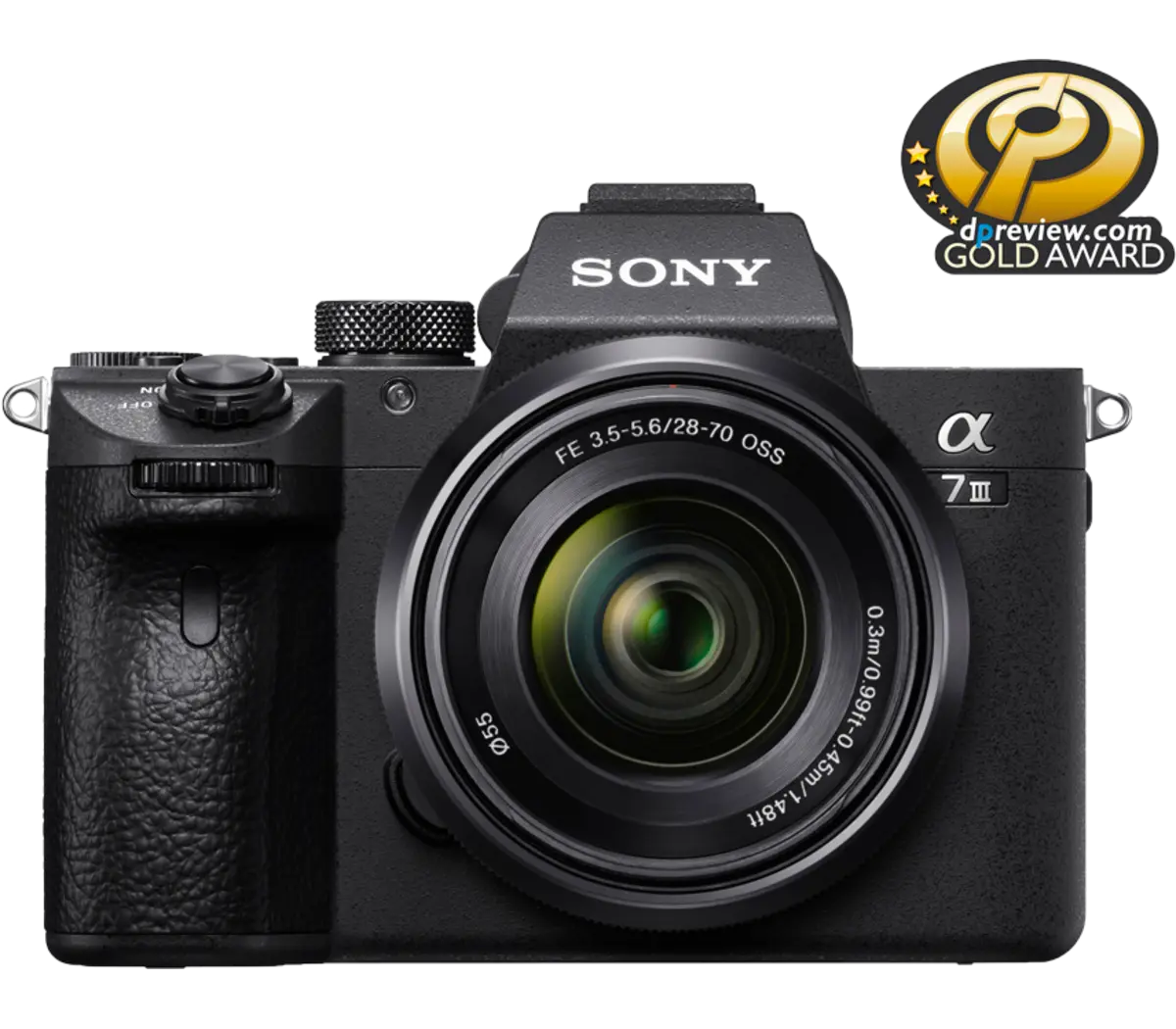
The Canon EOS R6 Mark III and the Sony A7 III are two full-frame mirrorless cameras that are popular choices for enthusiast and professional photographers. These models are often compared due to their similar sensor sizes, wide appeal to hybrid shooters (those who shoot both photos and videos), and compatibility with extensive lens ecosystems. Buyers considering these cameras typically value fast performance, excellent autofocus, and strong low-light performance.
The main differences between the two are generational and functional: the Canon EOS R6 Mark III is the newer and more technologically advanced, while the Sony A7 III offers exceptional value thanks to its proven platform and lower price point. Key differentiators include burst speed, autofocus technology, video features, and battery life. Understanding how these factors play out for different kinds of shooters is crucial when choosing between the two.
Specifications Comparison
Detailed Comparison
Image Quality
Both the Canon EOS R6 Mark III and the Sony A7 III use full-frame sensors, nearly identical in size, ensuring excellent image quality with strong dynamic range and low-light performance. The Sony A7 III has a 24MP sensor, which strikes a great balance between detail and manageable file sizes. Although the megapixel count for the Canon EOS R6 Mark III is not specified here, Canon's latest generation sensors are known for improved noise handling and expanded ISO capabilities (100-102400, expandable to 204800 versus Sony's 100-51200), which could make a difference in extreme low-light scenarios.
Canon's DIGIC X processor likely brings improved color science and image processing, yielding more natural color tones and better high-ISO performance. However, the Sony A7 III has proven itself as a high performer in real-world shooting situations, offering vibrant images, strong raw files, and impressive highlight/shadow recovery.
Both cameras feature in-body image stabilization, but Canon's up to 8.5 stops of compensation is markedly better than Sony's 5 stops, providing photographers better results when shooting handheld in low light. While both cameras deliver excellent full-frame image quality, advanced stabilization and high ISO range give Canon a technical edge, especially for demanding conditions.
Autofocus System
Autofocus capability is often a deciding factor, especially for action, sports, and wildlife shooters. The Canon EOS R6 Mark III leverages a state-of-the-art autofocus system with 4897 points-far surpassing the Sony A7 III's 693 phase-detect points. This wide coverage ensures more accurate subject tracking and excellent responsiveness across the frame.
Canon's latest models also incorporate advanced subject detection, recognizing people, animals, and vehicles, thus further improving consistency in challenging scenarios. The Sony AF system is very reliable, with precise Eye AF and real-time tracking, and has remained a benchmark in the industry since its release. However, it's now outpaced by Canon's newer algorithms and sheer point density.
In practice, both cameras will serve all but the most demanding users well, and Sony has the advantage of years of firmware updates and mature implementation. Still, the Canon's newer AF hardware and software provide greater flexibility and reliability in tricky shooting situations.
Video Capabilities
Video is a major focus for modern hybrid cameras, and here the generation gap is significant. The Canon EOS R6 Mark III offers up to 4K 120p recording-a feature aimed squarely at advanced videographers, allowing for smooth slow-motion footage at full 4K quality. In contrast, the Sony A7 III tops out at 4K 30p, which remains sufficient for most users but lacks the flexibility and quality demanded for professional video workflows.
Both cameras offer electronic viewfinders, articulating screens, and robust recording abilities, but Canon's higher frame rates and improved in-body stabilization (8.5 stops vs Sony's 5) position it as the superior tool for handheld video shoots and creative work. Additionally, the latest Canon systems offer less rolling shutter and better heat management for long-form recording.
While the Sony A7 III set a strong standard when first released, Canon's R6 Mark III delivers a future-proof suite of features for serious video creators.
Build & Ergonomics
Build quality is top-notch with both bodies: magnesium alloy construction, weather sealing, and robust design cater to professional use in all weather conditions. The Canon EOS R6 Mark III is slightly larger (138 x 98 x 88 mm; 699g) versus the Sony's more compact footprint (127 x 96 x 74 mm; 650g), which some may find more portable. Both have comfortable grips suitable for all-day shooting.
Both cameras offer electronic viewfinders and fully articulating 3" screens, but Canon's higher-resolution LCD (1,620,000 dots vs Sony's 921,600) gives it an edge for reviewing shots and navigating menus. Canon's menus are often considered more user-friendly and intuitive, although Sony has made strides with its interface through firmware updates.
Ultimately, both provide professional-grade construction and usability, but Canon's refinements in screen quality and interface give it a slight lead for usability, while Sony offers the benefit of being slightly smaller and lighter.
Battery & Storage
Battery life is a major win for the Sony A7 III, rated at an impressive 710 shots per charge-one of the best in the full-frame mirrorless category. The Canon R6 Mark III's battery specs aren't listed in detail here, but prior Canon R6 models tend to lag behind Sony, generally offering between 360-500 shots per charge depending on usage.
For events, weddings, or extended sessions away from power sources, the Sony A7 III will require fewer battery changes and contributes to an overall lighter kit. Both cameras offer dual card slots, essential for backups and professional workflows, but the Sony's longevity makes it ideal for all-day assignments.
In this arena, Sony delivers more practical usability for heavy shooters and professionals.
Value for Money
The Sony A7 III remains one of the best value propositions in the full-frame market, retailing for around $2000, or often less on sale. It delivers proven, robust performance, a solid feature set, and access to an extensive native and third-party lens ecosystem. Its price/power ratio makes it attractive to enthusiasts and professionals on a budget.
The Canon EOS R6 Mark III, at $2799, offers significant advancements-higher burst speeds, modern autofocus, superior video specs, and better stabilization. For photographers and filmmakers wanting the latest technology and future-proofing, the higher price can be justified, but it remains a considerable premium over the Sony.
For those seeking the best performance-per-dollar, the Sony A7 III has the edge. If absolute feature advantage is paramount and the budget allows, the Canon is a smart, if more expensive, investment.
Lens Ecosystem & Mount
Lens availability and price play a critical role in long-term system ownership. Sony's E-mount is the most mature mirrorless full-frame lens system, with extensive support from Sony and third-party manufacturers (Sigma, Tamron, Samyang, etc.), covering everything from budget primes to exotic telephotos. This maturity has led to a healthy used market and frequent lens bargains.
Canon's RF mount is newer but rapidly growing, with a focus on premium lenses and cutting-edge designs. Third-party offerings are increasing, but not as widespread as Sony's. RF lenses tend to be pricier, especially for advanced glass, which may impact total system costs for those building a kit from scratch.
For now, Sony retains an advantage in terms of lens selection, pricing diversity, and availability.
Our Verdict
The Canon EOS R6 Mark III emerges as the overall winner in this comparison, thanks to its class-leading autofocus system, superior image stabilization, and dramatically improved video features. Its cutting-edge technology makes it the obvious choice for those who demand the fastest performance, need flexibility across both stills and video, or work in challenging conditions where the best AF and in-body stabilization are crucial. However, the Sony A7 III continues to deliver exceptional value. Its outstanding battery life, mature lens system, and accessible price make it an unbeatable option for many photographers and hybrid shooters prioritizing cost-effectiveness and lens choice. If your workflow doesn't require the very latest in speed or video capabilities, or if you're building an extensive lens kit, the Sony is still a phenomenal, well-rounded camera. Ultimately, the Canon EOS R6 Mark III is the tech leader and best suited to those who need the latest features, while the Sony A7 III is a smart, budget-friendly alternative that holds up remarkably well in most real-world scenarios.
Canon EOS R6 Mark III
Sony A7 III
Also Compare
Frequently Asked Questions
Which camera is better for sports or wildlife photography?
The Canon EOS R6 Mark III is the better choice for sports or wildlife thanks to its ultra-fast 40 fps burst shooting and a superior autofocus system with 4897 points. This allows for more reliable subject tracking during fast action, giving it a clear advantage over the Sony A7 III's 10 fps and older AF implementation.
How do the autofocus systems compare for portrait photography?
Both cameras offer excellent Eye AF for portraits, but Canon's newer algorithms and higher AF point coverage provide greater accuracy and consistency, especially with subjects off-center or moving unpredictably. Sony's AF is still quick and reliable for portrait work, but Canon's R6 Mark III represents the latest in subject recognition technology.
Which is better for video creators and content production?
For serious video work, the Canon EOS R6 Mark III is ahead, offering 4K up to 120p and best-in-class in-body stabilization. The Sony A7 III tops out at 4K 30p and doesn't offer slow-motion recording at 4K resolution, making Canon the superior pick for advanced and future-proof video production.
How does battery life compare for travel or event photography?
The Sony A7 III offers a significant battery life advantage with up to 710 shots per charge, versus lower numbers typical of Canon mirrorless models. For travel, events, or all-day shooting without access to charging, Sony's greater battery endurance is a crucial benefit.
Is lens selection a major factor between these cameras?
Yes. The Sony E-mount has a broader range of native and third-party lenses with more affordable options, while Canon's RF system is newer with a stronger focus on high-end glass. Sony users will benefit from a larger, more affordable selection, particularly if building a kit from scratch.
Which camera is easier for beginners to pick up and use?
Canon's menu system and touchscreen interface tend to be more intuitive for most users, and the articulating, higher-resolution screen on the R6 Mark III further improves usability. Sony's system has improved over time, but Canon maintains an edge in straightforward operation for newcomers.