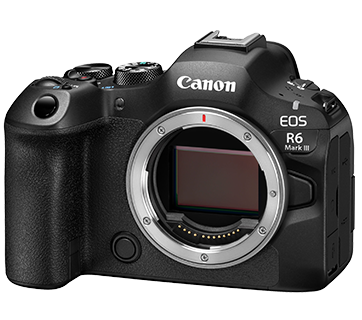
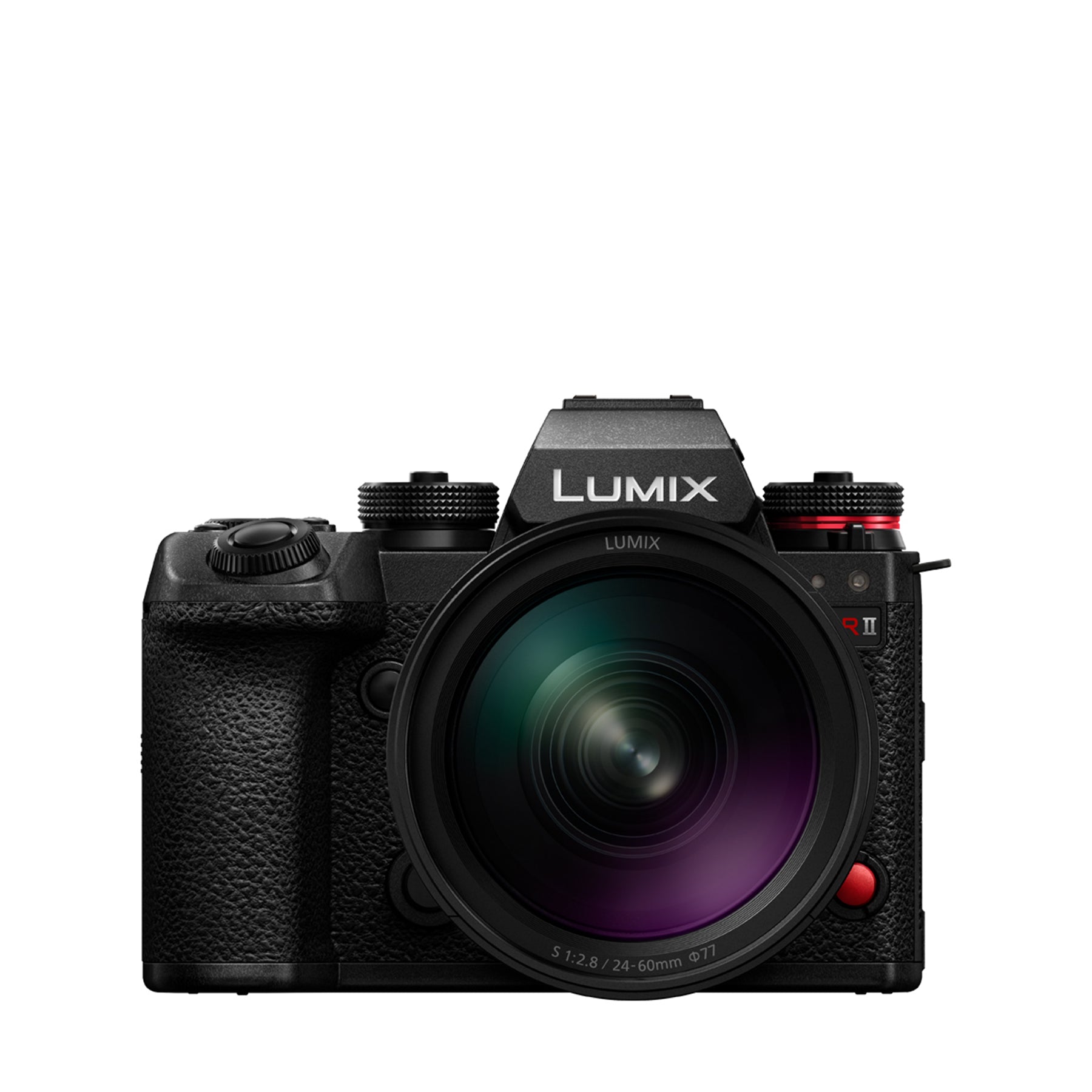
The Canon EOS R6 Mark III and the Panasonic S1R II are two high-performance full-frame mirrorless cameras that are often compared by both professional photographers and enthusiasts alike. These models cater to distinct photography needs, where the Canon excels in speed and autofocus, while the Panasonic offers higher resolution and robust video capabilities. Potential buyers might be weighing their options based on their shooting style, be it fast-paced sports photography or high-resolution studio work, leading to a close examination of their feature sets.
Specifications Comparison
Detailed Comparison
Image Quality
When it comes to image quality, both cameras have their strengths. The Panasonic S1R II offers a high-resolution 44.3-megapixel sensor, which allows for more detail and larger prints, catering to photographers who prioritize resolution. In contrast, the Canon EOS R6 Mark III features a full-frame sensor that may not boast the same megapixel count, but it delivers exceptional dynamic range and color accuracy, particularly in low-light situations due to its expansive ISO range of 100-102400, expandable to 204800. This advantage makes it suitable for a variety of shooting scenarios, especially when light is limited.
Moreover, the Canon EOS R6 Mark III utilizes advanced processing technologies that enhance its low-light capabilities, making it a strong contender for both wedding and event photography under challenging conditions. Meanwhile, while the S1R II's sensor provides stunning detail, its slightly lesser low-light performance might discourage some users from using it in dim environments. Therefore, while both cameras produce excellent images, the choice between high resolution and low-light performance will ultimately define which suits the photographer's needs better.
Autofocus System
The Canon EOS R6 Mark III features a cutting-edge autofocus system with an incredible 4897 autofocus points, making it one of the most advanced systems in its category. This expansive point coverage ensures accurate focusing on fast-moving subjects, which is particularly useful for wildlife or sports photography where timing is critical. The Canon's Eye Detection technology is highly regarded for portrait work, allowing for perfect focus on the subject's eyes even in challenging lighting scenarios.
On the other hand, the Panasonic S1R II utilizes a more traditional contrast-detection system that doesn't match the R6 Mark III in terms of speed and accuracy, especially in fast-paced situations. However, it does offer a reliable autofocus experience in well-lit conditions, which can still perform admirably for landscape or studio photography. Due to the advanced technology and higher number of points in the Canon, it takes the lead in this category, solidifying its place as a more versatile tool for fast-action photography.
Video Capabilities
In terms of video capabilities, the Panasonic S1R II stands out due to its support for 8K video at 30p alongside 4K at 120p, making it an excellent choice for videographers looking for high-resolution capture without compromise. This feature opens a broader range of creative possibilities, including cropping in post-production without losing quality. Also, Panasonic has a reputation for producing cameras with exceptional video performance, particularly when it comes to color science and dynamic range.
The Canon EOS R6 Mark III, while also offering 4K video at 120p, does not include an 8K option, which can be a significant drawback for those focused solely on video production. However, the R6's footage benefits from Canon's color science, which produces pleasing skin tones and overall visual fidelity. For photographers who plan to do an equal mix of stills and video work, Canon's 4K capabilities are still robust but may not provide the same breadth offered by the S1R II. Therefore, for purely video-centered work, the Panasonic has the edge here.
Build & Ergonomics
Both cameras exhibit strong build quality, but there are notable differences in design and ergonomics. The Canon EOS R6 Mark III is slightly lighter at 699 grams and has dimensions that make it compact for a full-frame camera. Its controls are user-friendly, and the touchscreen provides intuitive access to settings, which many find beneficial during shooting.
In contrast, the Panasonic S1R II is heavier and bulkier, but this contributes to a more solid feel, which some photographers might prefer for stability, especially when using larger lenses. The S1R II also includes a dual card slot feature, which is crucial for professional photographers managing high-resolution files. Both cameras are weather-sealed, giving them durability in various shooting environments. Ultimately, those who prioritize portability may favor the Canon, while users seeking robust ergonomics may lean toward the Panasonic.
Battery & Storage
Battery life is a critical aspect for photographers, and the Canon EOS R6 Mark III offers a reliable performance throughout full-day shoots, with its LP-E6NH batteries supporting approximately 500 shots per charge. Additionally, it features dual card slots (one SD UHS-II and one CFexpress), allowing for flexible storage solutions that are ideal for high-speed photography and video recording.
On the contrary, the Panasonic S1R II offers a larger battery capacity, yielding up to 370 shots, which might seem less than the R6 III. Nevertheless, the dual card slots in the S1R II also provide flexibility, supporting both SD UHS-II and XQD formats. Those heavily invested in continuous shooting may find the faster write speeds of the CFexpress slots on the R6 III beneficial, thereby making it a stronger contender overall in terms of battery performance and storage options.
Value for Money
At a price point of $2799, the Canon EOS R6 Mark III offers an attractive set of features for its money, especially considering its performance in autofocus, battery life, and ease of use. Photographers looking for a well-rounded camera that performs well in both photography and videography will find the R6 III to be a worthwhile investment. Canon's growing RF lens ecosystem also adds value, offering a wide range of native lenses to choose from.
Conversely, the Panasonic S1R II, while providing outstanding video features and high-resolution capability, comes at a slightly higher investment that may not suit every budget. However, for those photographers or videographers who prioritize 8K recording and high-resolution captures, the price could be justified. The choice ultimately hinges on whether the user values resolution and 8K video capabilities over the diverse shooting functionalities provided by the Canon. In this aspect, the price-to-performance balance leans slightly in favor of the Canon system.
Our Verdict
Overall, the Canon EOS R6 Mark III emerges as the winner in this comparison, particularly noted for its superior autofocus system and better low-light performance. It appeals to a diverse range of photographers, especially those who frequently capture fast-action subjects and need a reliable camera system for both video and stills. On the other hand, the Panasonic S1R II excels in high-resolution video and is designed for those who need extreme detail in their images. Therefore, while the R6 III is the more versatile option, the S1R II still holds significant value for users whose priorities align with its capabilities.
Canon EOS R6 Mark III
Panasonic S1R II
Also Compare
Frequently Asked Questions
Which camera is better for low-light photography?
The Canon EOS R6 Mark III is better for low-light photography, with its expandable ISO range allowing for excellent performance in dim conditions compared to the S1R II.
Is the S1R II worth the extra cost?
The S1R II might be worth the extra cost if you prioritize high-resolution images and 8K video recording; however, the R6 III is more versatile overall.
Can I use the same lenses on both cameras?
No, the Canon EOS R6 Mark III uses the RF lens mount, while the Panasonic S1R II has a different lens mount (L-mount).
Which camera has a better autofocus system?
The Canon EOS R6 Mark III features a superior autofocus system with 4897 points, while the Panasonic S1R II has a more basic autofocus setup.
What are the differences in video capabilities?
The S1R II supports 8K video at 30p, whereas the R6 Mark III offers up to 4K 120p, making the S1R II the better choice for high-resolution video.