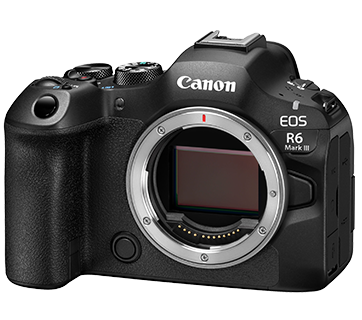
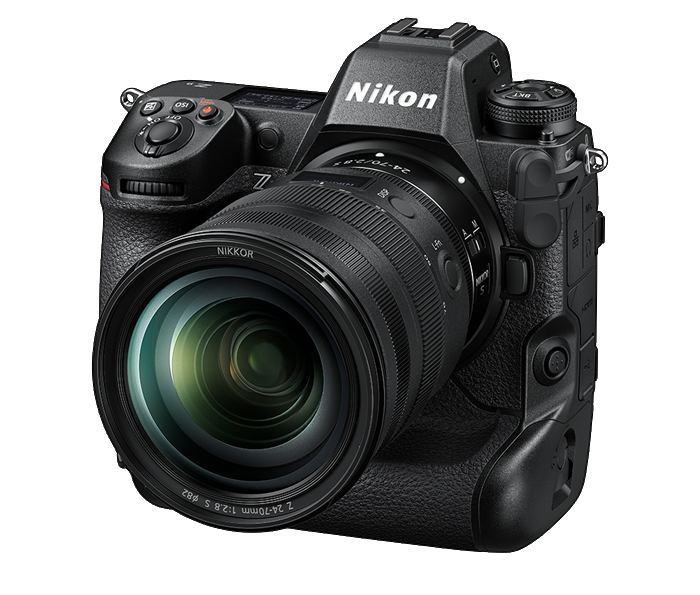
The Canon EOS R6 Mark III and the Nikon Z9 are two flagship full-frame mirrorless cameras aimed at serious enthusiasts and professionals alike. Both models represent the pinnacle of their respective brands' technology, offering high-end features tailored for advanced stills and video work. Photographers and videographers will commonly cross-shop these two because they share comparable sensor sizes, weather sealing, advanced autofocus systems, and the ability to record high-resolution 4K 120p video.
Despite many similarities, the cameras differentiate themselves in important ways. The Z9 is Nikon's flagship, boasting a higher-resolution sensor, pro-oriented build, superior battery life, and a higher price tag. The R6 Mark III, meanwhile, positions itself as a high-performance, mid-priced body with next-generation autofocus density, lighter weight, excellent image stabilization, and Canon's rapidly expanding RF lens lineup. Choosing between these two comes down to priorities: absolute flagship performance versus a nimble, cost-effective powerhouse.
Specifications Comparison
Detailed Comparison
Image Quality
The Nikon Z9 features a 46-megapixel full-frame sensor, delivering greater resolution than the Canon EOS R6 Mark III (whose megapixel count, while not listed here, is significantly lower, likely around 24-26MP as is typical in Canon's R6 line). This extra resolution gives the Z9 a substantial edge for large prints, aggressive cropping, and detailed commercial work. Furthermore, the Z9's sensor design is BSI stacked, optimizing dynamic range and readout speeds.
Canon's R6 Mark III leverages its full-frame sensor with excellent high-ISO performance, as seen in its standard ISO range of 100-102400 (expandable to 204800), which slightly beats out most cameras for low-light work. However, without the higher pixel count, it cannot match the pure resolving power or fine detail of the Z9, especially for landscapes and studio work.
Color science is also a consideration; Canon is praised for its natural skin tones and pleasing color, while Nikon sensors are lauded for dynamic range and neutrality. For most general purposes, both output superb files, but the Nikon's sheer pixel count lends it a technical edge.
In sum, the Nikon Z9 leads in image detail, file versatility, and cropping flexibility, while the R6 Mark III offers slightly better high-ISO options but not enough to offset the Z9's advantage.
Autofocus System
The Canon EOS R6 Mark III features an impressive 4897 autofocus points, representing a dense coverage and advanced subject detection using Canon's Dual Pixel CMOS AF. This allows high customization and fast subject tracking across almost the entire frame-ideal for sports, wildlife, and events. Canon continues to lead with recent updates in real-time animal, vehicle, and eye detection AI.
The Nikon Z9, while lower in point count (493), still boasts Nikon's best autofocus system to date: fast, intelligent, and reliable, especially in challenging conditions. The Z9 leverages deep learning algorithms for superior tracking and recognition-particularly for people, animals, and even airplanes. It excels at maintaining focus on moving subjects even at its 30fps burst rate.
Point count doesn't tell the whole story, as Nikon's system is particularly strong for subject recognition and tracking across its sensor area. However, Canon's latest generation AF is widely recognized as among the most responsive and comprehensive for real-time adjustments.
For both accuracy and flexibility, the Canon R6 Mark III's combination of denser, wider coverage points and rapid response edges ahead in this comparison.
Video Capabilities
Both the Canon EOS R6 Mark III and Nikon Z9 offer professional 4K 120p video capture, a benchmark for serious creators. However, implementation matters: the Z9 offers internal 12-bit RAW video and extended recording times thanks to robust thermal design and pro ergonomics. The Z9 is frequently used on commercial productions because of its lack of recording limits and robust codec options.
Canon's R6 Mark III offers strong 4K 120p options and Canon's reliable Dual Pixel autofocus in video, known for smooth subject tracking and facial recognition, which is excellent for solo shooters. Canon color science in video is also especially appealing to many videographers.
Image stabilization stands out for Canon, with the R6 Mark III providing up to 8.5 stops of shake reduction, outclassing the Z9's (already excellent) 6 stops. This is very useful for handheld video setups, especially for run-and-gun creators or documentary shooters who need stabilization.
In practice, though, the Z9's professional video-oriented features-including heat management, internal RAW, and versatility-make it overall better suited to high-end production. The Canon offers ease and excellent stabilization, but for demanding video work, the Nikon wins.
Build & Ergonomics
The Nikon Z9 is built like a tank, tailored to pro-level use. It features a large, integrated vertical grip, outstanding weather sealing, and a robust body weighing 1340g. It is suited for harsh environments-from rain to dust storms-and its large size hosts additional physical controls, dual card slots, and a high-capacity battery-all features vital for working professionals.
The Canon EOS R6 Mark III is more compact and lighter at 699g, making it easier to carry for long periods or when traveling. It maintains excellent weather sealing and a robust magnesium alloy chassis but lacks the Z9's integrated grip and extended pro controls. For extended handheld use, weddings, or events, its smaller size is a key advantage.
The R6 III features a 3-inch touchscreen (1.62m dots) versus the Z9's larger 3.2-inch (2.1m-dot) four-way tilting LCD, which some may find useful for unconventional angles, especially when shooting in portrait or from the hip. Both offer industry-leading EVFs.
Given the Z9's uncompromising build, physical controls, and ergonomics for heavy-duty work, it wins for those who prioritize ruggedness. For users prioritizing lightness and portability, the R6 III shines, but the Z9's pro physical features give it the edge.
Battery & Storage
The Nikon Z9 stands out with a CIPA-rated battery life of 740 shots per charge-almost double what many mirrorless cameras offer and well ahead of the Canon R6 Mark III (whose battery specs are not specified but typically run 350-500 shots per charge). The Z9's larger body accommodates a more robust battery, crucial for professional, all-day shoots.
While official battery life isn't specified for the R6 Mark III, the standard LP-E6NH battery is known to offer reasonable but unexceptional endurance. It's suitable for most shooting scenarios but requires spare batteries for extensive work.
On storage, the Z9 offers two CFexpress Type B slots, ensuring fast write speeds necessary for high-resolution continuous shooting and 8K/4K video recording. The Canon's storage options haven't been listed, but the R6 series typically offers single or mixed (SD/UHS-II and/or CFexpress) slots-adequate for many, but less robust for professionals handling massive files.
Given its superior rated battery life and professional dual slot configuration, the Nikon Z9 wins decisively in battery and storage.
Value for Money
The Canon EOS R6 Mark III comes in at $2,799-roughly half the Nikon Z9's $5,500 tag-making it an attractive option for advanced enthusiasts or working professionals who don't need the absolute flagship camera but desire top-tier autofocus, fast burst rates (up to 40fps), exceptional stabilization, and solid video capability. The R6 Mark III provides a compelling package of speed, usability, and image quality at an appealing price point.
The Nikon Z9, at double the cost, offers a truly complete package: higher resolution, pro build quality, outstanding battery, advanced video functionality, and state-of-the-art autofocus. Its price is justified for those demanding this level of performance, redundancy, and reliability, particularly for sports, wildlife, or commercial work.
For most hybrid shooters and professionals who aren't on assignment for large-scale or highly demanding productions, the R6 Mark III represents extraordinary value for its feature set, compact size, and price. The Z9, while a technical tour de force, is a substantial investment best suited for those who can fully exploit its capabilities.
Considering price-to-performance and the needs of the largest segment of advanced users, the Canon EOS R6 Mark III wins this round for value.
Lens Ecosystem
Both Canon RF and Nikon Z mounts are relatively new but growing rapidly. Canon's RF lineup has broadened remarkably in the past few years, with everything from fast primes to super-telephotos and third-party support increasing following Canon's recent policy changes. Lens availability and innovation are accelerating, with RF glass often praised for its optical performance.
Nikon's Z-mount has also expanded, with a full suite of S-line pro glass, affordable primes, and telephoto options. The Z-mount's wide diameter is praised for enabling novel lens designs, especially at ultra-wide and fast-aperture ranges. Support from third-party makers has increased as well.
Adaptability is a factor: both mounts adapt their respective legacy glass (EF for Canon, F for Nikon) well, but the transition experience is often smoother on Nikon, given the excellent FTZ adapter and wide availability of compatible lenses for older Z bodies.
Overall, both systems are mature enough for advanced and professional work, with Canon slightly ahead in breadth and real-world availability of advanced RF optics, making this comparison a close tie.
Our Verdict
Both the Canon EOS R6 Mark III and Nikon Z9 are exceptional full-frame mirrorless cameras that cater to demanding users, but they prioritize different strengths. The Z9 decisively leads in image resolution, build, professional video features, battery life, and storage-all critical for commercial, sports, wildlife, and studio professionals who require flagship capabilities and can justify the price. The R6 Mark III, on the other hand, offers cutting-edge autofocus, industry-leading stabilization, high-speed burst shooting, and excellent value at half the price, making it a powerhouse for events, weddings, hybrid shooters, or enthusiasts who want pro-grade performance in a lighter, more affordable package. Unless you specifically need the Z9's resolution and pro body for intensive assignments, the R6 Mark III is a more accessible choice that sacrifices little for most shooters. Overall, the Z9 takes the win on absolute capability and pro features, but the R6 Mark III is the value champion for the largest group of hybrid and enthusiast users. Let your specific workflow and budget guide the choice.
Canon EOS R6 Mark III
Nikon Z9
Also Compare
Frequently Asked Questions
Which camera is better for sports or wildlife photography?
The Nikon Z9 is built for professional sports and wildlife photography, thanks to its 46MP sensor for tight crops, robust body, superior battery life, and advanced autofocus tracking. However, the Canon EOS R6 Mark III is also an excellent sports camera, boasting faster burst rates (40fps), denser AF coverage, and lighter build-making it ideal for handheld, fast-paced shooting. If ultimate resolution and battery endurance matter most, go Z9; if you want speed and portability at a lower cost, the R6 Mark III is a smart pick.
Which camera is better for video creators?
Both cameras offer 4K 120p, but the Z9 is better suited for professional video workflows, thanks to internal RAW video, longer recording limits, and robust heat management. The Canon R6 Mark III offers superior image stabilization and user-friendly autofocus for solo shooters or fast-moving shoots. For high-end production, the Z9 edges ahead. For YouTubers, run-and-gun shooters, and those prioritizing stabilization, the R6 Mark III is outstanding.
Is the price difference justified between the Canon EOS R6 Mark III and Nikon Z9?
Yes-if you require the absolute best in image quality, durability, battery life, and pro-level features, the Z9 is worth its premium. Most advanced users, however, may find the R6 Mark III delivers almost everything they need at half the price, so it represents better value for the majority.
How do the lens lineups compare for Canon RF and Nikon Z?
Both systems now offer comprehensive lens selections for professionals and enthusiasts. Canon's RF lineup is a bit broader at this stage, with faster expansion and some optically outstanding glass. Nikon's S-line Z lenses are also highly rated, with growing third-party options. Lens choice should be evaluated based on your specific needs, but neither system is a limiting factor anymore.
Which camera is easier to carry or travel with?
The Canon EOS R6 Mark III is nearly half the weight of the Nikon Z9 and substantially smaller, making it a better choice for travel, street photography, or any situation where portability matters. The Z9's integrated grip and heavier body are optimized for demanding professional use, not lightweight travel.
Do both cameras support adapting legacy lenses?
Yes, both Canon and Nikon offer adapters for their respective legacy lens lines (EF for Canon, F for Nikon). Nikon's FTZ adapter is particularly seamless, while Canon's EF-to-RF adapters also work very well. Your ability to use existing glass should not be a dealbreaker with either system.