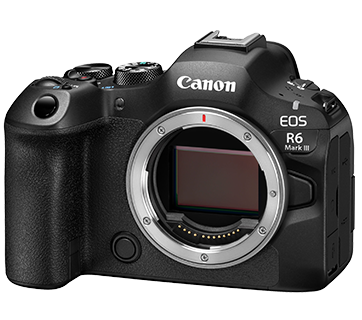
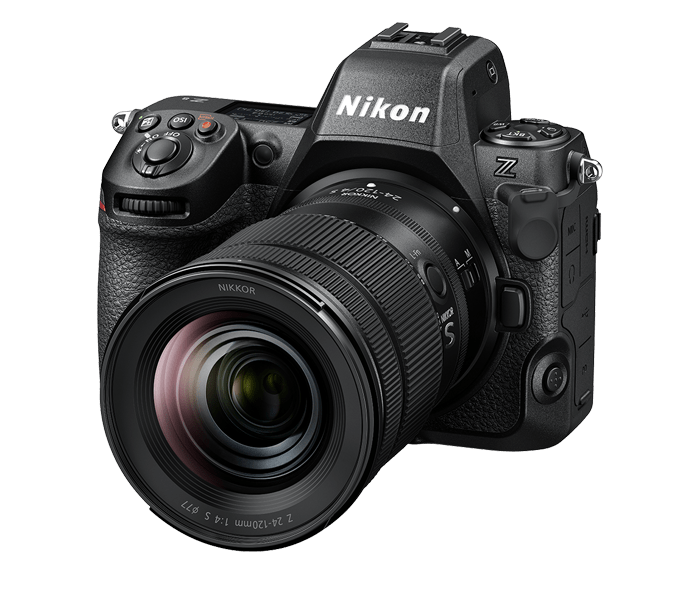
The Canon EOS R6 Mark III and Nikon Z8 are two advanced mirrorless cameras that cater to professional photographers and videographers. Both models boast full-frame sensors and high-end specifications, making them appealing choices for users looking for superior image quality and performance. As the competition between Canon and Nikon continues to intensify, these models often find themselves compared as they each offer unique strengths that can sway a buyer's decision based on specific needs and preferences. Key differentiators include the intended usage such as action photography, resolution requirements, and video capabilities.
Specifications Comparison
Detailed Comparison
Image Quality
Both cameras sport full-frame sensors with outstanding image quality capabilities. The Canon EOS R6 Mark III features a sensor that performs exceptionally well in low-light conditions due to its ISO range of 100-102400 (expandable to 204800). This allows photographers to capture clear images in challenging lighting. Although the Nikon Z8 has a higher megapixel count of 46, leading to sharper images and more cropping flexibility, it is still critical to consider the sensor's overall performance in various lighting situations. Moreover, the R6 Mark III's sensor design also supports better dynamic range in many scenarios.
The R6 Mark III's processing algorithms enhance color reproduction and skin tones, making it preferable for portrait photographers. On the other hand, the Z8's increased resolution allows for exceptional detail, making it an excellent choice for landscape and commercial photographers. The differences in megapixels may seem marginal when both offer high ISO performance, but it may influence users who already work with detailed subjects.
In practical terms, both cameras shine beautifully in their output; however, the specific choice comes down to the necessary requirements for resolution versus low-light capability. Users demanding high detail might lean towards the Z8, while those who prioritize low-light performance may prefer the R6 Mark III.
Autofocus System
The Canon EOS R6 Mark III comes equipped with an impressive autofocus system featuring 4897 AF points, ensuring fast and accurate focusing in diverse scenarios. This system employs Dual Pixel autofocus technology, which is particularly beneficial for video recording and tracking moving subjects, making it suitable for sports and wildlife photographers.
In contrast, the Nikon Z8 offers 493 autofocus points, which, while slightly fewer, still covers the frame extensively and provides reliable performance. Nikon has also integrated advanced AI for subject detection, making it user-friendly for those capturing fast-moving subjects. However, some users have reported that Canon's autofocus system often locks on subject matter faster and maintains focus more effectively during rapid movements.
Both systems have their advantages, and ultimately, the effectiveness of the autofocus systems will hinge on a photographer's specific needs. While the Canon excels in tracking speed, the Nikon's advanced AI enhances user experience. Therefore, the choice largely depends on individual preferences and usage scenarios.
Video Capabilities
Both the Canon EOS R6 Mark III and Nikon Z8 are designed with video features that cater to the growing demands of content creators. The R6 Mark III supports 4K recording at 120 frames per second, allowing for stunning slow-motion capabilities and high-resolution footage. Its stabilization system, at 8.5 stops, further enhances video performance, providing smooth and steady shots, making it ideal for handheld shooting.
The Z8 also supports 4K recording at 120p, with a notable quality in output. However, it features a 6-stop stabilization system, which, while effective, may not match the R6 Mark III in demanding video conditions. The slight edge in Canon's stabilization may be particularly advantageous for dynamic shooting scenarios like event videography.
Considering these aspects, both cameras excel in video performance, but the Canon R6 Mark III's higher stabilization offers a practical edge for videographers who frequently operate without a tripod. However, both cameras deliver high-quality video suited for professional needs.
Build & Ergonomics
When it comes to build quality and ergonomics, both the Canon EOS R6 Mark III and Nikon Z8 are constructed to withstand the rigors of professional use. Both cameras come equipped with weather-sealing, allowing them to operate effectively in adverse conditions. However, there are slight differences in their dimensions and weight which may influence user preference.
The R6 Mark III is more compact, weighing 699g and measuring 138 x 98 x 88 mm, resulting in a camera that is easier to handle for long periods. Meanwhile, the Z8 is slightly larger at 910g and dimensions of 144 x 119 x 83 mm. This weight difference could be a deciding factor for photographers who prioritize portability.
In terms of user interface, both cameras feature electronic viewfinders and high-resolution screens, but the Nikon Z8's 3.2-inch screen at 2,088,960 dots offers a clearer and more detailed view for composition. Users may find the ergonomics of the R6 Mark III slightly better due to its lighter weight, while others may appreciate the larger display and sturdier build of the Z8.
Battery & Storage
Battery performance is critical for any photographer, especially those shooting extensively outdoors or in events. The Nikon Z8 has a decent battery life, rated at approximately 340 shots, which is commendable, but compared to a typical day of shooting, it may require an extra battery for prolonged sessions. On the other hand, specifications for the R6 Mark III's battery life haven't been disclosed, but Canon generally provides reliable battery life that often surpasses Nikon's offerings.
When it comes to storage, both cameras support SD cards, providing flexibility depending on the user's needs. The Z8 particularly emphasizes support for CFexpress Type B cards, which allows for faster data transfer speeds, especially beneficial for high-resolution video.
Given these differences, the Z8 may appeal to users needing rapid write speeds for high-quality video capture, while the Canon may be preferable for all-day shooting without frequent battery swaps, making versatility a strong point.
Value for Money
In terms of pricing, the Canon EOS R6 Mark III is positioned at $2799 while the Nikon Z8 carries a higher price tag of $3999. This significant price difference raises pertinent questions regarding the value offered by each camera. For users on a budget, the R6 Mark III presents a robust feature set for a lower cost, potentially making it a better value overall when considering performance per dollar.
The Z8, while more expensive, provides advantages like higher resolution and professional-grade features that may justify the cost for certain professionals, particularly in high-resolution photography and videography scenarios. However, for many enthusiasts and professionals, the R6 Mark III offers exemplary performance that rivals the Z8 at a more attractive price point.
Ultimately, the decision here rests on specific photography needs. If users prioritize high megapixels and are capable of leveraging the additional features offered in the Z8, it can represent a worthy investment. In contrast, budget-conscious users or those who don't require the utmost resolution may find the R6 Mark III's performance compelling and more economical.
Our Verdict
The Canon EOS R6 Mark III emerges as the overall winner in this comparison, chiefly owing to its superior autofocus performance, video stabilization, and better value for money. While the Nikon Z8 excels in resolution and has a slightly larger display, these aspects may not sufficiently outbalance the advantages offered by the R6 Mark III for most users. Photographers who require extensive resolution and specific high-end features may favor the Z8, but for most versatile applications, especially with fast-action subjects, the R6 Mark III serves as a more practical choice for enthusiasts and professionals alike.
Canon EOS R6 Mark III
Nikon Z8
Also Compare
Frequently Asked Questions
Which camera is better for low-light photography?
The Canon EOS R6 Mark III is more favorable for low-light photography due to its superior ISO range, allowing it to perform better in challenging lighting conditions.
How does the video performance compare between the two cameras?
Both cameras support 4K video at 120p, but the R6 Mark III has a stabilization advantage with 8.5 stops compared to 6 stops in the Z8, making it the better option for handheld video work.
Which camera is lighter and easier to carry?
The Canon EOS R6 Mark III is lighter at 699g compared to the Nikon Z8, which weighs 910g, making the R6 Mark III a better option for photographers who prioritize portability.
Is the Nikon Z8 worth the higher price?
The Z8 may be worth its higher price for photographers who need the extra resolution of 46 megapixels and robust performance at high resolutions. However, for many users, the R6 Mark III offers similar performance for less money.