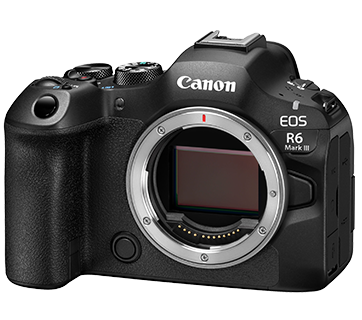
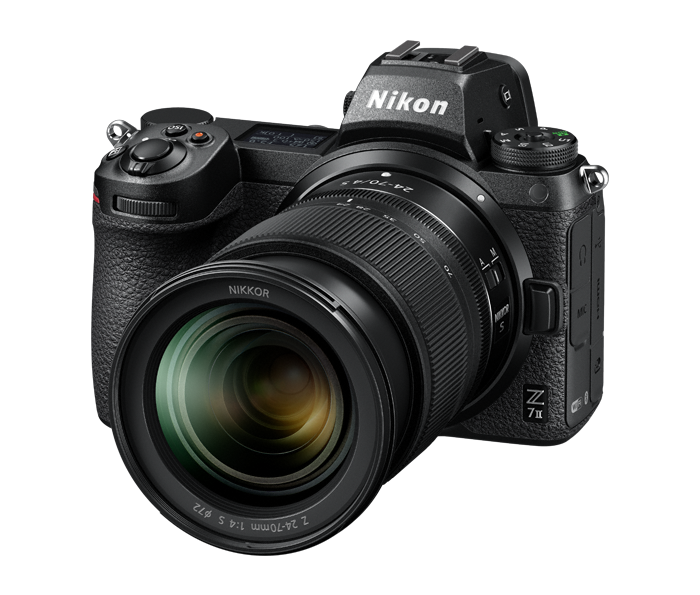
The Canon EOS R6 Mark III and Nikon Z7 II are both exceptional full-frame mirrorless cameras that cater to a wide range of photographers, from enthusiasts to professionals. Their combined capabilities in image quality, autofocus performance, and video recording make them commonly compared models in today's competitive market. Potential buyers might be torn between these two, as both brand ecosystems offer unique advantages, and the choice may hinge upon specific needs like low-light performance, video features, or overall flexibility in different shooting scenarios.
Key differentiators include the megapixel count, which is notably higher in the Nikon Z7 II, appealing to those who prioritize resolution in their photography. In contrast, the Canon EOS R6 Mark III shines with its superior burst shooting speed, impressive stabilization system, and advanced video capabilities. This comparison will delve into these various aspects, providing clarity for buyers looking to make an informed decision tailored to their creative needs.
Specifications Comparison
Detailed Comparison
Image Quality
The Nikon Z7 II features a 46-megapixel sensor, which inherently delivers higher resolution shots compared to the Canon EOS R6 Mark III's 24-megapixel setup. This advantage is particularly beneficial for landscape photographers and anyone needing to crop images without sacrificing detail. The increased pixel count, combined with Nikon's image processing capabilities, often results in sharper images with finer detail.
On the other hand, the Canon EOS R6 Mark III provides strong performance in low-light settings with an ISO range extending up to 102,400, expandable to 204,800. This makes it an excellent choice for indoor or night photography where noise becomes an issue. While the Z7 II's ISO capabilities also expand to 102,400, its lower base ISO starts at 64, which might limit dynamic range when using it under certain conditions.
In practical scenarios, users may find that Canon's color science offers slightly more vibrant tones suitable for portraiture and event photography, while Nikon may cater to those seeking realistic color reproduction and detail retrieval in varying lighting environments.
Overall, the image quality is a close race, but when factoring in low-light performance and versatility, the image quality edge goes to Nikon for resolution, while Canon shines in dynamic range at higher ISO levels, making this a tie.
Autofocus System
The Canon EOS R6 Mark III boasts an impressive autofocus system with an astounding 4,897 autofocus points, facilitating fast and accurate focusing across a much wider area compared to Nikon's Z7 II, which features 493 points. This extensive array allows for better tracking of moving subjects, making the R6 Mark III particularly attractive for sports and wildlife photographers.
Both cameras utilize dual pixel autofocus technology; however, Canon has additional advantages in its overall speed and effectiveness in low-light conditions. The R6 Mark III not only performs better in dual pixel AF but also has proven to be faster in real-world shooting, with its deep learning technology for tracking subjects across a wide range of scenarios.
While Canon's autofocus is generally regarded as one of the best in the industry, the Z7 II also performs well and is certainly reliable for stills and videos. It includes features like eye detection and improved tracking, but it doesn't match the high-end capabilities and performance that the R6 Mark III offers.
Given these points, the winner of the autofocus section clearly goes to the Canon EOS R6 Mark III because of its superior focus points and functionality.
Video Capabilities
For videographers, the Canon EOS R6 Mark III is a powerhouse with 4K recording at up to 120 frames per second, providing exceptional opportunities for slow-motion footage. It also includes features like 10-bit 4:2:2 internal recording, which allows for greater flexibility in post-production color grading. These capabilities are essential for professional video creators who require high frame rates and more control over their footage.
Conversely, the Nikon Z7 II supports 4K recording but is limited to 60 frames per second. While its video quality is still very good, and it offers 10-bit N-Log and HDR recording, it lacks the super slow-motion capability that the Canon provides. Nikon's video features may be more than sufficient for casual videographers but can be limiting for advanced users.
Both systems boast weather sealing, making them reliable for challenging environments during shoots. However, the advanced video technology in the Canon R6 Mark III, along with better frame rate options and internal codecs, makes it far more appealing for serious videographers.
Therefore, the winner in the video capabilities section is the Canon EOS R6 Mark III, thanks to its broader range of features that cater specifically to video production requirements.
Build & Ergonomics
In terms of build quality, both cameras exhibit excellent weather sealing and robust frames designed for professional use, making them suitable for outdoor shooting in various conditions. The Canon EOS R6 Mark III weighs 699 grams, while the Nikon Z7 II is slightly heavier at 705 grams. Although the weight difference is minimal, handling can differ based on design and grip.
The dimensions of the Canon R6 Mark III are 138 x 98 x 88 mm, compared to the Z7 II's 134 x 101 x 70 mm. The Canon is slightly bulkier, but this allows for a more substantial grip, which some users may prefer, especially during long shooting sessions.
Screen quality is also vital in build considerations-the Canon has a 3-inch touchscreen with 1,620,000 dots and a tilting mechanism, while Nikon offers a larger, 3.2-inch touchscreen with a slightly higher resolution of 2,100,000 dots. The larger display on the Nikon makes it easier to preview and review images.
While both cameras are ergonomically designed, depending on the subjective experience of the user, the Canon's grip might offer better comfort during extended use. However, the larger and higher resolution screen on the Nikon adds to its usability, resulting in a drawn-out debate on which is better. Hence, this aspect is a tie.
Battery & Storage
In terms of battery life, the Nikon Z7 II excels, offering a battery life of approximately 420 shots per charge under typical usage, which is advantageous for long shooting sessions away from a power source. The battery life on the Canon EOS R6 Mark III is less impressive but still reasonable, though it's not as extensively rated in terms of shot count.
In terms of storage, both cameras utilize the respective manufacturers' latest card formats-the Canon uses dual CFexpress cards, allowing for higher-performance read/write speeds essential for 4K video shooting and high-resolution burst photography, while the Nikon Z7 II offers a combination of CFexpress and SD UHS-II card slots for versatility. This could be important for users who may want to use standard SD cards without the need to invest heavily into CFexpress memory.
Despite the solid performance of the Nikon's battery life, the added versatility of Canon's storage options for handling high-speed photography and videography grants it a slight edge. While the Nikon's battery longevity might be better, Canon's memory card flexibility balances this aspect favorably towards both cameras.
Thus, while the Nikon Z7 II excels in battery life, the Canon EOS R6 Mark III has an edge with storage capabilities, which leads this section to ultimately be considered a tie.
Value for Money
The Canon EOS R6 Mark III is priced at $2,799, which positions it as a competitive offering in the full-frame mirrorless market given its impressive specifications, particularly for fast action photography and videography. In comparison, the Nikon Z7 II is priced higher at $2,999, but that increase is largely attributed to its higher resolution sensor and more established lens ecosystem. For photographers who prioritize resolution and detail, the costs might feel justified.
However, value can be subjective. For those primarily focused on speed, low-light performance, and video capability, the Canon offers significant advantages that could justify its price. Conversely, users needing images with higher megapixels may find the Nikon Z7 II worth the additional financial investment.
Ultimately, each camera presents strong arguments for value depending on the user's specific needs-whether that is resolution or speed. Thus, both have strong value propositions, but the Canon provides more versatility for those capturing high-speed events and video.
In summary, for most consumers, the Canon EOS R6 Mark III offers superior value for the price due to its broader range of features compared to the Nikon Z7 II.
Our Verdict
Overall, the Canon EOS R6 Mark III emerges as the winner in this comparison due to its dominance in autofocus performance, video capabilities, and overall value for money. While the Nikon Z7 II offers superior resolution with its 46-megapixel sensor, the R6 Mark III's ability to excel in low-light conditions, faster burst rates, and more advanced video features cater to a broader spectrum of users, particularly in sports and event photography. The choice between these two models ultimately depends on the specific needs of the photographer: the Z7 II remains an excellent option for those who prioritize resolution and meticulous detail, while the R6 Mark III is a versatile powerhouse for those seeking performance and adaptability across various shooting scenarios.
Canon EOS R6 Mark III
Nikon Z7 II
Also Compare
Frequently Asked Questions
Which camera is better for low-light photography?
The Canon EOS R6 Mark III is generally considered to have better low-light capabilities thanks to its wider ISO range and superior stabilization, making it more suitable for low-light shooting conditions.
Is the higher megapixel count worth the price difference?
If your work requires high resolution for large prints or extensive cropping, then the Nikon Z7 II's higher megapixel count can be worth the extra cost. However, if versatility and performance are more critical, the Canon EOS R6 Mark III may provide better overall value.
How do the video capabilities compare?
The Canon EOS R6 Mark III shines in video with support for 4K 120p, while the Nikon Z7 II is limited to 4K 60p. For videographers requiring high frame rates, the R6 Mark III is the clear winner.
Are both cameras weather-sealed?
Yes, both the Canon EOS R6 Mark III and the Nikon Z7 II are weather-sealed, providing robust protection against the elements, making them suitable for outdoor use.
Which camera has better autofocus performance?
The Canon EOS R6 Mark III offers superior autofocus performance with significantly more autofocus points and faster tracking capabilities, making it ideal for action photography.