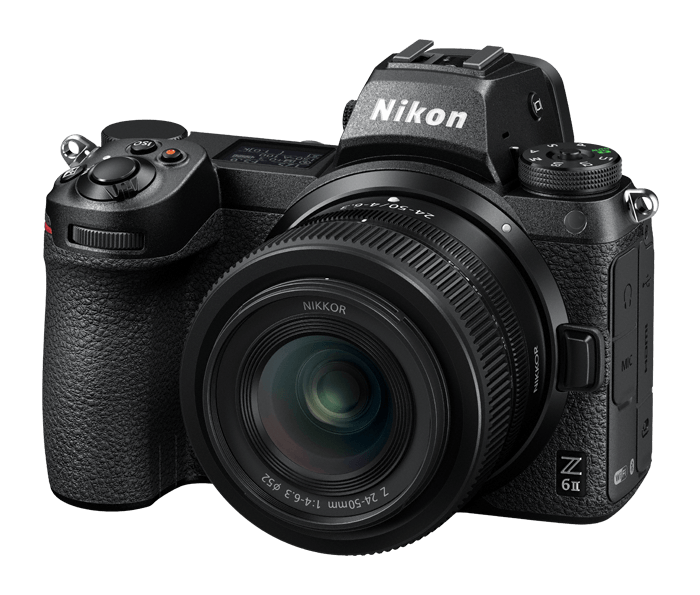
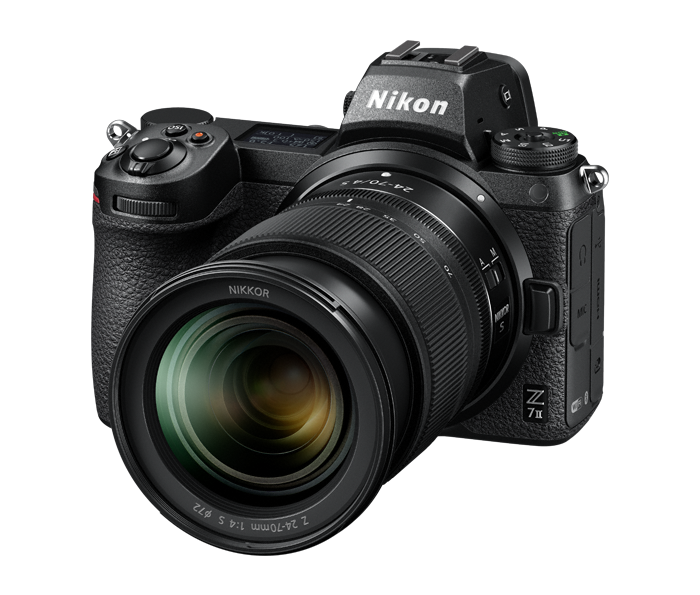
The Nikon Z6 II and Z7 II are two highly regarded mirrorless cameras that cater to photography enthusiasts and professionals alike. Both models belong to Nikon's Z series, featuring a full-frame sensor, advanced autofocus, and high-quality video capabilities. However, the differences in their specifications lead to distinct use cases, making this comparison vital for potential buyers who may find themselves choosing between the two models. The Z6 II is designed more for versatility and speed, while the Z7 II emphasizes resolution and detail, especially in high-quality photography scenarios.
Specifications Comparison
Detailed Comparison
Image Quality
The image quality of a camera is influenced heavily by the sensor size and resolution. Both the Nikon Z6 II and Z7 II feature a full-frame sensor, but the Z7 II has a notable advantage with its 46 megapixels compared to Z6 II's 25 megapixels. This difference allow the Z7 II to produce exceptionally detailed images, which is a significant benefit for large prints or high-resolution cropping. On the other hand, the Z6 II's 25 MP still delivers excellent image quality suitable for a majority of professional applications, especially in lower light conditions where pixel density can impact noise levels. Additionally, the Z6 II has a wider native ISO range, making it more versatile in challenging lighting situations. Overall, both cameras deliver outstanding image quality, but the Z7 II excels in resolution, making it the superior choice for situations where detail is paramount.
Autofocus System
Autofocus performance is crucial for capturing fast-moving subjects, and both the Z6 II and Z7 II offer robust autofocus systems. The Z6 II has 273 AF points, while the Z7 II boasts a more advanced system with 493 AF points. The additional autofocus points in the Z7 II translate to improved tracking capabilities, particularly for erratic subjects. Additionally, the Z7 II performs better in low-light situations due to the more sensitive autofocus points. For users prioritizing fast action photography or wildlife photography, the Z7 II's superior autofocus system may prove to be a significant advantage. However, the Z6 II's autofocus is still solid and sufficient for most everyday photography needs, making this aspect a key differentiator between the two models.
Video Capabilities
Video enthusiasts may find the Nikon Z7 II more appealing due to its ability to shoot 4K video at up to 60 frames per second, providing smoother motion and greater flexibility in post-production. The Z6 II, while also capable of 4K video, limits frame rates to 30 fps. This makes the Z7 II a better choice for videographers looking for high frame rates and better performance in this area. Additionally, both cameras feature 10-bit output and are equipped with Nikon's N-Log and HLG for greater dynamic range and color grading flexibility. Although both cameras are effective for video, the Z7 II's higher frame rates provide a tangible edge for cinematography.
Build & Ergonomics
Both the Nikon Z6 II and Z7 II share identical dimensions and weight of 705 grams, offering a similar compact design that feels robust in hand. Both models are weather-sealed, providing reassurance against outdoor environments. The layout of controls and the use of the familiar Nikon interface enhances usability in both cases. Given their identical build specifications, users will find that both models provide exceptional ergonomics and durability. In this aspect, neither camera significantly surpasses the other, as they are designed to complement each other ergonomically.
Battery & Storage
Battery life is another consideration for those on long shoots. The Z6 II has a slightly lower battery life with 410 shots, while the Z7 II offers about 420 shots per charge. In terms of storage, both cameras utilize dual card slots allowing for versatile media storage options. Both models use SD and CFexpress cards, enhancing write speeds, which is particularly beneficial for high-resolution photography and video. Therefore, while there are minor differences in battery life favoring the Z7 II, both cameras provide great options for extended shooting sessions.
Value for Money
When considering value for money, the Z6 II is priced at $1995, while the Z7 II is considerably more expensive at $2999. The Z6 II provides an excellent feature set for its price, making it a great option for photographers who want high performance without breaking the bank. On the other hand, while the Z7 II justifies its higher price with superior resolution and features that benefit high-end photography and videography, such a price point may not be necessary for all users. Consequently, for most everyday photography needs, the Z6 II provides a more affordable and practical option, making it the better value in terms of price-to-feature ratio.
Our Verdict
In the head-to-head comparison, the Nikon Z7 II emerges as the overall winner due to its superior image resolution, autofocus system, and video capabilities. It's particularly well-suited for professionals who demand high detail in their work or require advanced autofocus for fast-moving subjects. However, the Z6 II still stands out for its remarkable value for money and versatility, making it a strong contender especially for general photography, event work, and those who prioritize budget without sacrificing quality. Each camera has its strengths and will cater to different user needs, so choice ultimately hinges on specific requirements.