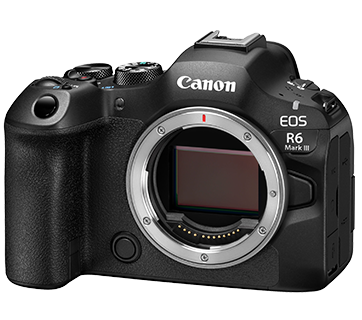
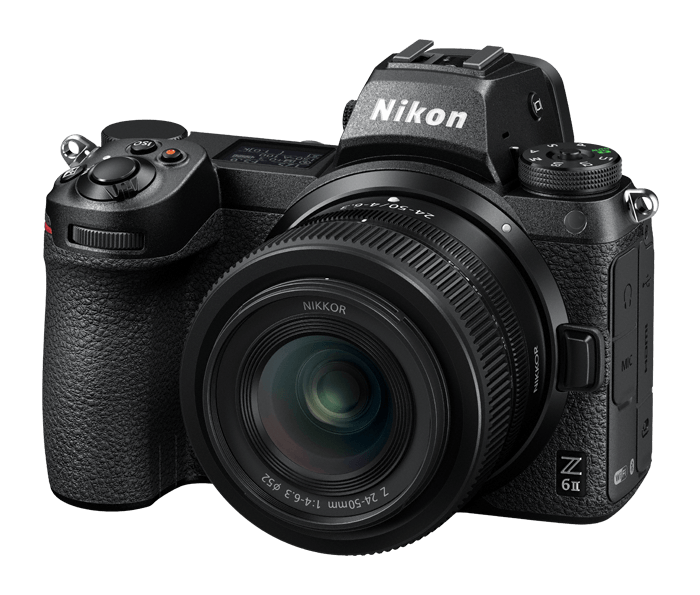
The Canon EOS R6 Mark III and Nikon Z6 II are two prominent models in the full-frame mirrorless camera market, often compared by professional and amateur photographers alike. The choice between these two models boils down to specific needs, whether one is looking for superior image quality, advanced autofocus capabilities, or exceptional video performance. While both cameras are highly regarded among their users, their differing specifications may sway a buyer's decision based on their shooting style and requirements.
Specifications Comparison
Detailed Comparison
Image Quality
Both cameras feature a full-frame sensor with a size of 35.9 x 23.9 mm, ensuring that they deliver impressive image quality with great depth of field and low-light performance. The Canon EOS R6 Mark III, however, has an ISO range that extends to 102400, and can further be expanded to 204800, giving it a significant edge for low-light shooting. In contrast, the Nikon Z6 II has an ISO range of 100-51200, expandable to 204800 too, but with a quality drop observed at higher ISO levels. This suggests that the R6 Mark III would perform better in challenging lighting situations where noise could be an issue. Additionally, while the Z6 II offers 25 megapixels, the R6 Mark III focuses on delivering exceptional dynamic range and color accuracy rather than just pixel count.
Autofocus System
One of the key highlights of the Canon EOS R6 Mark III is its autofocus system, boasting an impressive 4897 autofocus points, allowing for precise tracking and fast performance in various conditions. The R6 Mark III is equipped with advanced subject tracking capabilities, which makes it more suitable for fast-action photography. On the other hand, the Nikon Z6 II features a more conventional autofocus setup with 273 points. While it remains effective for most shooting scenarios, it cannot match the speed or number of focus points offered by the Canon. The Canon's dual-pixel autofocus technology also excels in both stills and video, making it a strong contender for those who prioritize autofocus performance sharply.
Video Capabilities
When it comes to video performance, the Canon EOS R6 Mark III clearly leads the pack with its ability to shoot 4K video at 120 frames per second. This capability opens up significant creative possibilities for high frame-rate slow-motion videos, appealing to videographers and content creators. The Z6 II, while still competent, supports 4K video only at 30 frames per second, which may not suffice for those looking to shoot professional-level videos. Additionally, the R6 Mark III provides a wider array of video codecs and settings, enhancing the overall production flexibility. Thus, for users focusing on high-quality video capabilities, the R6 Mark III stands out as the better option.
Build & Ergonomics
In terms of build quality, both cameras are robust and weather-sealed, designed to withstand the rigors of outdoor shooting. The Canon EOS R6 Mark III weighs 699 grams and has a slightly larger body dimension, which could offer a more substantial grip, especially for prolonged use. However, the Nikon Z6 II is marginally heavier at 705 grams but features a larger screen at 3.2 inches and 2,100,000 dots compared to Canon's 3-inch, 1,620,000 dots screen, providing better clarity and better visibility in bright conditions. Ergonomically, both cameras are user-friendly, though individual preferences for button placements and controls may tip the scales towards one model depending on the photographer's habits.
Battery & Storage
Battery life is crucial for any photographer, and the Nikon Z6 II holds an advantage here with a battery life rated for approximately 410 shots per charge, as per CIPA standards. In contrast, the battery life of the Canon EOS R6 Mark III has yet to be finalized, but Canon cameras typically boast good battery performance. Both cameras offer storage options through dual card slots, accommodating CFexpress Type B (Canon) and dual SD card slots (Nikon), a feature that provides flexibility and security for professional photographers needing ample storage on long shoots.
Value for Money
Priced at $2799, the Canon EOS R6 Mark III is positioned as a premium option that justifies its price point through superior specifications, particularly in terms of image quality, autofocus system, and video capabilities. On the other hand, the Nikon Z6 II, priced at $1995, provides a compelling package that balances performance with a lower cost, making it more accessible to those who may not need the advanced features or higher frame rate capabilities. The price difference makes the Nikon particularly appealing to enthusiasts and videographers looking to maximize their budget without compromising on essential features. For photography-focused professionals, the Canon might be worth the investment, but casual users could find the Z6 II offers more than sufficient performance at a reasonable cost.
Our Verdict
Overall, the Canon EOS R6 Mark III triumphs due to its advanced features in autofocus performance, superior video options, and low-light image quality, making it the top choice for serious photographers and videographers who require versatility and quality in their work. However, the Nikon Z6 II offers excellent value and reliability, making it a fitting choice for photographers prioritizing ergonomics and battery life, along with a more affordable price point. Ultimately, the decision may come down to specific feature prioritization and budget consideration.
Canon EOS R6 Mark III
Nikon Z6 II
Also Compare
Frequently Asked Questions
Which camera is better for low-light photography?
The Canon EOS R6 Mark III is superior for low-light photography due to its broader ISO range and better noise handling at high ISO settings compared to the Nikon Z6 II.
How do the video capabilities compare?
The Canon EOS R6 Mark III can shoot 4K at up to 120p, allowing for high frame-rate videography, while the Nikon Z6 II is limited to 4K at 30p.
What is the battery life like for each camera?
The Nikon Z6 II has a battery rating of about 410 shots, which is helpful for long shooting sessions, whereas the Canon R6 Mark III's battery life is less defined but traditionally robust in Canon models.
Which camera has better autofocus performance?
The Canon EOS R6 Mark III offers 4897 autofocus points, significantly outpacing the Nikon Z6 II's 273 points, making it the choice for fast-action and precise focusing.
Is the price difference justified?
The Canon EOS R6 Mark III is priced higher but offers advanced features that justify the cost for professionals. The Nikon Z6 II, however, provides excellent performance for its price, appealing to a broader range of users.