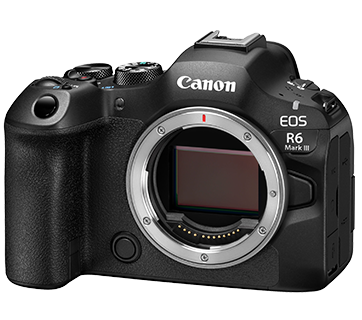
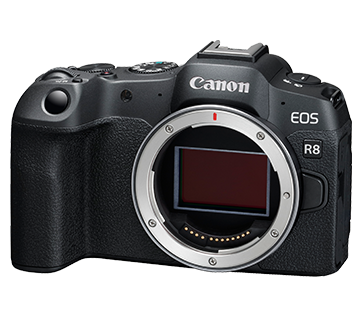
The Canon EOS R6 Mark III and the Canon EOS R8 are two compelling full-frame mirrorless cameras from Canon that cater to different segments of photographers and videographers. While the R6 Mark III appeals more to professionals and enthusiasts seeking robust capabilities, the R8 targets those looking for a more affordable solution without significant compromises. The key differentiators between the two encompass autofocus technology, video specifications, and overall usability, prompting buyers to evaluate their specific needs before making a decision.
Specifications Comparison
Detailed Comparison
Image Quality
Both the Canon EOS R6 Mark III and the Canon EOS R8 feature full-frame sensors that deliver exceptional image quality. The R6 Mark III, with its higher maximum iso of 102400 (expandable to 204800), might appeal more to low-light photographers, enabling better performance in challenging lighting conditions. In contrast, R8 has an iso range that is also effective but may not perform as well under extreme conditions due to its 24-megapixel sensor, which tends to provide less flexibility than the R6 Mark III. Additionally, the larger sensor size of the R8 (36 x 24 mm compared to 35.9 x 23.9 mm for the R6 Mark III) gives it a slight edge in terms of capturing a wider dynamic range, but the R6 Mark III's superior noise handling at high iso gives it the upper hand for many photographers. As such, those needing advanced image quality, especially in low-light scenarios, would find the R6 Mark III more appealing.
Autofocus System
The autofocus capabilities of both cameras exemplify Canon's innovation in this field, yet there are significant differences in quantity and performance. The R6 Mark III boasts a staggering 4897 autofocus points, providing near-complete coverage of the image frame, which is beneficial for challenging subjects and fast action. In contrast, the R8 features 1053 autofocus points, which while good, may not match the precision and tracking efficacy of the R6 Mark III. Photographers shooting fast-moving subjects, such as in sports or wildlife, may gravitate towards the R6 Mark III for its superior autofocus abilities. However, the R8's autofocus system is still reliable for general photography and portraits, offering a strong experience for typical users who do not need the extended capabilities of the R6 Mark III.
Video Capabilities
Video recording capabilities are a crucial feature for many buyers, and in this aspect, the R6 Mark III prevails significantly over the R8. The R6 Mark III supports 4K video recording at a breathtaking 120 frames per second, making it ideal for capturing high-speed action, while the R8 is limited to 4K at 60 fps. Furthermore, the R6 Mark III includes advanced features like better video stabilization rated at 8.5 stops, which aids in smoother video capture. The R8 lacks stabilization, which may hinder videographers attempting handheld shoots. Overall, while both cameras deliver great video quality, the R6 Mark III's advanced features make it the superior choice for serious video creators.
Build & Ergonomics
In terms of build quality, both the R6 Mark III and R8 are weather-sealed, ensuring durability against the elements. However, the R6 Mark III is significantly heavier at 699 grams compared to the R8's 461 grams, making the R8 more portable and easier to handle for prolonged periods. This weight difference is a critical factor for travel photographers or those who prioritize portability. Furthermore, while both cameras feature a 3-inch vari-angle touchscreen with 1.62 million dots, the ergonomic design of the R6 Mark III tends to offer a more substantial grip which can be beneficial during extended shooting sessions. Consequently, while both cameras are built well, the choice may boil down to the user's preferences regarding weight and ergonomics.
Battery & Storage
Battery performance is another important factor for users. The R6 Mark III is equipped with a more advanced battery that allows for a higher number of shots on a single charge compared to the R8. This makes the R6 Mark III a more reliable option for event photography, where power management becomes vital. Both cameras utilize the same type of storage with Dual Card Slots compatible with UHS-II cards, ensuring fast write speeds and ample storage. However, in practical terms, users who find themselves frequently shooting extensive sessions without opportunities for recharge may prefer the longer battery life evident in the R6 Mark III.
Value for Money
From a pricing perspective, the Canon EOS R8 emerges as the more budget-friendly option retailing at $1499 compared to the R6 Mark III's $2799. The R8 offers strong value for enthusiasts looking to enter the full-frame mirrorless market without overspending. It is suitable for most hobbyists and casual users who may not require the higher-end features of the R6 Mark III. However, for professionals who demand superior performance in autofocus, video capabilities, and battery life, the investment in the R6 Mark III can be justified for its additional features. Therefore, the value proposition varies significantly depending on the specific user needs and level of commitment to photography or videography.
Our Verdict
Overall, the Canon EOS R6 Mark III is the clear winner for those prioritizing advanced features, particularly in autofocus, video capabilities, and image quality. Its design caters well to professionals and serious enthusiasts who require the highest performance across various shooting scenarios. Conversely, the Canon EOS R8 offers excellent value for those entering the full-frame system without needing the extensive capabilities of the R6 Mark III. Buyers must weigh their needs against the price point to determine which model best fits their photography style and budget.
Canon EOS R6 Mark III
Canon EOS R8
Also Compare
Frequently Asked Questions
Which camera is better for low-light photography?
The Canon EOS R6 Mark III is better for low-light photography due to its higher ISO range and superior noise handling capabilities.
Is the additional cost of the R6 Mark III justified?
Yes, if you require advanced features such as higher video frame rates, superior autofocus, and extended battery life, the additional cost of the R6 Mark III is justified.
Can the R8 produce good video quality?
Yes, the R8 produces good video quality suitable for general use, but its video capabilities are less advanced compared to the R6 Mark III.
Which camera is more portable?
The Canon EOS R8 is more portable due to its lighter weight and compact dimensions, making it easier for travel photography.
Do both cameras have weather sealing?
Yes, both the Canon EOS R6 Mark III and R8 come weather-sealed, making them suitable for use in challenging environmental conditions.