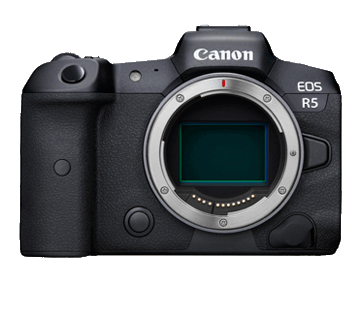
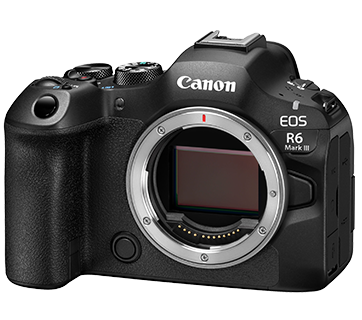
The Canon EOS R5 and Canon EOS R6 Mark III are two highly regarded full-frame mirrorless cameras in Canon's RF lineup, each aimed at different segments of photographers and videographers. The R5, introduced in 2020, is known for its high resolution and advanced features, making it an ideal choice for landscape and studio photographers. In contrast, the R6 Mark III, launched in 2025, excels in speed and versatility, catering more towards sports and wildlife enthusiasts who require fast performance and robust autofocus capabilities. Given their similar price points and user bases, many buyers find themselves weighing the merits of each model depending on their specific requirements.
Key differentiators between the two models include sensor resolution, autofocus performance, video capabilities, and overall handling. While both cameras are formidable, understanding their unique strengths will help prospective buyers make a more informed decision about which camera best fits their creative needs.
Specifications Comparison
Detailed Comparison
Image Quality
The Canon EOS R5 features a standout 45-megapixel full-frame sensor, which allows for high-resolution images with exceptional detail. This is particularly beneficial for landscape, studio, and commercial photographers who demand the highest fidelity for large prints or cropping flexibility. The R5 also offers incredible dynamic range and color depth, making it suitable for post-processing manipulation.
On the other hand, the Canon EOS R6 Mark III, with its 24-megapixel sensor, offers slightly lower resolution but compensates with excellent low-light performance and better ISO handling. It has an ISO range that expands to 204800, which may be more advantageous in challenging lighting conditions, allowing for cleaner images in low light compared to the R5.
In practice, both cameras deliver outstanding image quality, but the R5 takes a clear lead in resolution and detail, while the R6 Mark III shines in low-light scenarios. For projects that require maximum image quality and detail, the R5 is the obvious choice, whereas the R6 Mark III could appeal to those needing flexibility in varying light conditions.
Autofocus System
The autofocus systems of both cameras are exemplary, but they serve slightly different purposes. The R6 Mark III boasts an impressive 4897 autofocus points, compared to the R5's 1053 points. This extensive coverage enables the R6 Mark III to excel in tracking fast-moving subjects, making it a preferred choice for sports and wildlife photography. The advanced Dual Pixel AF technology ensures quick and accurate focus locks even in difficult conditions.
Meanwhile, while the R5 has fewer autofocus points, its autofocus performance is still top-tier, especially for static subjects and slower-moving scenes. The R5's autofocus is particularly praised for its subject recognition capabilities, making it easier to capture portraits and still life with precision.
Given the R6 Mark III's superior autofocus point count and enhanced tracking performance, it emerges as the winner in this category, mainly for users who need speed and accuracy in fast-paced environments.
Video Capabilities
Both cameras support 4K video at up to 120 frames per second, making them formidable choices for videographers. However, the R5 offers additional advantages, including 8K video recording capabilities, appealing to filmmakers seeking the highest resolution for professional projects and extensive post-production options.
The R6 Mark III also provides excellent video quality and high frame rates, but it lacks the 8K feature, which may be a limiting factor for serious video creators. Instead, the R6 is designed for smooth 4K capture without the heavy data storage requirements that 8K may impose, thus catering better to casual and social media videographers.
In this category, the R5 clearly stands out for those looking to produce high-resolution cinematic content, while the R6 Mark III provides satisfactory 4K performance that will meet the needs of most general applications.
Build & Ergonomics
Both the Canon EOS R5 and R6 Mark III share a design philosophy characterized by their weather-sealed bodies, making them suitable for outdoor shooting in various conditions. As both cameras measure 138 x 98 x 88 mm, the ergonomics are similar, ensuring a comfortable grip and user-friendly controls.
However, the R6 Mark III is slightly lighter at 699 grams compared to the R5's 738 grams. This minor difference is nominal for everyday use, but it may matter to individuals planning on extensive handheld shooting sessions.
Additionally, the R5 features a higher-resolution 3.2-inch screen with 2,100,000 dots, whereas the R6 Mark III has a smaller 3-inch screen with 1,620,000 dots. This may enhance the usability of the R5 for detailed inspection and review of images and video during shooting as well.
Considering these factors, while both cameras are robust and well-built, the R5 takes the edge in screen quality, while the R6 Mark III can be perceived as marginally more portable, leading to a slightly even conclusion.
Battery & Storage
Battery life is a critical aspect for any camera, particularly for extensive photoshoots. The R5 offers a battery life rated at approximately 320 shots, which is respectable for its level of performance. However, for more intensive users, this could be a limiting factor when shooting continuously in high-performance modes.
In contrast, the R6 Mark III displays notable improvements with its battery life, enabling around 500 shots, thanks to its efficient hardware and lower resolution sensor that doesn't require as much power for operation. This extended time between charges is invaluable for those shooting on location without immediate access to charging facilities.
Regarding storage, both cameras support dual card slots, which afford users flexibility in choosing storage media and providing redundancy in case one card fails. Overall, the R6 Mark III's advantage in battery longevity makes it a more reliable option for extended shooting sessions without the need for constant recharging.
Value for Money
With the Canon EOS R5 priced at approximately $3899, it positions itself as a premium option within the Canon mirrorless lineup. This price is justified by its high-resolution sensor, advanced video capabilities, and overall image quality but may be beyond the reach for hobbyists or those who do not require such extensive features.
Conversely, the R6 Mark III's price tag of about $2799 makes it a more accessible entry point for advanced enthusiasts and professionals seeking excellent performance without breaking the bank. It offers most of the advanced features users would want, such as high-quality video and fast autofocus, without the excessive cost associated with the R5.
In terms of value for money, the R6 Mark III clearly appeals to a broader audience, effectively balancing features with affordability, making it the winner in this category, particularly for photographers who need high performance without the highest price.
Our Verdict
Overall, the Canon EOS R5 is slightly superior in image quality and video capabilities, making it an excellent choice for those who prioritize high-resolution images and advanced video features. Conversely, the Canon EOS R6 Mark III excels in autofocus performance, battery life, and overall value, catering more to fast-paced shooters and those who need a reliable, efficient camera without the steep price tag. For buyers deciding between the two, the ultimate decision will largely depend on whether they lean more towards high resolution and advanced video (R5) or speed and portability with great performance (R6 Mark III).
Canon EOS R5
Canon EOS R6 Mark III
Also Compare
Frequently Asked Questions
Which camera is better for low-light photography?
The Canon EOS R6 Mark III performs better in low-light conditions with its expanded ISO range and lower resolution sensor, allowing for cleaner images at high ISOs.
Is the Canon EOS R5 worth the extra price?
If high resolution and extensive video capabilities are essential for your work, the additional investment in the R5 can be justified for professional uses.
Can the R6 Mark III shoot 8K video?
No, the R6 Mark III does not support 8K video recording; it is limited to 4K at up to 120fps.
What is the battery life like on these models?
The R5 has a battery life rated at about 320 shots, while the R6 Mark III offers approximately 500 shots per charge, making it better for extended shooting.
Are both cameras weather-sealed?
Yes, both the Canon EOS R5 and R6 Mark III feature weather-sealed bodies, making them suitable for use in various environments.
Which one should I buy for sports photography?
The Canon EOS R6 Mark III is better suited for sports photography due to its superior autofocus system and higher frame rate, making it more effective for capturing fast-moving subjects.