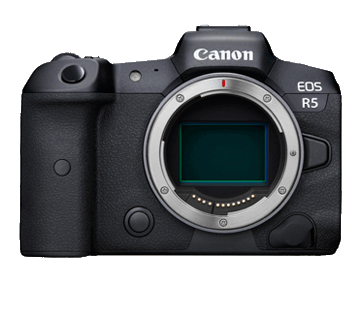
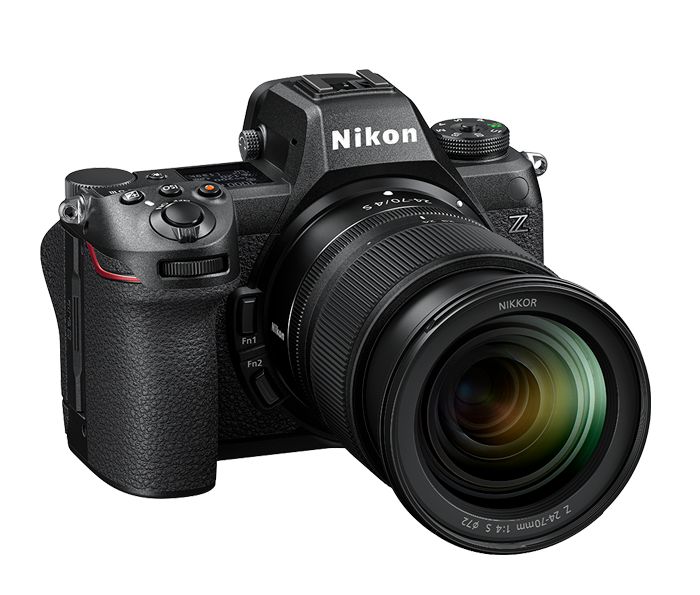
The Canon EOS R5 and Nikon Z6III are two prominent contenders in the full-frame mirrorless camera market, each tailored to meet the needs of both professional photographers and videographers. These models are often compared because they represent the latest advancements in their respective brands, offering features that cater to a wide range of shooting scenarios. Buyers considering either camera could be professional photographers seeking the best image quality and autofocusing capabilities, or enthusiasts wanting high-end models for serious photography and videography.
While both cameras feature electronic viewfinders and robust weather-sealing, the Canon EOS R5 stands out with a higher megapixel count and impressive 4K video capabilities, while the Nikon Z6III offers a more competitive price point and slightly better battery life. Understanding the key differentiators, such as image quality, performance in low-light conditions, and overall usability, can help potential buyers make an informed choice based on their photography or videography requirements.
Specifications Comparison
Detailed Comparison
Image Quality
The Canon EOS R5 boasts a remarkable 45 megapixel full-frame sensor, delivering exceptional detail and dynamic range, which is perfect for large print landscapes and studio portraits. This high resolution allows photographers to crop images significantly without noticeable loss in quality. Meanwhile, the Nikon Z6III, with its 25 megapixels, although lower, still produces impressive images with great color accuracy and finer details suitable for many professional applications.
Another aspect of image quality is low-light performance, where both cameras perform admirably. The Canon R5 has an ISO range of 100-51200 (expandable to 102400), providing versatility in challenging lighting conditions. The Nikon Z6III offers an ISO range of 100-64000, slightly less in its upper limit but nonetheless capable. However, in practical applications, the difference in noise performance at high ISO settings is often negligible for standard use.
In conclusion, while both cameras deliver excellent image quality, the higher resolution of the Canon EOS R5 gives it an edge for those who require ultimate detail.
Autofocus System
The autofocus systems in both cameras are superb, though they use different methodologies. The Canon EOS R5 features an extensive 1053 autofocus points, which cover a significant portion of the frame, allowing for precise focus tracking, even with moving subjects. Canon's Dual Pixel autofocus technology enables fast and accurate focusing in both video and still photography. This system has been praised for its ability to excel in various situations, particularly in continuous shooting.
In comparison, the Nikon Z6III has 273 autofocus points, which, while significantly fewer, still provides robust performance. It uses a hybrid system integrating both phase-detection and contrast-detection, allowing for reliable focus acquisition. While the Nikon's autofocus is generally fast, particularly in good light, some users note it can struggle slightly in more challenging conditions compared to the Canon.
Overall, while both systems are quite capable, the Canon EOS R5's greater number of autofocus points and advanced tracking performance give it a clear advantage in high-demand shooting scenarios.
Video Capabilities
The video capabilities of the Canon EOS R5 are outstanding, as it supports 4K recording at 120 frames per second, which is a significant advantage for professional videographers seeking high-speed capture for slow-motion footage. Additionally, it offers 8K video recording, which is a feature not available in the Nikon Z6III, catering to filmmakers looking for the highest possible resolution. The robust in-body stabilization (8 stops) further enhances the Canon's video performance by reducing shake, making handheld shooting much smoother.
On the other hand, the Nikon Z6III supports 4K video up to 60 frames per second, a solid specification that caters to most standard videography needs. However, it lacks the capabilities to shoot in 8K, which could be a limiting factor for professionals looking to future-proof their shooting options. Both cameras provide excellent color science and image quality in video mode, though the Z6III might require additional tools or lenses for stabilization and achieving cinematic effects.
Considering the unique features, the Canon EOS R5 is the superior choice for dedicated video work, especially for those who need high-speed and high-resolution capabilities.
Build & Ergonomics
When it comes to build and ergonomics, both cameras are constructed robustly with weather-sealing features, making them suitable for outdoor photography. The Canon EOS R5 is slightly lighter at 738 grams compared to the Nikon Z6III, which weighs 760 grams, providing a marginal advantage in portability.
The dimensions also differ slightly, with the Canon being more compact (138 x 98 x 88 mm) compared to the Nikon's slightly larger build (139 x 102 x 74 mm). Users may have preferences based on how each camera feels in-hand. Canon provides a deep grip that many photographers find comfortable during extended shooting. The Nikon Z6III, while slightly bulkier, offers a solid grip and layout that some users appreciate for its intuitive controls.
In terms of the LCD screen, the Canon's 3.2-inch display provides a marginally larger viewing area, though both screens offer the same resolution (2,100,000 dots). Ultimately, both models feature excellent build quality, but the ergonomic experience may come down to personal preference.
Battery & Storage
The Canon EOS R5 has a battery life that allows approximately 320 shots on a full charge, slightly lower than the Nikon Z6III's impressive 380 shots. This can be important for photographers who require longer shooting time without frequent battery changes. Both cameras use their respective proprietary battery types; Canon's LP-E6NH and Nikon's EN-EL15c, which have varying capabilities and may affect shooting duration in different settings.
In terms of storage, both cameras use dual slots, offering flexibility in terms of media management. The Canon R5 supports CFexpress Type B cards, enabling high-speed writing necessary for bursts or 8K video, while the Nikon Z6III supports XQD and CFexpress cards, providing similar high-speed performance. The choice of cards can affect the overall workflow for professional users, depending on data transfer and reliability.
While the Nikon Z6III offers superior battery performance, the Canon EOS R5's ability to handle high-speed storage options is a notable consideration for those focused on video or high-resolution burst shooting.
Value for Money
In terms of pricing, the Canon EOS R5 is positioned at a premium of $3899, which reflects its advanced features, particularly in high-resolution imaging and video capabilities. However, this price point may be daunting for enthusiasts and even semi-professionals who may not need all these capabilities.
Conversely, the Nikon Z6III comes in at $2500, making it a far more appealing option for budget-conscious buyers who still want high-quality photography and videography features. While it lacks some of the advanced specifications found in the Canon, it still performs admirably and is more accessible to a broader range of consumers.
Ultimately, the decision on value may depend on the buyer's specific needs. If high resolution and advanced video features are essential, the Canon R5 offers those qualities, but for many users, the Nikon Z6III provides an outstanding balance of features and price.
Our Verdict
In this comprehensive comparison, the Canon EOS R5 emerges as the overall winner due to its superior image quality, advanced autofocus system, and impressive video capabilities. These features make it ideal for professional photographers and videographers who require the utmost in performance and detail. However, the Nikon Z6III should not be overlooked; it offers a fantastic value for money with solid performance, making it a great option for enthusiasts or professionals on a budget. Ultimately, the choice will depend on individual needs: for those prioritizing high-end images and video, the R5 is the optimal choice, while the Z6III provides a cost-effective alternative without sacrificing critical features.