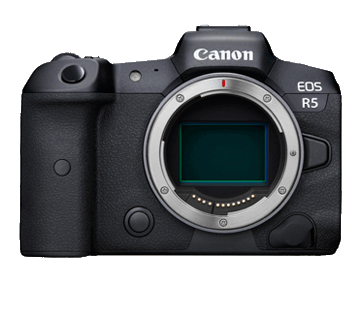
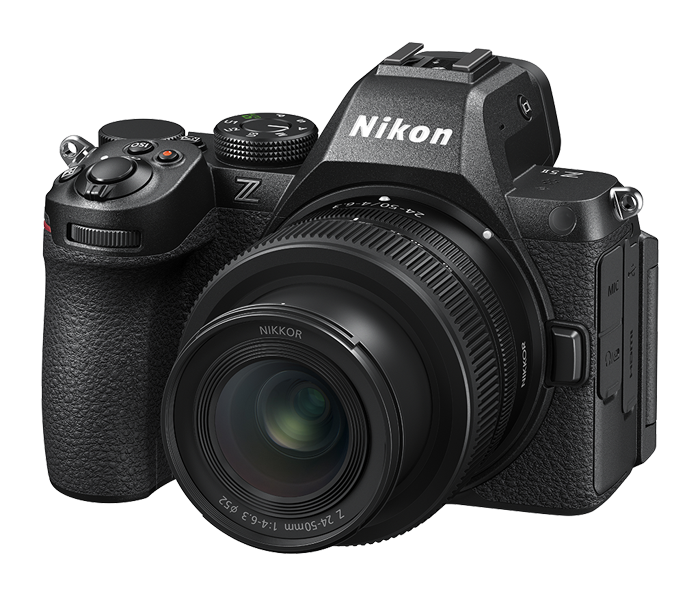
The Canon EOS R5 and Nikon Z5II are two prominent contenders in the full-frame mirrorless camera market, appealing to both professional and enthusiast photographers. With the EOS R5 being a flagship model and the Z5II being a more recently announced option, they represent different price points and specifications, which leads many buyers to consider them in comparison. Photographers might be choosing between these two based on their needs for image quality, autofocus performance, video capabilities, and overall value, particularly given that they serve different segments of the market.
Specifications Comparison
Detailed Comparison
Image Quality
The image quality produced by a camera is pivotal, and in this respect, the Canon EOS R5 showcases its superior performance with a 45-megapixel full-frame sensor. This high resolution allows for more detailed images, making it an excellent choice for landscape photographers and commercial work that demands significant enlargements. The EOS R5 also boasts an impressive ISO range of 100-51200, which expands to a remarkable 102400, providing excellent low-light performance.
On the other hand, the Nikon Z5II features a 24-megapixel full-frame sensor. While this resolution is suitable for most applications, it may not match the R5's detail in high-resolution prints and cropping scenarios. However, the Z5II's ISO range yields satisfactory results in low-light conditions, though it does not quite reach the extremes of the Canon. Generally, the EOS R5 delivers superior image quality, particularly where high detail and low-light performance are essential.
Autofocus System
Autofocus is another crucial element in photography, and in this category, the Canon EOS R5 takes the lead once again with its impressive 1053 autofocus points, which ensure fast and reliable focusing across a wide area of the frame. The dual pixel autofocus system is particularly noteworthy, offering excellent tracking capabilities for both still images and video. This is vital for action and wildlife photographers who require accuracy.
In contrast, the Nikon Z5II offers 299 autofocus points, which, while sufficient for most scenarios, may not provide the same level of coverage and precision as the R5. Nikon's focusing system performs well, especially in good lighting, but lacks the advanced tracking performance found in the EOS R5. Hence, for those who prioritize autofocus performance, the Canon EOS R5 is the clear winner in this aspect.
Video Capabilities
Both cameras are capable of recording high-quality video, but they cater to different needs and specifications. The Canon EOS R5 shines with its 4K recording option at 120 frames per second, making it extraordinarily versatile for videographers and content creators looking to capture high-tempo action or produce stunning slow-motion footage. Additionally, the R5 supports various video formats, including 8K recording, which further enhances its appeal to professional filmmakers.
Conversely, the Nikon Z5II supports 4K recording up to 60 frames per second, which is more than adequate for most casual and even some professional applications. However, it does not support 8K and lacks the high-frame-rate capabilities of the R5. This makes the Canon EOS R5 the preferred choice for videography, particularly for those needing advanced filming features.
Build & Ergonomics
Build quality is critical for a camera's usability in different environments. Both the Canon EOS R5 and Nikon Z5II are constructed with weather sealing, giving them an advantage in adverse conditions. The EOS R5 weighs slightly more at 738 grams compared to the Z5II's 700 grams, but the difference is minimal and likely unnoticeable during extended use. Canon's design tends to have a slightly more ergonomic grip, which can aid during long shoots.
The dimensions of the cameras show that while the R5 is marginally larger, both cameras are compact enough for travel and fieldwork. Thus, while there are slight differences in ergonomics and feel, both models perform well in their respective settings.
Battery & Storage
Battery life is an important consideration for photographers and videographers who often work on location. The Canon EOS R5 has a battery life of approximately 320 shots, while the Nikon Z5II offers slightly better longevity at around 330 shots. However, in real-world scenarios, users often find that battery management and optimization can yield better performance than the numbers alone suggest.
Both cameras support dual storage options, which is beneficial for photographers who need to ensure data integrity by writing to two cards simultaneously. The R5's performance during long sessions might be hampered by its higher power consumption due to its advanced features. Thus, although the Nikon Z5II has a marginal advantage in battery life, both models meet the demands of most users.
Value for Money
Value is a significant factor for buyers, and the Canon EOS R5, priced at $3899, represents a higher investment primarily due to its advanced features and specifications. For professionals who need the highest quality in imaging and video production, this investment can be justified. The R5's superior resolution, autofocus system, and video capabilities contribute to its overall value proposition.
In contrast, the Nikon Z5II is priced at $1699, which makes it a more accessible option for enthusiasts and those new to full-frame photography. While it does come with trade-offs, such as lower resolution and fewer autofocus points, it still offers excellent performance for the price. For demographics such as hobbyists or budget-conscious professionals, the Z5II stands out as an excellent value option, providing a strong feature set without the high cost associated with the R5.
Our Verdict
Overall, the Canon EOS R5 comes out on top, particularly for those who prioritize exceptional image quality, autofocus performance, and advanced video capabilities. It is ideal for professionals and serious enthusiasts willing to invest in a high-end product that can handle various shooting scenarios. Meanwhile, the Nikon Z5II, with its competitive pricing, offers great value for those looking to step into full-frame photography without breaking the bank. It is well-suited for photographers who do not require the extreme specifications of the R5 but still seek quality performance.