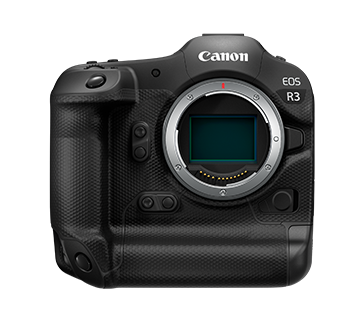
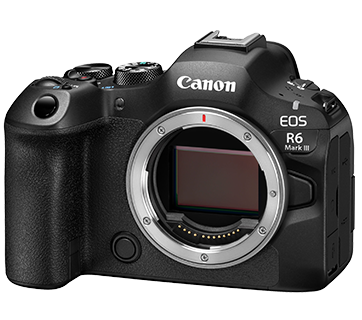
The Canon EOS R3 and the Canon EOS R6 Mark III are two highly regarded full-frame mirrorless cameras catering to different types of photographers. Commonly compared to each other, these models are particularly appealing to professionals and serious enthusiasts who prioritize outstanding image quality and cutting-edge features. The R3 is designed with sports and wildlife photographers in mind, delivering fast performance and advanced autofocus capabilities, while the R6 Mark III offers an excellent balance of features that could attract a wider audience, especially those focused on video production. Key differentiators include resolution, autofocus systems, and pricing, which ultimately guide the decision for potential buyers.
Specifications Comparison
Detailed Comparison
Image Quality
Both the Canon EOS R3 and EOS R6 Mark III boast full-frame sensors capable of producing stunning images. The R3 has a 24-megapixel sensor, which can capture detailed images suitable for professional use, particularly in dynamic shooting conditions. In contrast, the R6 Mark III also utilizes a full-frame sensor but at a similar resolution, ensuring excellent low-light performance with an ISO range that extends to 204800. However, the slight difference in sensor dimensions (36 x 24 mm for R3 vs. 35.9 x 23.9 mm for R6 Mark III) offers negligible impacts in practical image quality. Both cameras can satisfy high-end image quality demands, although the R3 is known for its superior dynamic range in challenging lighting situations. Overall, both perform exceptionally well, but the R3 slightly edges out in dynamic conditions.
Autofocus System
The R3 features an impressive autofocus system with 1053 focus points, complemented by Canon's Dual Pixel CMOS AF technology that enables rapid subject tracking and eye detection for both humans and animals. This makes it particularly suitable for fast-paced photography, such as sports and wildlife. The EOS R6 Mark III, on the other hand, offers an even more extensive autofocus system with a staggering 4897 focus points. This allows for extremely versatile tracking and focusing options, potentially benefiting diverse photographic styles. While the R6 excels in terms of sheer point count, the R3's performance in real-time focusing and subject recognition is refined, making it more efficient in rapidly changing scenes. Autonomously, both systems are excellent, but the robust targeting capabilities put the R3 ahead when precision in motion is paramount.
Video Capabilities
Both the EOS R3 and R6 Mark III support stunning 4K video recording at up to 120 frames per second, making them ideal for videography enthusiasts seeking high frame rates for smooth playback. The R3's encoding options, combined with its advanced cooling system, are exceptional for extended recording sessions, ensuring it can manage thermal performance effectively. The R6 Mark III, with its robust video features, also supports unmatched versatility in shooting options, targeting a video-centric segment. Given that both options offer 4K at similar frame rates, the results are similar in practice, but the R3 is often favored for its superior heat management during longer projects. However, both embed powerful video functionalities, making this a draw for those focused purely on 4K video capabilities.
Build & Ergonomics
Construction quality and ergonomics are significant factors where both the R3 and R6 Mark III shine. The R3 is heavier, weighing in at 1015 grams, indicating a more robust build that feels professional in hand and is designed for intensive usage, especially in challenging environments. It measures 150 x 143 x 87 mm, providing a comfortable grip for extended use. Conversely, the R6 Mark III, at 699 grams and dimensions of 138 x 98 x 88 mm, offers improved portability without compromising on grip or durability, also maintaining weather sealing to protect against various elements. Photographers needing a lightweight option may prefer the R6 Mark III for travel or daily carry, while those prioritizing a rugged, professional feel might lean towards the R3. Given both perform well under ace conditions, it ultimately boils down to user preference regarding weight and feel.
Battery & Storage
Battery life is an essential consideration for working professionals, especially when shooting in demanding situations. The Canon EOS R3 boasts an impressive battery life, capturing up to 760 shots on a single charge, making it more dependable for full-day shoots. Meanwhile, the R6 Mark III offers comparable performance with a slightly lower shot count due to its more compact battery. In terms of storage, both cameras utilize CFexpress Type B for faster write speeds, which is crucial for high-resolution video and continuous shooting. Overall, while the R3 clearly surpasses in battery longevity, many users may find the R6 adequate for their needs, especially for lighter shooting duties, contributing to individual preferences in each camera's overall usability.
Value for Money
When it comes to price, the R3 is significantly higher at $5999 compared to the R6 Mark III's $2799. This price difference is reflective of the R3's positioning as a high-end model designed for professionals who require the most advanced features like its expansive autofocus system and high-speed performance. For general photographers or video creators, the R6 Mark III strikes an excellent balance of price and feature set, making it a far more viable option for those not necessarily needing the absolute best. The value for money perspective heavily favors the R6 Mark III for hobbyists and settings where budget constraints are critical. However, for pros seeking unmatched performance, the R3 justifies its sticker price through its premium features. Thus, while the R3 offers premium capabilities, the R6 Mark III is undoubtedly a better choice for overall value.
Lens Ecosystem
Both cameras share the Canon RF mount, providing access to a compelling range of lenses that enhance their functionality for different photography genres. Canon's RF lens lineup is continuously expanding, ensuring that photographers using either camera will have access to high-quality optics for numerous applications. However, due to the absence of one standout attribute regarding lens compatibility unique to either camera, this section stands as a tie. Both users will benefit from Canon's extensive ecosystem, ensuring both the R3 and R6 Mark III have robust support no matter the chosen lens, making it easier for photographers to maximize their photographic vision. Overall, with no significant differentiators in lens offerings, this aspect feels equal across both models.
Our Verdict
Overall, the Canon EOS R3 emerges as the winner in this comparison, particularly for professionals demanding top-tier performance in fast-paced shooting environments. Its superior autofocus system, battery life, and build quality justify its higher price point. Meanwhile, the Canon EOS R6 Mark III offers remarkable value and versatility for video creators and those who may not need the advanced features of the R3. In scenarios where budget is a considerable factor or lighter weight is beneficial, the R6 Mark III excels, making it a suitable choice for most enthusiast photographers and videographers. Both cameras stand out in their respective categories, ensuring that buyers will find satisfaction based on their unique requirements.