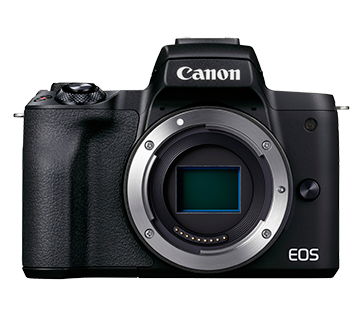
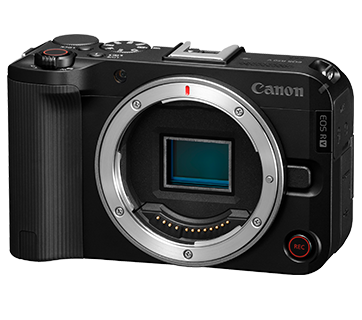
The Canon EOS M50 Mark II and the Canon EOS R50 V are both compact, entry-level mirrorless cameras targeting photography enthusiasts, vloggers, and content creators seeking an affordable and lightweight option. As successors in their respective lines, they're frequently compared due to their similar APS-C sensors, approachable price points, and appeal to the growing video-oriented user base. The M50 Mark II, released in 2020, is well-established among Canon EF-M mount users, while the R50 V, introduced in 2025, represents Canon's push into the future with the RF-S mount and updated features.
Those choosing between these two will likely be considering factors such as lens compatibility, autofocus performance, video features, and long-term system investment. The key differentiators include the R50 V's advanced video capabilities, the new RF-S lens mount, and faster shooting speeds, while the M50 Mark II is notable for its mature ecosystem and proven reliability. Understanding their strengths and limitations is essential for buyers deciding which camera best fits their needs.
Specifications Comparison
Detailed Comparison
Image Quality
Both the Canon EOS M50 Mark II and the EOS R50 V sport similar APS-C-sized sensors (22.3 x 14.9 mm). The M50 Mark II offers 24.1 megapixels, while the R50 V closely follows with 24 megapixels. In practical photography, the difference in resolution is negligible and won't be noticeable in prints or crops.
Image quality from both cameras is predictably excellent for APS-C standards, delivering vibrant color reproduction and good dynamic range suitable for enthusiast photographers and hobbyists. The more recent R50 V may benefit from minor image processing improvements, thanks to newer internal processing, but without a significant sensor upgrade, real-world differences remain minimal.
Both cameras have similar ISO capabilities, with the M50 Mark II natively ranging from 100 to 25,600 (expandable). The R50 V's ISO range is not specified in this comparison, but Canon APS-C sensors typically perform similarly regarding noise control, especially at typical shooting ISOs. If you are mainly focused on stills, neither camera will have a decisive advantage.
Autofocus System
Autofocus is a crucial area for modern mirrorless cameras, especially for video creators and those taking action or family photos. The Canon EOS M50 Mark II uses Canon's older autofocus system, which, while reliable for stills and stationary subjects, struggles with tracking fast-moving subjects and can be less effective in continuous-servo modes during video recording.
The Canon EOS R50 V, released in 2025, benefits from newer focusing algorithms and processor improvements. While specific AF point counts aren't listed, Canon's newer RF-S line is known to incorporate more advanced subject detection (human, animal, and eye AF) and better real-time tracking, making it significantly more capable for action, events, and vlogging-especially in challenging lighting.
During video use, the R50 V's enhanced autofocus performance is especially noticeable. The subject tracking is stickier and more accurate, resulting in fewer missed frames or focus hunting, thus simplifying solo shooting and dynamic scenes.
Video Capabilities
Video performance is increasingly important, particularly for vloggers and hybrid shooters. The Canon EOS M50 Mark II offers 4K recording, but with noticeable limitations: a significant crop factor and slower autofocus due to lack of Dual Pixel AF in 4K mode. This makes it less ideal for wide-angle vlogging or dynamic shooting and undermines its potential for content creators aiming at 4K formats.
By contrast, the Canon EOS R50 V features uncropped 4K 60p video, a significant leap over the M50 Mark II. Higher frame rates enable smooth, detailed slow-motion footage, and Canon's newer focusing systems mean that Dual Pixel AF is fully functional in all video modes, offering reliable subject tracking. The R50 V includes digital stabilization (as opposed to optical), which aids handheld work though can introduce minor cropping.
For creators prioritizing video, especially for YouTube, streaming, or social media, the R50 V represents a major upgrade. It resolves the frustrations associated with the M50 Mark II's video workflow.
Build & Ergonomics
Physically, both cameras are lightweight and easy to carry, making them excellent options for travel or on-the-go content creation. The Canon EOS M50 Mark II has a fully articulated touchscreen, which is highly valued for both photography at awkward angles and vlogging. The R50 V also offers a 3-inch, 1,040,000-dot screen with full articulation, matching the flexibility needed by creators.
In terms of build, the R50 V weighs in at 370g and gains a slight edge with its compact dimensions (119 x 74 x 45 mm). Both bodies are predominantly plastic but feel solidly built for their class, and button layouts are optimized for intuitive control. The choice between the two may come down to personal preference for grip shape or button arrangement, but ergonomically, they are more similar than different.
Given the comparable screen articulation and overall usability, neither camera has a substantial advantage here. The R50 V's slight reduction in size and weight may appeal to some, while the M50 Mark II's established ergonomics negate any significant gap.
Battery & Storage
Both cameras use compact batteries, typical for their segment, resulting in similar real-world battery life that generally suffices for moderate daily shooting or short video projects. Neither model is considered an endurance champion, so additional batteries are recommended for extended outings or long video sessions.
Storage-wise, both models use a single SD card slot (not specified for R50 V, but standard for Canon's entry-level bodies), which is adequate but not suited for demanding professionals needing backup redundancy.
Unless one is willing to carry more batteries, either camera will require some planning for extended sessions. In this regard, their performance is fairly evenly matched.
Value for Money
The Canon EOS M50 Mark II, despite its older tech and discontinuation status in some regions, is often available at a modest discount and enjoys a well-established user community with a comprehensive array of affordable EF-M lenses. Its value proposition lies in its mature ecosystem, lower used prices, and reliability for beginners or those not seeking cutting-edge performance.
The EOS R50 V, with a launch price of $649, delivers significantly upgraded video specs, autofocus capabilities, and faster burst shooting (12 fps). As Canon continues to grow its RF lens ecosystem, investment in this newer platform offers future compatibility, enhanced features, and longevity.
For buyers focused on immediate savings and a wide array of affordable secondhand lenses, the M50 Mark II delivers strong value. However, for those wanting the latest features, improved performance, and longer-term system support, the R50 V's compelling feature set justifies its asking price.
Overall, the R50 V offers a stronger value proposition when considering long-term investment and features.
Lens Ecosystem
The lens mount is a critical consideration for any mirrorless camera choice. The Canon EOS M50 Mark II uses the EF-M mount, which, while offering a compact and affordable selection of lenses, has a relatively limited native lineup and is not being further developed by Canon. Adaptation to other mounts is possible but comes with usability trade-offs.
In contrast, the EOS R50 V uses Canon's RF-S mount, compatible with both RF-S and full-frame RF lenses. This system is actively expanding, offering a growing range of native glass with improved optical performance and autofocus speed. This makes the R50 V much more future-proof, providing access to Canon's latest lens innovations and more choices as the RF ecosystem grows.
For photographers or videographers prioritizing a wide or future-proof selection, the R50 V's RF-S mount is the logical choice. However, if you already own EF-M lenses or are on a tight budget, the M50 Mark II may still serve your needs adequately.
Our Verdict
Weighing all aspects, the Canon EOS R50 V emerges as the overall winner. Its advanced autofocus, vastly superior video capabilities, cutting-edge burst speed, and future-proof RF-S lens mount make it the more versatile and modern option for the majority of entry-level users, vloggers, and those wanting to invest in Canon's growing mirrorless ecosystem. The R50 V represents a clear upgrade in performance and longevity compared to the M50 Mark II. That said, the M50 Mark II remains a solid and budget-friendly choice for still photographers already invested in EF-M lenses, or those who don't require top-tier autofocus or advanced video performance. It's proven, straightforward, and capable in its own right, but is better suited to bargain hunters and those prioritizing immediate cost savings over long-term system growth.
Canon EOS M50 Mark II
Canon EOS R50 V
Also Compare
Frequently Asked Questions
Is the Canon EOS R50 V worth upgrading to if I already own an M50 Mark II?
If you primarily shoot video, require faster autofocus, or want to access Canon's expanding RF-S lens lineup, the R50 V is a substantial upgrade. For casual stills shooters or those invested in EF-M glass without need for advanced video features, upgrading is less urgent.
Which camera is better for vlogging and YouTube?
The R50 V clearly outperforms the M50 Mark II for vlogging and YouTube. It offers uncropped 4K 60p video, superior autofocus during recording, and digital stabilization-all features that simplify high-quality solo content creation.
Can I use my EF or EF-S lenses with these cameras?
With the appropriate Canon adapter, you can use EF and EF-S lenses on both cameras. However, the R50 V (RF mount) supports ongoing lens development and better compatibility, while the M50 Mark II's EF-M mount is more limited in terms of both current and future lens selection.
Which camera has better autofocus for moving subjects?
The R50 V boasts a more advanced autofocus system with improved subject tracking and eye detection, especially for moving subjects or when shooting video. The M50 Mark II's AF system is adequate for still scenes but less reliable with motion.
Is the RF-S lens system worth investing in for the future?
Yes, Canon is rapidly expanding its RF and RF-S lens lineup, making it a better choice for future expansion, new technologies, and broader third-party support. The EF-M system is no longer actively developed by Canon.
Are both cameras suitable for beginners?
Absolutely. Both models are beginner-friendly, offering intuitive menus, touch controls, and compact bodies. The R50 V adds newer technology and longer-term system viability, but the M50 Mark II is still an excellent and affordable starting point.