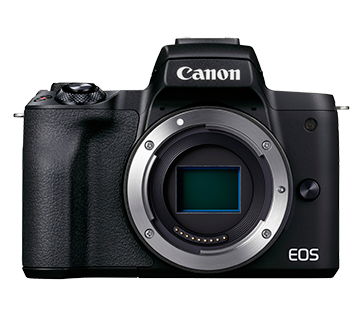

The Canon EOS M50 Mark II and Sony ZV-E10 II are two popular mirrorless cameras aimed at content creators, vloggers, and enthusiasts seeking high-quality performance in a compact package. Both models are lightweight, offer APS-C sensors, and are favored by users who want more creative control than a smartphone or compact camera can provide. These cameras are frequently compared because they occupy a similar price bracket and target a similar audience, particularly those interested in both photography and video.
Choosing between these two often comes down to specific needs: Canon's M50 Mark II has been a mainstay for vloggers and entry-level shooters, thanks to its approachable interface, flip-out touchscreen, and tried-and-true color science. The Sony ZV-E10 II, released in 2024, is a newer entrant with a host of technical upgrades-aimed especially at creators who want cutting-edge autofocus, higher resolution video, and a larger choice of lenses. The key differentiators revolve around sensor performance, autofocus, video frame rates, ergonomics, and the future-proofing each system promises.
Specifications Comparison
Detailed Comparison
Image Quality
Both the Canon EOS M50 Mark II and the Sony ZV-E10 II utilize APS-C sized sensors, though the ZV-E10 II's sensor is marginally larger (23 x 15.5 mm vs. 22.3 x 14.9 mm) and features a higher resolution-26 megapixels compared to 24.1MP on the Canon. This gives Sony a slight edge for those seeking extra detail, cropping flexibility, or larger prints.
When it comes to ISO performance, the M50 Mark II's native range tops out at 25,600, while the Sony stretches from 100 all the way to 32,000 (expandable to 102,400), implying better low-light capabilities. In practice, real-world differences at moderate ISOs are small, though the Sony will provide cleaner results at very high sensitivities.
Canon's color science is often highlighted for its pleasing skin tones, which some photographers prefer straight out of camera. Sony, on the other hand, offers greater latitude for editing and a distinct look. Both deliver solid JPEG and RAW output, but the ZV-E10 II's increased resolution and stronger ISO specs give it a measurable edge for demanding users.
Autofocus System
Autofocus is one arena where the Sony ZV-E10 II stands out with its impressive 759 phase detection points, which enable precise, fast, and accurate autofocus across a wide portion of the frame. It leverages Sony's proven Real-time Eye-AF and subject tracking, making it ideal for video creators, portrait shooters, and those capturing moving subjects.
The Canon EOS M50 Mark II employs Canon's well-regarded Dual Pixel CMOS AF, which is smooth and reliable, especially in stills and during face-detection for vlogging. However, it covers fewer focus points and doesn't offer the same state-of-the-art tracking or speed found in the Sony. Continuous autofocus performance, particularly in challenging conditions, is superior on the ZV-E10 II.
For those relying on autofocus for video, action, or unpredictable shooting scenarios, Sony's newer and more sophisticated AF system represents clear progress.
Video Capabilities
Both cameras target video creators, but the ZV-E10 II takes the lead in terms of raw specifications and flexibility. The Sony records 4K at up to 60p, providing smoother motion, better slow-motion options, and improved future-proofing. The M50 Mark II, while offering 4K recording, is limited to 24p, with substantial crop and slower, less reliable autofocus in that mode.
Additionally, the ZV-E10 II boasts a higher ISO range for low-light video and better autofocus tracking for subjects in motion, both of which are crucial for solo creators and vloggers. Both have fully articulated touchscreens, making self-recording easy, but only Sony's LCD displays more detail (1,036,800 dots).
Neither camera has in-body stabilization, so lens choice and post-stabilization are necessary for handheld shooting. Overall, the ZV-E10 II offers significantly enhanced video flexibility, making it a stronger choice for creators prioritizing advanced video features.
Build & Ergonomics
The Canon M50 Mark II is lighter and slightly more compact than earlier Sony models, but the ZV-E10 II counters with weather sealing and a relatively lightweight build at 377g. The Sony is easier to handle in challenging conditions due to its weather-sealed construction, making it more robust for outdoor use or travel. The camera body dimensions are comparable, and both feature a fully articulated screen-a must for vloggers.
A crucial difference lies in the viewfinder: the M50 Mark II offers an electronic viewfinder (EVF), enabling comfortable composition under bright light or in traditional shooting stances. The ZV-E10 II omits a viewfinder altogether, which may deter photographers who regularly shoot handheld stills in sunlight.
Ergonomically, user experiences are similar, with intuitive controls and good menu systems. However, the lack of a viewfinder on the Sony is a notable omission for stills-focused users.
For creators prioritizing weather resistance and ruggedness, Sony wins, but for photographers valuing a built-in viewfinder and traditional camera handling, the Canon has the edge.
Battery & Storage
In terms of battery and storage, both cameras use a single SD card slot and support UHS-I speeds. Battery life on both models is competent but not class-leading-enough for light shooting or vlogging sessions but not for extended outings without spares.
Sony's newer model is typically refined for better battery optimization, though the real-world differences are small, with approximately 400-440 shots per charge for both, depending on usage patterns. Neither model supports dual card slots, which might be a limitation for professionals.
Both cameras offer USB charging, which is convenient for creators on the move. There's no substantial advantage here for either model.
Value for Money
The Canon EOS M50 Mark II is notable for its attractive price point and established user base. It offers a balanced package that appeals to beginners and budget-conscious creators, especially those who already own EF-M lenses or accessories. However, the EF-M system is somewhat limited in future lens expansion potential, and the camera's 2020 release date means some features are now showing their age.
The Sony ZV-E10 II, with its higher new-camera price, justifies the premium through cutting-edge autofocus, higher resolution, 4K60p video, robust ISO performance, and weather sealing. The Sony E-mount ecosystem provides many lens and accessory options, supporting both enthusiast and semi-pro growth.
For users seeking the latest tech, especially in autofocus and video, the ZV-E10 II offers superior value for its segment, despite a higher upfront cost. For beginners or those looking to save, the Canon remains competitive, but the Sony's future-proofing and features provide stronger long-term value.
Lens Ecosystem
Canon's EF-M mount, while home to some quality and compact lenses, is limited compared to Canon's own RF and EF systems and especially when compared to Sony's E-mount. With Canon's main focus now shifted to the RF mount, future EF-M lens releases are unlikely, restricting ongoing expansion for M-series users.
In contrast, Sony's E-mount is one of the most established APS-C/full-frame mirrorless ecosystems, with both first-party and third-party lenses available spanning all focal lengths and price points. This makes the ZV-E10 II a more flexible and future-proof choice for users looking to grow their system over time.
Thus, for lens choice and long-term system growth, Sony's offering is significantly stronger.
Our Verdict
Overall, the Sony ZV-E10 II outpaces the Canon EOS M50 Mark II in most key categories-image quality, autofocus sophistication, video capabilities, lens ecosystem, and value for money. Its newer sensor, significantly better autofocus, 4K 60p video, and the advantages of weather sealing and access to a broad E-mount lens lineup make it the superior choice for most modern content creators, vloggers, and photographers looking for performance, versatility, and growth within a system. That said, the Canon EOS M50 Mark II remains a dependable, user-friendly option for beginners, those on strict budgets, or shooters already invested in EF-M glass. Its built-in viewfinder and excellent color output retain appeal for photography enthusiasts, though its outdated 4K video offering and limited lens roadmap now make it a tougher long-term investment. For most new buyers, the Sony ZV-E10 II wins-especially for video-centric creators or those planning to expand their kit-but the Canon still has its place for those with specific needs or allegiances.
Canon EOS M50 Mark II
Sony ZV-E10 II
Also Compare
Frequently Asked Questions
Which camera is better for vlogging?
The Sony ZV-E10 II is better suited for vlogging, thanks to its advanced autofocus, high-quality 4K 60p video, weather sealing, and broad E-mount lens support. The Canon EOS M50 Mark II still provides good performance for stationary vlogs, but its 4K output is limited and autofocus less robust in video.
Does either camera have in-body stabilization?
Neither the Canon EOS M50 Mark II nor the Sony ZV-E10 II features in-body image stabilization. You'll need stabilized lenses or gimbals for smooth handheld video, though image stabilization options in each lens system vary.
Can I use my existing Canon or Sony lenses with these cameras?
The Canon EOS M50 Mark II uses the EF-M mount, which only works natively with EF-M lenses, though EF and EF-S lenses can be adapted with reduced AF performance. The Sony ZV-E10 II uses the E-mount, compatible with a wide and growing range of Sony and third-party lenses, making it a more future-proof platform for lens adaptability.
Which is better for low-light photography?
The Sony ZV-E10 II has a slight edge in low-light photography due to its larger sensor area, higher resolution, and much higher ISO range. However, both cameras produce solid results at moderate ISO settings; lens choice will also strongly affect low-light performance.
Is the Canon EOS M50 Mark II still worth buying in 2024?
While the Canon EOS M50 Mark II is showing its age, it remains a good entry-level option for stills shooters and beginner vloggers who prioritize affordability and ease of use-especially if you already have EF-M lenses. However, those seeking advanced video features, lens growth, or cutting-edge performance may find the Sony ZV-E10 II a more forward-looking investment.
Do either of these cameras support external microphones?
Yes, both the Canon EOS M50 Mark II and Sony ZV-E10 II have microphone input ports, allowing for improved audio quality with external microphones-an important feature for vloggers and content creators.