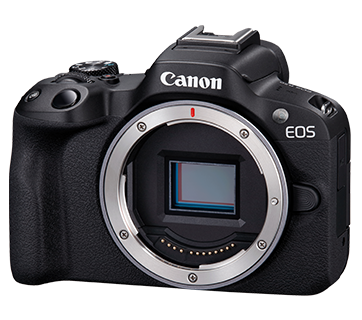

The Canon EOS R50 and Sony ZV-E10 II are two popular choices among aspiring filmmakers and content creators who are looking for compact and versatile mirrorless cameras. While both models offer APS-C sensors and impressive specifications, their target audiences can differ slightly: the EOS R50 caters more toward general photography and videography, while the ZV-E10 II is tailored for vlogging and content creation, emphasizing user-friendly features. Key differentiators between the two models include video capabilities, autofocus systems, and overall ergonomics, which can significantly influence a buyer's decision based on their specific needs, whether it be casual photography or professional-grade video production.
Specifications Comparison
Detailed Comparison
Image Quality
The Canon EOS R50 features a 24-megapixel APS-C sensor, while the Sony ZV-E10 II offers a slightly higher resolution at 26 megapixels. This translates into superior detail retention for the ZV-E10 II when shooting at larger prints or cropping images. Furthermore, both cameras have an ISO range stretching from 100 to 32,000, giving them similar versatility in low-light settings; however, the ZV-E10 II has an extended option to 102,400, which could be beneficial for extreme low-light environments. In practical applications, users have reported the color science of Canon cameras as being vibrant and pleasing, whereas Sony is known for its remarkable performance in dynamic range, particularly in post-processing scenarios, which could be advantageous for professional photographers. Overall, while both cameras deliver excellent image quality, the slight edge goes to Sony for resolution and low-light capability.
Autofocus System
The autofocus capabilities of the two cameras vary significantly, with the Canon EOS R50 featuring 651 autofocus points compared to the 759 points available on the Sony ZV-E10 II. This means that the ZV-E10 II can capture moving subjects with greater precision, especially for video and fast-paced photography. Both cameras offer fast and reliable autofocus performance, but the ZV-E10 II benefits from advanced features such as real-time eye autofocus and animal tracking, which can be crucial for wildlife photography or capturing candid moments. Additionally, while Canon's autofocus performance is commendable, Sony's system is often praised for better subject tracking in dynamic environments. Therefore, for those prioritizing autofocus for video and moving subjects, the Sony ZV-E10 II emerges as the better option.
Video Capabilities
When it comes to video capabilities, the Sony ZV-E10 II holds a clear advantage with its ability to shoot 4K video at 60p, allowing for higher frame rates and smoother motion. In contrast, the Canon EOS R50 is limited to 4K at 30p, which may suffice for casual content creation but lacks the versatility of higher-frame-rate options. Moreover, the ZV-E10 II is specifically designed for vlogging, featuring a fully articulating screen which is crucial for self-recording. Additionally, the ZV-E10 II's specifications include features such as a dedicated button for switching to bokeh mode, enhancing video storytelling. While both cameras lack in-body stabilization, the overall video capabilities of the Sony ZV-E10 II make it the superior choice for videographers. Thus, for those focused on capturing high-quality video, the Sony model wins convincingly.
Build & Ergonomics
In terms of build quality, the Canon EOS R50 offers a solid and lightweight design at 375g, making it easy to carry for extended shooting sessions. It is equipped with an electronic viewfinder, allowing users to compose shots without relying on the LCD screen alone. Conversely, the Sony ZV-E10 II, although similarly light at 377g, is slightly more compact and lacks a viewfinder, posing a potential disadvantage for some photographers who prefer having one. However, the ZV-E10 II features a weather-sealed body, which can be a vital consideration for outdoor shooters facing varying environmental conditions. Both cameras sport a 3-inch LCD screen, but the Canon's higher resolution (1,620,000 dots versus 1,036,800 dots for the Sony) ensures clearer visibility of details. In this category, while both cameras triumph in practicality, the added weather-sealing gives the Sony ZV-E10 II an edge.
Battery & Storage
The battery life of the Canon EOS R50 is rated for approximately 500 shots, which allows for ample shooting time under normal conditions. However, the Sony ZV-E10 II also offers commendable battery performance, generally rated for around 440 shots. When it comes to storage, both cameras accept popular SD card types but differ in the flexibility of their file formats; the Canon R50 supports RAW and JPEG, while the ZV-E10 II also allows for high efficiency video and photos in high-compression formats. Such flexibility is particularly advantageous in terms of managing storage space when recording 4K videos. Despite the typical performance, neither camera boasts significant superiority in battery life when considering the practical requirements of content creation. Hence, this aspect is deemed a tie.
Value for Money
The Canon EOS R50 is competitively priced at $679, making it a cost-effective option for beginner photographers and content creators aiming for quality without breaking the bank. On the other hand, the Sony ZV-E10 II IS priced higher at $1000, which positions it as a premium offering specialized for vloggers and videographers that require advanced features. This price tag reflects the additional benefits of enhanced video capabilities and superior autofocus systems, which are critical for serious video production. Although the EOS R50 offers excellent image quality and ease of use, those serious about video making may find value in the richer feature set of the ZV-E10 II despite the higher price. Overall, while the Canon offers unmatched value within its price range, the long-term investment in the Sony may justify its price for dedicated content creators.
Our Verdict
Considering the balance of strengths across different sections, the Sony ZV-E10 II emerges as the overall winner primarily due to its superior video capabilities, advanced autofocus system, and vlogging-friendly design. Those drawn to high-frame-rate video and subject tracking will benefit significantly from its features. However, the Canon EOS R50 stands out due to its affordability and appealing image quality, making it an excellent choice for beginners or casual photographers seeking a reliable all-around camera. Ultimately, the decision boils down to the user's primary focus: if video is paramount, the ZV-E10 II is ideal; if still photography matters more alongside a budget-friendly option, the EOS R50 proves to be an attractive alternative.
Canon EOS R50
Sony ZV-E10 II
Also Compare
Frequently Asked Questions
Which camera is better for video shooting?
The Sony ZV-E10 II is better for video shooting as it supports 4K at 60p, has advanced autofocus features, and is built specifically for vlogging and content creation.
Is the Canon EOS R50 suitable for beginners?
Yes, the Canon EOS R50 is a very user-friendly camera with a lightweight design and excellent image quality, making it ideal for beginners entering the world of photography and videography.
How do the autofocus systems compare?
The Sony ZV-E10 II offers a more advanced autofocus system with 759 points and enhanced tracking capabilities, making it superior to the Canon EOS R50's 651 points, particularly for video content.
What is the difference in price, and is it justified?
The Canon EOS R50 is priced at $679, while the Sony ZV-E10 II is $1000. The higher price of the ZV-E10 II is justified by its advanced video features, enhanced autofocus, and vlogging-focused design.
Do both cameras have stabilization features?
Neither camera features in-body stabilization, which is often considered a crucial feature for video shooting, so external stabilization methods may be necessary for both.
What type of photographer or videographer should choose each camera?
The Canon EOS R50 is great for beginners and still photography enthusiasts, while the Sony ZV-E10 II is designed for content creators, vloggers, and videographers who prioritize video capabilities and autofocus performance.