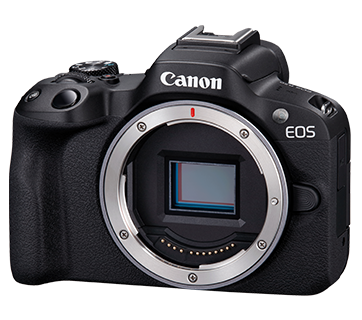
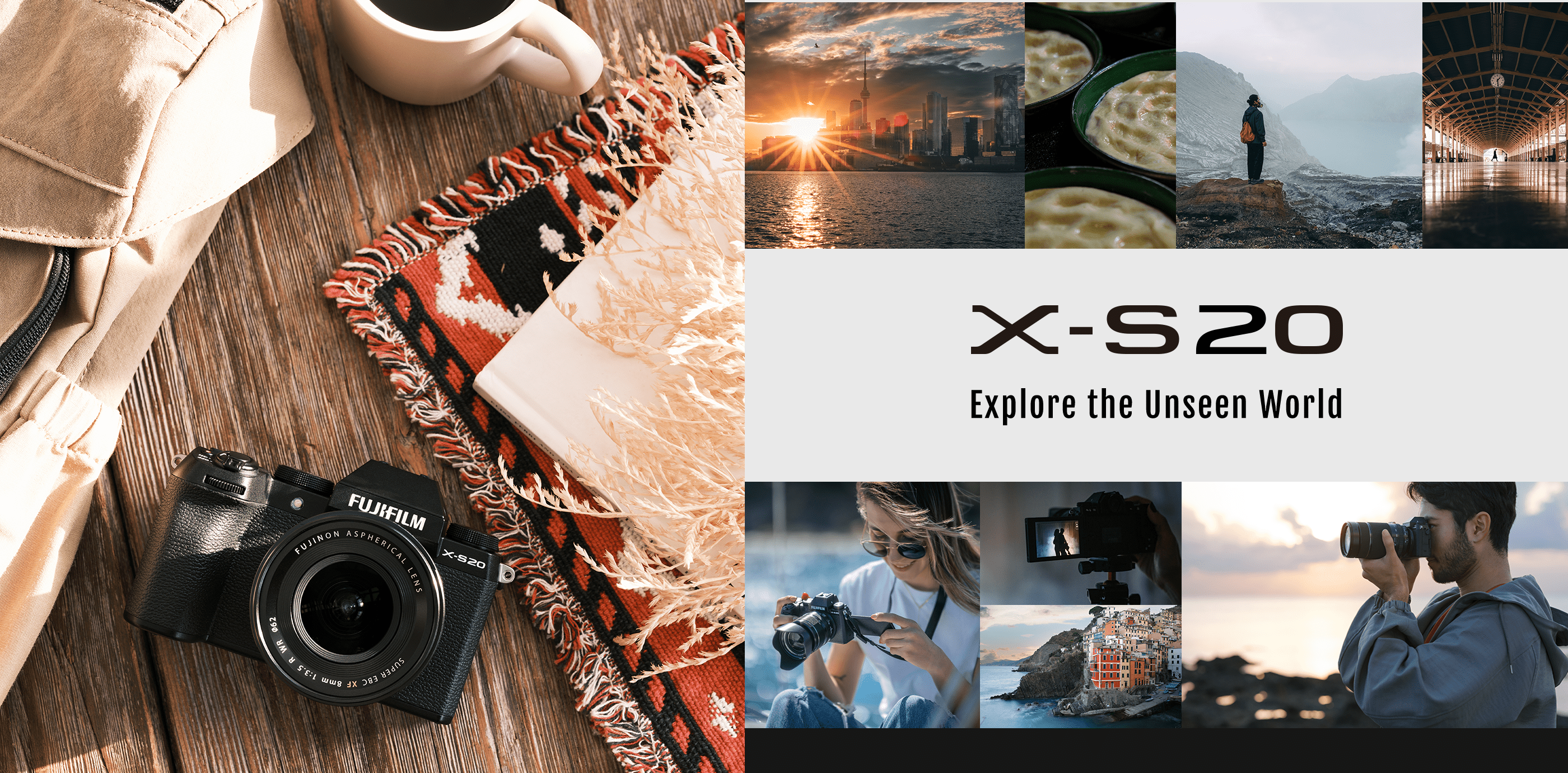
The Canon EOS R50 and the Fujifilm X-S20 are two prominent contenders in the APS-C mirrorless camera market, appealing to both enthusiasts and budding photographers. Each camera brings unique strengths to the table, making them popular choices for varying photography needs. Canon's offering is characterized by its compact size and affordability, while Fujifilm's model boasts advanced video capabilities and in-body stabilization, catering to a diverse clientele looking to capture high-quality imagery and video effortlessly.
Photographers choosing between the two will find that both models excel in their respective niches. Key differentiators include video performance, autofocus capabilities, price, and overall ease of use. The R50 is more budget-friendly, while the X-S20 offers superior features that justify its higher price point. Understanding these aspects can aid buyers in selecting the camera that best meets their specific requirements.
Specifications Comparison
Detailed Comparison
Image Quality
In terms of image quality, the Fujifilm X-S20 holds a slight edge with its 26-megapixel sensor compared to the Canon EOS R50's 24-megapixel sensor. This increase in resolution translates to more detailed images, notably useful for large prints or cropping in post-processing. Additionally, Fujifilm's unique film simulation modes add creative flexibility, allowing photographers to emulate various film stocks without extensive editing.
On the other hand, the Canon EOS R50 benefits from slightly better low-light performance at its base ISO settings, as the ISO range extends up to 32,000. While the X-S20 does have an expanded ISO range that reaches up to 51,200, the effective usability at higher ISOs can vary, often depending on the specific lighting conditions and the individual technique of each user.
Both cameras incorporate APS-C sensors that yield images with excellent dynamic range, but real-world performance can vary. Overall, the different sensor technologies and processing engines in use lead to unique color profiles and rendering, which users might prefer based on their shooting style. However, the additional detail and creative options with the X-S20 give it the upper hand in this category.
Autofocus System
The autofocus systems of both cameras are sophisticated, yet they cater to different shooting scenarios. The Canon EOS R50 features 651 autofocus points, allowing for comprehensive coverage and precision in focus tracking, ideal for fast-moving subjects, especially in still photography.
Conversely, the Fujifilm X-S20 has 425 autofocus points but is notable for its high-speed performance, achieving a maximum frame rate of 20 fps, which can benefit sports and action photographers. Canon's model peaks at 12 fps, which, while respectable, doesn't match the burst capability of the X-S20.
While both systems are capable, the differences in performance metrics mean that the R50 excels in static shooting conditions, while the X-S20's system may serve those who require speed and accuracy in dynamic environments better, solidifying its classification as the winner in this area.
Video Capabilities
When it comes to video, the Fujifilm X-S20 outshines the Canon EOS R50 with its ability to record 4K video at up to 60p, compared to the R50's maximum of 30p. This higher frame rate results in smoother motion rendering, making it a superior choice for professional video applications or enthusiasts looking to capture fast-action footage. Furthermore, the X-S20's 7 stops of in-body stabilization provide a significant advantage in creating stable handheld videos, especially during movements.
The Canon EOS R50, while still capable of producing good quality video, lacks internal stabilization, which could lead to shakier footage unless using stabilized lenses or additional stabilization gear. Additionally, the capability to shoot in F-Log on the X-S20 gives videographers more flexibility in post-production, allowing for greater color grading options.
Given these factors, particularly in a video-centric application, the X-S20 is certainly the more robust option, satisfying those looking for enhanced motion capture and creative filming possibilities.
Build & Ergonomics
In terms of build quality, both cameras showcase a compact form factor, but the designs cater to different user experiences. The Canon EOS R50 is smaller and lighter at 375g, making it a great travel companion for those who prioritize portability. Its dimensions also afford a more discreet profile, which can be advantageous for street photography.
The Fujifilm X-S20, despite being heavier at 491g, offers a more robust build, appealing to those who favor a slightly bulkier feel for stability in use. It also has a slightly more extensive control layout, which could benefit advanced users looking for quick access to manual controls and custom settings.
Ultimately, the ideal choice may come down to personal preference regarding weight and handling. While the R50 is ideal for users seeking a lightweight, portable option, the sturdiness and control offered by the X-S20 might suit those prioritizing a solid grip and functionality over slight weight fluctuations.
Battery & Storage
Battery life is an important consideration for photographers who spend long days shooting. The Fujifilm X-S20 boasts an impressive battery life, capable of capturing approximately 750 shots on a single charge, which is significant for extended shooting sessions without the need for frequent changes. In contrast, the Canon EOS R50's battery life does not have an explicit coverage stated, but generally, Canon models have a lower longevity than the X-S20 in practical use.
Storage also plays a vital role in capturing high-resolution content. Both models use SD cards, but the X-S20 supports faster write speeds that should be advantageous when shooting high-frame-rate video or burst shooting in RAW format. The R50, while competent, may not match the buffer capabilities seen in the X-S20 due to its specifications and processing.
Thus, for photographers and videographers who prioritize longevity and storage efficiency, the X-S20 clearly provides more reliability and better performance in terms of battery and memory capabilities.
Value for Money
When assessing value, the price difference between the two models is considerable, with the Canon EOS R50 retailing at $679, while the Fujifilm X-S20 is priced at $1299. The R50 stands out as an entry-level option that packs substantial features for its cost, suitable for newcomers to photography or casual users looking for quality without the hefty investment.
However, while the X-S20 is more expensive, the additional features-including superior autofocus, enhanced video capabilities, built-in stabilization, and better battery life-provide a solid argument for its price point, especially for those serious about both photography and videography.
Ultimately, the best choice will depend on the buyer's budget and requirements. For a tight budget, the R50 represents excellent value. For those who wish to invest more for enhanced capabilities, the X-S20 justifies its higher price with its advanced features.
Our Verdict
Overall, while the Canon EOS R50 presents itself as an excellent entry-level camera offering great value for money, the Fujifilm X-S20 emerges as the better choice for those who can stretch their budget and demand enhanced performance in image quality, video capabilities, and autofocus. Serious photographers and videographers will benefit from the X-S20's superior features that warrant the additional investment. Conversely, casual users or those just starting out may find the R50 to be a perfect fit for their initial leap into the world of mirrorless photography.
Canon EOS R50
Fujifilm X-S20
Also Compare
Frequently Asked Questions
Is the Fujifilm X-S20 worth the higher price compared to the Canon EOS R50?
Yes, the X-S20 provides superior features, including better autofocus, video capabilities, and in-body stabilization, which justify the higher price, especially for serious photographers and videographers.
Which camera has better low-light performance?
While both cameras have good low-light performance, the Canon EOS R50 may perform slightly better at base ISO levels, but the Fujifilm X-S20 offers expanded ISO capabilities for more versatility.
Can I use Canon RF lenses on the Fujifilm X-S20?
No, Canon RF lenses are only compatible with Canon cameras. If you're considering Fujifilm, you'll need to use Fujifilm X mount lenses.
What is the battery life comparison between the two models?
The Fujifilm X-S20 has a significantly longer battery life, rated at approximately 750 shots, making it more dependable for prolonged shooting sessions compared to the Canon EOS R50.
Which camera is better for video recording?
The Fujifilm X-S20 is better for video recording, as it supports 4K at 60p and has built-in stabilization, offering superior performance for videography compared to the Canon EOS R50.