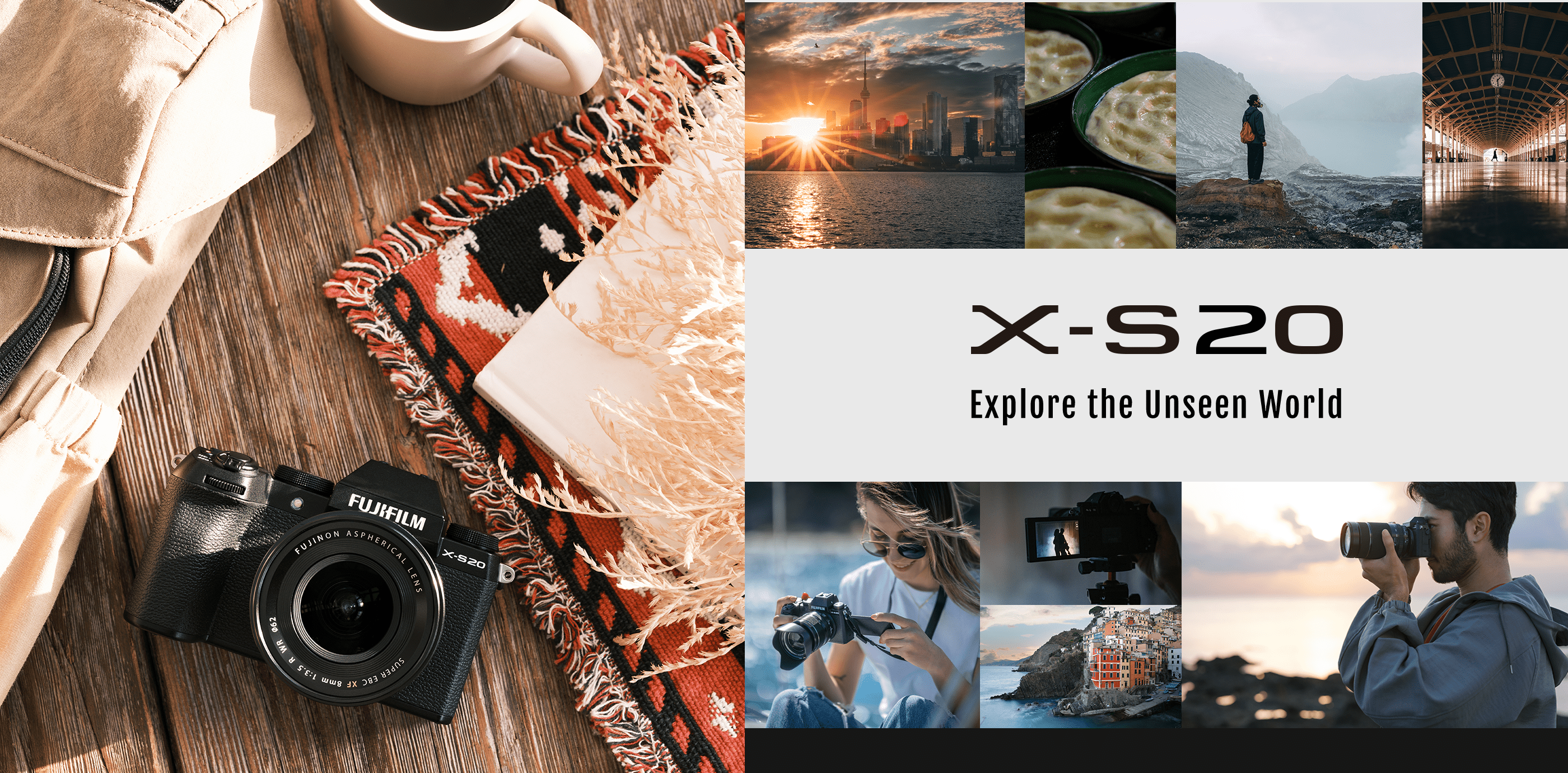
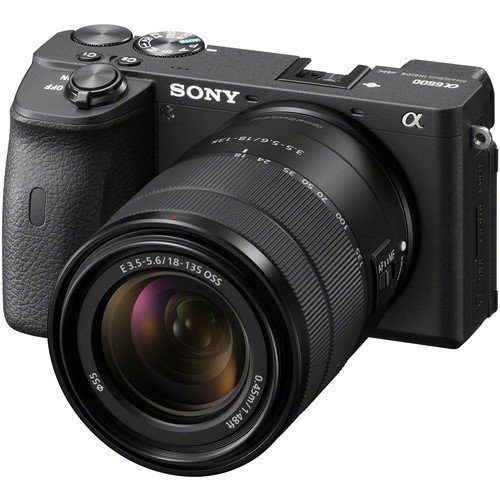
The Fujifilm X-S20 and the Sony A6600 are both popular choices among photography enthusiasts and content creators looking for high-quality mirrorless cameras. The two models appeal to those who prioritize portability, performance, and advanced features in a compact form factor. Users might be choosing between them due to their similar price points, sensor sizes, and target markets, making them ideal candidates for comparisons. Key differentiators include image quality, autofocus capabilities, video performance, build quality, and overall value proposition.
Specifications Comparison
Detailed Comparison
Image Quality
Both the Fujifilm X-S20 and the Sony A6600 utilize APS-C sensors, offering excellent image quality for their respective resolutions. The X-S20 features a 26 megapixel sensor, while the A6600 has a slightly lower resolution at 24 megapixels. In terms of ISO performance, the X-S20 has an advantage with a native ISO range of 160-12800 that expands to 80-51200, compared to the A6600's 100-32000 range that extends to 102400. This flexibility makes the X-S20 more adaptable in low-light conditions.
Moreover, Fujifilm's renowned color science produces vibrant film-like colors, making it a preferred choice for those seeking to minimize post-processing. Users have noted that images from the X-S20 often exhibit better dynamic range and tonal gradation, particularly in landscapes and portraits. However, the A6600 is not to be overlooked as it provides excellent detail retention and sharpness, making it a strong contender.
In practical use, both cameras produce stunning images, but the top-end ISO performance and color quality slightly tilt the advantage towards the Fujifilm X-S20. Thus, while both cameras deliver great image quality, the X-S20 can better handle challenging lighting situations.
Autofocus System
The autofocus systems of both the Fujifilm X-S20 and the Sony A6600 are advanced, featuring 425 phase-detection points that ensure rapid and accurate focusing capabilities. However, the implementation and performance of these systems vary.
The A6600's autofocus system benefits from Sony's industry-leading Eye AF technology, making it particularly effective for portraiture and wildlife shooting where tracking moving subjects is crucial. It also uses AI-driven algorithms for real-time object tracking, providing a more responsive shooting experience. On the other hand, the X-S20, while robust, lacks the same level of advanced tracking performance as the A6600.
In practical use, users have reported that the A6600's autofocus performance shines, particularly in dynamic scenarios. Nevertheless, the X-S20's autofocus can keep up with most standard shooting conditions. Given the specific strengths of the A6600 in active tracking and face detection, it narrowly edges out in this category.
Video Capabilities
Video performance is a significant factor for many content creators and casual videographers. The Fujifilm X-S20 supports 4K video recording at up to 60 frames per second, providing enhanced fluidity for high-resolution video. The X-S20 also features in-body stabilization rated at 7 stops, which is particularly beneficial for handheld shooting, minimizing shake and jitters.
In contrast, the Sony A6600 features 4K video recording but limits its frame rate to 30fps. While it also includes stabilization, the level is less pronounced than on the X-S20. However, the A6600's superiority in video codecs and color profiles provides videographers with greater flexibility in post-production, especially with S-Log and HDR capabilities.
Considering these factors, the X-S20 offers a more robust video capability in terms of frame rates and stabilization, appealing to action-oriented filmmakers. For videography, especially in dynamic situations, the X-S20 is the clear winner.
Build & Ergonomics
In terms of build quality, the Sony A6600 comes with a weather-sealed body, providing an extra layer of protection against harsh environments, making it suitable for outdoor shooting in varying conditions. The X-S20, while not explicitly weather-sealed, does feature a durable build that feels robust in the hand, weighing 491 grams compared to the A6600's slightly heavier 503 grams.
Both cameras feature similar dimensions, with the A6600 offering a slightly more compact design. This may appeal to users looking for a more portable option. The X-S20 boasts a higher resolution LCD screen at 1.84 million dots versus the A6600's 921,600 dots, which enhances usability when shooting at angles or in bright conditions.
While the A6600 benefits from its weather sealing, the practical differences in ergonomics are minimal, giving both cameras a solid foundation. However, in considerations of practical comfort and usability, the slight edge over screen quality allows the X-S20 to prevail.
Battery & Storage
Battery life plays a crucial role, especially for photographers who engage in extended shooting sessions. The Fujifilm X-S20 boasts a battery life rated at approximately 750 shots, while the Sony A6600 offers slightly better performance at 810 shots per charge. This can be significant for users who prioritize longevity without frequent battery changes.
Furthermore, both cameras utilize SD card storage, but the A6600 supports high-speed UHS-II cards, which can lead to faster data writing and quicker burst shooting performance. The X-S20, however, is also quite competent, offering good write speeds for most users.
When considering battery life and storage capabilities, the A6600 slightly outperforms the X-S20 with its superior battery longevity and UHS-II support. Thus, this rounding performance leads to a win for the A6600 in this regard.
Value for Money
When assessing value for money, the Fujifilm X-S20 is priced at $1299, making it the more attractive option for budget-conscious shoppers seeking high performance. It includes features like advanced video capabilities and superior image quality for a lower price tag.
Conversely, the Sony A6600 is higher priced at $1400. While it does offer exceptional autofocus performance and slightly better battery life, the price difference may not justify the benefits for all users. The A6600 is ideal for users who specifically prioritize these features and need a weather-sealed body environment.
Given the overall performance for their respective prices, the Fujifilm X-S20 presents a compelling case, providing more value for features that resonate with a broader audience, especially those focused on videography.
Our Verdict
The Fujifilm X-S20 takes the overall victory in this comparison, primarily due to its superior image quality, advanced video capabilities, and better value for money. It excels in scenarios requiring excellent color rendition and dynamic range, making it ideal for photographers and videographers alike. While the Sony A6600 holds its ground with a robust autofocus system, weather-sealing, and slightly longer battery life, it may not offer the same level of appeal for users focused on dynamic video production. Buyers should consider their primary use cases carefully before making a decision.
Fujifilm X-S20
Sony A6600
Also Compare
Frequently Asked Questions
Which camera is better for low-light photography?
The Fujifilm X-S20 provides a superior ISO range that expands down to ISO 80 and up to 51200, making it more adaptable in low-light conditions compared to the Sony A6600.
Is the autofocus system better on the Fujifilm X-S20 or Sony A6600?
The Sony A6600 features a more advanced autofocus system with superior Eye AF and tracking capabilities, especially in dynamic shooting scenarios.
Which camera has better video capabilities?
The Fujifilm X-S20 offers 4K recording at up to 60p, alongside advanced stabilization, making it the better choice for videography compared to the A6600's 4K at 30p.
What is the main advantage of the Sony A6600?
The main advantage of the Sony A6600 is its weather-sealed body and advanced autofocus performance, which makes it suitable for various shooting conditions and environments.
Is price a significant factor when choosing between these two cameras?
Yes, the Fujifilm X-S20 is priced lower at $1299 compared to $1400 for the Sony A6600, providing better value for many photographers and videographers.