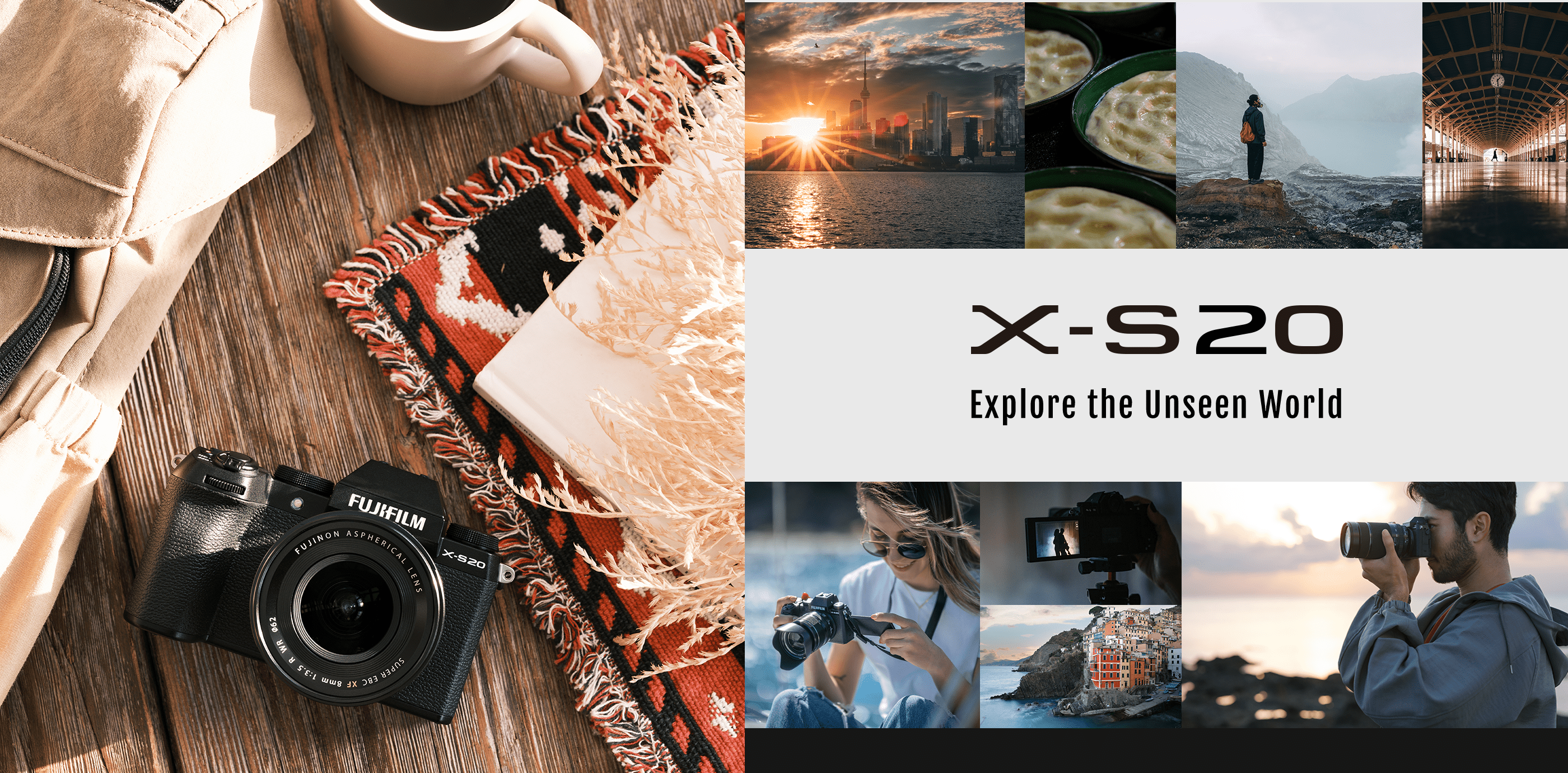

The Fujifilm X-S20 and the Sony A6700 are two of the most compelling APS-C mirrorless cameras available in 2023, appealing to both enthusiasts and professionals. Photographers and videographers alike frequently compare these models due to their similar sensor sizes, megapixel counts, and capabilities. However, distinct differences in their specifications and functionalities make them suited for slightly different users and scenarios. Choosing between the two often comes down to personal preferences regarding autofocus systems, video specifications, and overall ergonomics.
Specifications Comparison
Detailed Comparison
Image Quality
Both the Fujifilm X-S20 and the Sony A6700 share similar megapixel counts, with 26 MP APS-C sensors, providing high-resolution images with fantastic detail. The key difference is in their ISO performance; the X-S20 has an expandable ISO range up to 51,200, while the A6700 expansively offers up to 102,400. This gives the A6700 a slight edge in low-light situations, allowing for more versatility when shooting under challenging lighting conditions. Nevertheless, both cameras produce exceptional image quality with excellent dynamic range, color fidelity, and overall sharpness, which are hallmark traits of their respective manufacturers' sensor technology. Ultimately, while both cameras excel in image quality, the slightly wider ISO range of the A6700 provides an edge in extreme conditions.
Autofocus System
The autofocus systems are where a significant difference is observed. The Fujifilm X-S20 has 425 autofocus points, which offer respectable tracking performance for stills and moderate action. In comparison, the Sony A6700 boasts an impressive 759 autofocus points, significantly enhancing acquisition speed and accuracy, especially when tracking fast-moving subjects, such as during sports or wildlife photography. The A6700 also features advanced AI-driven subject recognition, improving its ability to lock onto faces and moving elements, giving it a substantial advantage in real-world performance. Consequently, photographers who prioritize autofocus speed and accuracy, especially in dynamic environments, may lean towards the A6700 for its superior system.
Video Capabilities
When it comes to video performance, the Sony A6700 clearly leads the competition with its ability to record 4K video at 120fps, catering to filmmakers looking for high frame rates and smooth slow-motion footage. The Fujifilm X-S20, while also capable of 4K video, is limited to 60fps. Additionally, the X-S20 features in-body image stabilization rated at 7 stops, compared to the A6700's 5 stops, making it potentially better for handheld shooting. While both cameras have their strengths, the A6700's higher frame rate and better autofocus during video capture make it the preferred choice for serious videographers who need versatile recording options.
Build & Ergonomics
In terms of build quality, the Sony A6700 is weather-sealed, providing added durability for outdoor shooting in unpredictable conditions. The Fujifilm X-S20, while offering a lightweight design at 491g, lacks this weatherproofing, potentially making it less suitable for rugged use. In terms of controls and ergonomics, both cameras feature electronic viewfinders, but the A6700's more compact dimensions might be beneficial for users seeking a more portable option. However, the X-S20's layout may appeal to those familiar with Fujifilm's classic retro design, which prioritizes intuitive manual controls. The build quality and feel provided by both models can cater to different user preferences, making this comparison somewhat subjective.
Battery & Storage
The Fujifilm X-S20 has a considerably higher battery life at approximately 750 shots compared to the 570 shots offered by the Sony A6700. For users involved in extended shooting sessions where changing batteries frequently might inconvenience them, the extra longevity of the X-S20 can be a significant benefit. Additionally, both cameras use similar storage solutions, adopting SD card slots that support UHS-II for high-speed data transfer. Nonetheless, if endurance is a priority for prolonged shooting without interruptions, the X-S20 emerges as the better option in this comparison.
Value for Money
The Fujifilm X-S20 is priced at $1,299, while the Sony A6700 comes in at $1,400. For many, the X-S20's higher battery life and stabilization features might surpass its higher resolution video limitations. Furthermore, users valuing a simpler photographic setup might appreciate the reasonable price point of the X-S20. In contrast, the A6700's advanced features justify its slightly higher price - particularly for those who prioritize video and autofocus capabilities. Overall, while both cameras offer good value relative to their features, cost-conscious buyers may find the X-S20 provides a better balance of performance and budget.
Our Verdict
Overall, while the Fujifilm X-S20 impresses with its battery life and in-body stabilization, the Sony A6700's superior autofocus system, video capabilities, and weather-sealed design position it as the better all-around choice, particularly for video enthusiasts and those shooting in challenging conditions. The X-S20, however, remains an excellent option for still photographers and those who value battery longevity and Fujifilm's unique color science. Ultimately, potential buyers should assess their primary use cases and feature preferences before making their final decision.
Fujifilm X-S20
Sony A6700
Also Compare
Frequently Asked Questions
Is the Fujifilm X-S20 better for still photography?
The X-S20 has excellent image quality and battery life, making it a good option for still photography. However, the autofocus performance is stronger in the A6700, which might make it easier to capture moving subjects.
Which camera is better for video recording?
The Sony A6700 has a significant advantage for video, offering 4K at up to 120fps, whereas the X-S20 is limited to 60fps. If video capabilities are a priority, the A6700 is the clear choice.
Do either cameras have weather sealing?
The Sony A6700 is weather-sealed, making it suitable for outdoor shooting in various weather conditions. The Fujifilm X-S20 lacks this feature.
How does low-light performance compare?
While both cameras have similar megapixels, the A6700's ISO range extends to 102,400, giving it a clearer advantage in low-light situations compared to the X-S20.
Which camera offers better value for photography and videography?
The Fujifilm X-S20 offers great value for still photography with its longer battery life and stabilization, while the A6700 provides extensive video features that justify its higher price for videographers.