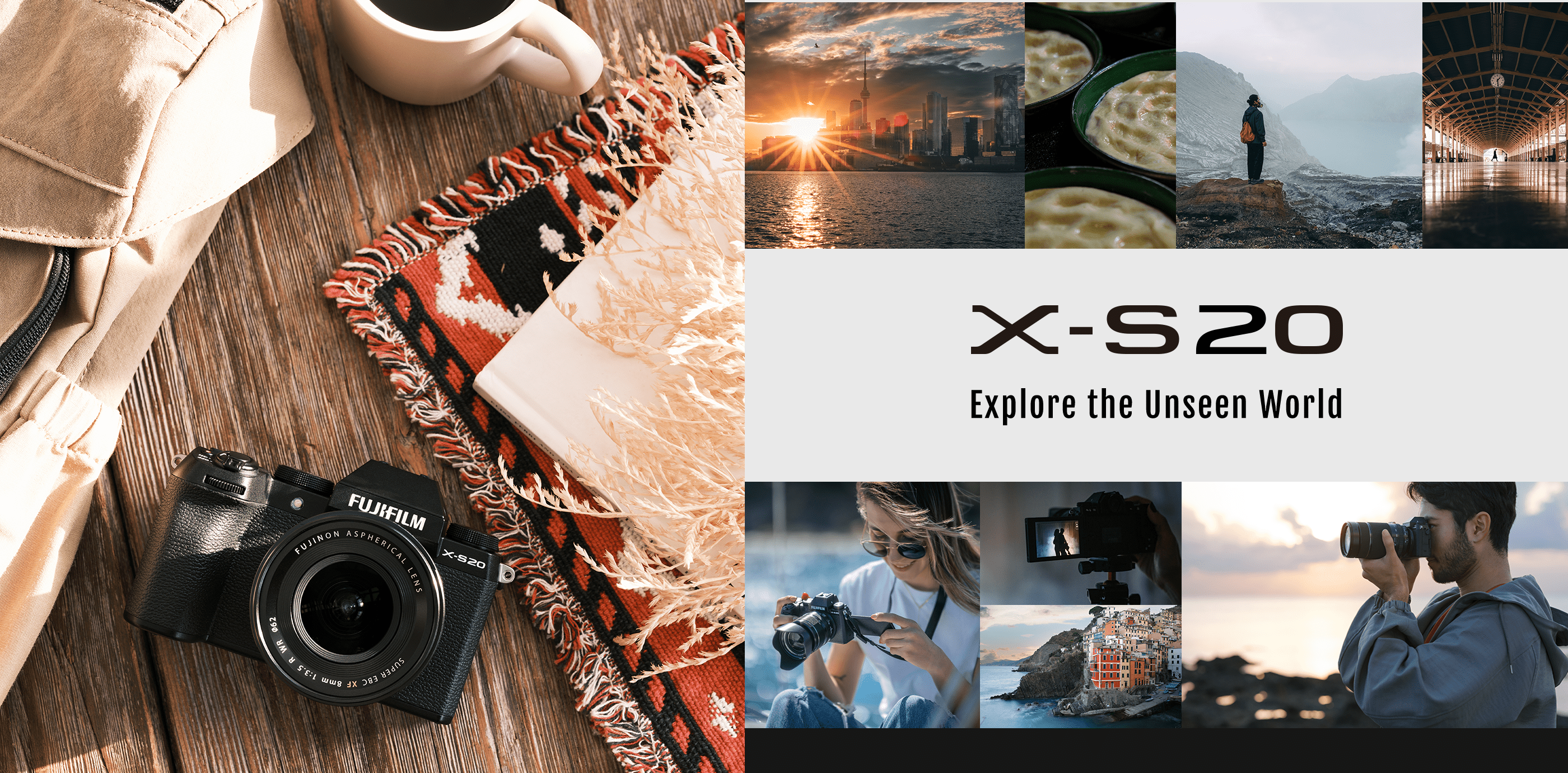

The Fujifilm X-S20 and X-T5 are two highly regarded models in Fujifilm's APS-C lineup, catering to both amateur enthusiasts and professional photographers alike. Both cameras provide exceptional image quality and versatile features, making them popular options for those interested in high-performance photography and videography. Buyers choosing between these two models will want to consider key differentiators such as megapixel count, autofocus capabilities, build quality, and video specifications, as these factors will significantly influence their photography experience.
Specifications Comparison
Detailed Comparison
Image Quality
Image quality is one of the most crucial aspects to consider when comparing cameras. The Fujifilm X-S20 features a 26-megapixel sensor, which delivers excellent detail and color accuracy suitable for a variety of shooting scenarios. In contrast, the Fujifilm X-T5 boasts a significantly higher 40-megapixel sensor, allowing for even more detail, particularly useful for large prints and cropping. Both cameras utilize the same APS-C sensor size, enabling similar performance in lower light conditions; however, the higher resolution of the X-T5 can lead to increased noise under certain conditions.
In real-world use, the X-T5 also captures more natural skin tones and finer details compared to the X-S20. The expanded ISO range available on both cameras allows users to shoot in challenging lighting situations, but the X-T5's ability to start at ISO 64 gives it a slight edge in outdoor conditions where bright light is prevalent. Overall, while both cameras perform admirably in terms of image quality, the X-T5 stands out for those who prioritize maximum detail and resolution in their work.
Autofocus System
Both the Fujifilm X-S20 and X-T5 feature advanced autofocus systems with 425 phase-detection autofocus points, allowing for fast and accurate focusing on moving subjects. The X-S20, however, has a slightly faster burst shooting capability at 20 frames per second compared to the X-T5's 15 frames per second. This can be advantageous for capturing fast action, making the X-S20 a compelling option for sports or wildlife photography.
Additionally, both models support various focus modes and face/eye detection, ensuring that subjects remain sharp during video and still photography. While there are no significant differences in the autofocus system's fundamental capabilities, the faster frame rate of the X-S20 can make it more appealing for photographers who frequently shoot high-speed subjects. However, for predominantly still photography where focus precision is critical, both cameras perform exceptionally well.
Video Capabilities
When it comes to video performances, the Fujifilm X-S20 supports 4K recording at up to 60p, making it an excellent choice for videographers looking for high frame rates and flexibility. The X-S20's 7-stop in-body stabilization is also noteworthy and can greatly enhance the quality of handheld footage, providing smooth shooting experiences in various environments. In contrast, the X-T5 also supports 4K video but can only reach up to 30p with certain high-quality codecs.
Moreover, both cameras feature a fully articulating screen; however, the X-S20's screen responsiveness and usability are slightly enhanced due to its more modern design. Given these factors, the X-S20's advantages in video capabilities make it particularly well-suited for vloggers and dynamic content creators seeking the latest technology in their tools.
Build & Ergonomics
Build quality and ergonomics can significantly influence the user experience, and both cameras have unique advantages. The Fujifilm X-T5 features weather sealing, which allows it to withstand dust and moisture, making it a better option for outdoor photographers. In contrast, while the X-S20 is well-built and portable, it lacks weather sealing, which could be a concern for those shooting in challenging weather conditions.
In terms of dimensions, the X-S20 is slightly smaller and lighter at 491g, which may appeal to those who prioritize portability for travel or street photography. The X-T5, weighing 557g and having additional controls, might feel sturdier in hand, giving a more premium user experience. Ultimately, the choice here depends on the shooting environment and personal preference for size versus durability.
Battery & Storage
Battery performance is an integral aspect of any camera, especially for long shoots. The Fujifilm X-S20 offers a battery life of approximately 750 shots, while the X-T5 provides 580 shots per charge. This gives the X-S20 a notable advantage for users who need extended shooting periods without frequent battery changes.
Both cameras use the same Fujifilm X mount, making it easy to switch lenses between the two. However, the X-T5 has the benefit of dual card slots for increased storage capacity and backup options during lengthy shoots, making it more convenient for professional usage. For photographers who prioritize battery life and storage reliability, the decision may hinge on how they balance these attributes based on their shooting style.
Value for Money
In terms of price, the Fujifilm X-S20 retails for $1299, while the X-T5 is available at $1699. The price difference reflects the X-T5's higher image resolution, additional features like weather sealing, and a more robust build. The X-S20, on the other hand, offers impressive features for those who may not need the maximum resolution or advanced weather protection, making it an excellent entry point for enthusiasts.
Considering performance across various aspects, the X-S20 provides a great value for those focused on videography, casual photography, or who value portability above all. The X-T5, while more expensive, is best suited for professionals who need enhanced image quality, dual card slots, and ruggedness in demanding environments. This makes the overall perceived value subjective and dependent on the user's specific needs and budget.
Our Verdict
Overall, the Fujifilm X-S20 wins for its superior value, video capabilities, and higher burst rate. It's particularly suited for enthusiasts, vloggers, and those looking for a compact, versatile camera. On the other hand, the X-T5 excels in image resolution and build quality with weather sealing, making it an ideal choice for professional photographers who prioritize detail and durability. Each camera has its strengths, so the ideal choice ultimately hinges on the specific needs and shooting preferences of the user.
Fujifilm X-S20
Fujifilm X-T5
Also Compare
Frequently Asked Questions
Is the Fujifilm X-T5 worth the extra money over the X-S20?
If you prioritize high resolution and weather-sealing, the X-T5 offers compelling advantages for professional environments. However, the X-S20 provides excellent value for a broad range of applications, especially for videography.
Can I use the same lenses on both cameras?
Yes, both the Fujifilm X-S20 and X-T5 use the Fujifilm X mount, allowing you to interchange lenses seamlessly.
How do the video features compare?
The X-S20 supports 4K recording up to 60p, while the X-T5 is limited to 4K at 30p for certain codecs. This makes the X-S20 the better choice for videographers.
What is the autofocus performance like?
Both models perform well with 425 autofocus points. The X-S20 has a faster burst rate, making it ideal for capturing fast action.
How does battery life compare between the two models?
The X-S20 has a longer battery life of 750 shots, while the X-T5 lasts around 580 shots. If extended shooting is a priority, the X-S20 has the advantage.