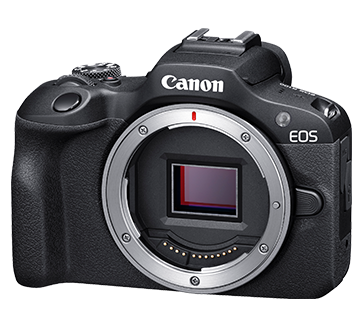

The Canon EOS R100 and the Sony A6700 are two popular choices in the APS-C mirrorless camera segment, catering to both enthusiasts and professionals looking for compact, high-performance options. Commonly compared due to their recent releases in 2023, buyers often weigh these cameras against each other, especially those who are looking for either an entry-level option with robust features or a more advanced model that offers extensive capabilities. Key differentiators between the two include sensor performance, autofocus systems, video capabilities, and overall build quality.
Specifications Comparison
Detailed Comparison
Image Quality
Both the Canon EOS R100 and the Sony A6700 utilize APS-C sensors, but each brings its own strengths to image quality. The Canon R100 features a 24-megapixel resolution which produces sharp images with good detail, especially in well-lit conditions. On the other hand, the Sony A6700, with a slightly higher resolution of 26 megapixels, allows for even more detail and improved cropping ability, making it a favorable choice for those who require higher resolution images. ISO performance is another critical factor; while both cameras offer an ISO range starting at 100, the A6700 extends to 32,000 and can be expanded to 102,400, making it more capable in low-light situations compared to R100's upper limit of 12,800, which could lead to more noise in darker environments.
Autofocus System
The autofocus systems in the Canon EOS R100 and Sony A6700 show significant differences, which can be a deciding factor for many users. The A6700's autofocus features 759 points, providing extensive coverage and fast, precise tracking capabilities, especially for moving subjects. This system is especially beneficial for action shots, sports, and wildlife photography. The R100, while having a respectable 143 autofocus points, falls short in versatility and speed when compared directly to the A6700. The difference in autofocus performance is particularly noticeable in dynamic shooting environments, where the A6700 excels.
Video Capabilities
When it comes to video features, the Sony A6700 significantly outshines the Canon R100. The A6700 supports 4K video resolution up to 120 frames per second, making it an excellent choice for videographers seeking high frame rates and smooth slow-motion footage. Additionally, its advanced video codecs and features provide a professional edge for serious video creators. In contrast, the Canon R100 supports basic video functions without the same level of sophistication, focusing more on still photography, which makes it less versatile for those looking to create high-quality video content.
Build & Ergonomics
The Canon EOS R100 and Sony A6700 exhibit different approaches to design and ergonomics. The R100 is lightweight at 356g and compact, measuring 116 x 86 x 69 mm, making it highly portable for everyday use and travel. However, it sacrifices some advanced build quality features, such as weather sealing. The A6700, while heavier at 493g and slightly larger, boasts a weather-sealed body, enhancing durability in various shooting conditions. Additionally, the layout of controls and grip on the A6700 is often rated more ergonomic for prolonged usage, making it a more comfortable option for intensive shooting sessions.
Battery & Storage
Battery life is an essential consideration, especially for photographers and videographers on the go. The Sony A6700 offers an impressive battery life of around 570 shots per charge, greatly enhancing its appeal for extended shooting sessions. In contrast, the Canon EOS R100 does not specify battery life, which might indicate a concern for prospective buyers. Furthermore, the A6700 supports dual card slots for more storage flexibility, accommodating more extensive photo and video sessions. The lack of dual slot support in the R100 may limit continuous shooting capabilities for users who rely on extensive storage.
Value for Money
Price is a significant factor for many buyers, and the value propositions of the Canon EOS R100 and Sony A6700 reflect their advanced features. The R100 is priced at $480, appealing for entry-level photographers who want a capable camera without the advanced features of pricier models. However, the A6700 is priced at $1,400, which may deter budget-conscious buyers but provides advanced features that cater to serious photographers and videographers. Given that the A6700 justifies its higher price with superior image quality, autofocus, and video capabilities, it can be seen as a better long-term investment for users who require professional-grade performance.
Lens Ecosystem
Both Canon and Sony have a rich ecosystem of lenses available for their respective mounts, yet the differences in system maturity could influence purchasing decisions. The Canon RF mount has been growing but is still more limited relative to the well-established Sony E mount. Sony users have an extensive range of lenses, including many third-party options, enhancing versatility to suit different shooting styles. This robust selection is an essential factor for photographers looking to expand their systems over time, making the A6700 a more future-proof investment. In summary, while both brands offer solid lens options, the A6700 benefits from a broader and more mature lens ecosystem.
Our Verdict
Overall, the Sony A6700 is the clear winner when considering image quality, autofocus performance, video capabilities, and build quality. Its advanced features and increased versatility make it a better choice for serious photographers and videographers who can leverage its full potential. However, the Canon EOS R100 remains an attractive option for beginners or those on a budget, delivering good quality and ease of use at a lower price point. Understanding individual needs and priorities, particularly whether users prioritize advanced capabilities or a more user-friendly experience, will ultimately guide the best choice between these two cameras.
Canon EOS R100
Sony A6700
Also Compare
Frequently Asked Questions
Which camera is better for beginners?
The Canon EOS R100 is more suited for beginners due to its lower price, ease of use, and straightforward controls, making it easier for those new to photography.
Is the Sony A6700 worth the extra price?
Yes, the Sony A6700's advanced features, higher megapixel count, superior autofocus, and video capabilities justify the higher price, making it a better investment for serious photographers.
Can I use lenses from my old Canon/Nikon camera on the R100?
You will need an adapter to use older Canon or Nikon lenses on the R100, as it has a specific RF mount. Compatibility might depend on the specific lenses and adapters available.
What type of photography is best suited for the A6700?
The A6700 excels in action, wildlife, and low-light photography due to its superior autofocus system, high ISO range, and fast continuous shooting capabilities.
Does the R100 have a good battery life?
While the exact battery life is not specified, entry-level cameras like the R100 typically have average performance. Users considering long shoots may want to carry extra batteries.