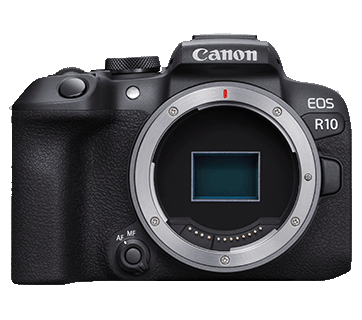

The Canon EOS R10 and the Sony ZV-E10 II are two popular mirrorless cameras tailored for content creators, vloggers, and photography enthusiasts. Both cameras boast APS-C sensors and cater to a similar audience, making them frequently compared choices in the mirrorless segment. Buyers might be torn between the two based on specific needs such as video capabilities, autofocus performance, or overall system compatibility with existing lenses.
Key differentiators include their video resolution, autofocus systems, and build quality. The Canon EOS R10 provides a robust autofocus system and a higher continuous shooting rate, while the Sony ZV-E10 II offers impressive video specifications, including higher frame rates and an expandable ISO range. Understanding these differences is crucial to making an informed decision tailored to specific use cases and personal preferences.
Specifications Comparison
Detailed Comparison
Image Quality
In terms of image quality, both cameras perform exceptionally well due to their APS-C sensors. The Canon EOS R10 features a 24-megapixel sensor that delivers sharp images with excellent dynamic range, particularly in well-lit conditions. Its ISO performance ranges from 100 to 32,000, providing decent low-light capabilities, although pushing the limits might introduce some noise.
On the other hand, the Sony ZV-E10 II comes with a slightly higher 26-megapixel sensor providing an edge in detail resolution. It also shares the same ISO range, but with an impressive expandable range down to ISO 50 and up to ISO 102,400, enhancing its low-light performance significantly. This makes it a favorable choice for night photography or in challenging lighting conditions.
In practical scenarios, while both cameras yield excellent results, the slight megapixel advantage and greater ISO flexibility of the ZV-E10 II give it an edge when it comes to capturing high-quality images in a variety of environments.
Thus, for overall image quality, the winner is:
Autofocus System
The autofocus systems in the Canon EOS R10 and Sony ZV-E10 II are quite sophisticated, catering well to their target audiences. The R10 features an extensive autofocus system with 651 AF points, ensuring fast and accurate focusing across the frame. Its Dual Pixel CMOS AF technology allows for smooth subject tracking, especially beneficial in dynamic shooting scenarios such as sports and wildlife photography.
Conversely, the ZV-E10 II has a slightly higher number of autofocus points at 759, which translates to even more precision in focusing. Its Real-Time Eye Autofocus and Object Tracking capabilities work exceptionally well for vlogging, ensuring that subjects stay in focus even during movement.
Both systems excel, but the additional AF points and advanced tracking features of the Sony ZV-E10 II cater particularly well to content creators who need reliable face tracking in videos or while vlogging. Therefore, in terms of autofocus, the winner is:
Video Capabilities
Video capabilities are a crucial consideration for many buyers, particularly vloggers and online content creators. The Canon EOS R10 supports 4K video recording at 30 frames per second, providing solid quality for vlogs and short films. However, it does not support 4K recording at higher frame rates, which could be a limitation for those looking for slow-motion effects.
In contrast, the Sony ZV-E10 II excels with 4K video resolution capabilities up to 60 frames per second. This higher frame rate allows for smoother motion and more creative video options. Additionally, its improved features cater specifically to video creators, such as a dedicated product showcase setting that quickly shifts focus between the subject's face and items held in front of the camera.
Given the emphasis on video, the ZV-E10 II offers far more versatility for dynamic video content, establishing it as the superior option for filmmakers and content creators. Thus, the winner for video capabilities is:
Build & Ergonomics
When evaluating build quality and ergonomics, both cameras offer different advantages. The Canon EOS R10 has a slightly larger and bulkier design, weighing in at 426 grams, which can provide a more substantial feel in the hand and be comfortable for extended use. It features an electronic viewfinder, which may appeal to photographers who prefer composing shots through a viewfinder rather than an LCD screen.
In contrast, the Sony ZV-E10 II is lighter at 377 grams and boasts a more compact design, ideal for travel and vlogging venues. Its lack of a viewfinder may be seen as a drawback for traditional photographers, but its fully articulating LCD makes it excellent for vlogging and self-recording. Additionally, the ZV-E10 II is weather-sealed, which adds durability against the elements, making it a valuable choice for outdoor shooting.
Ultimately, while both cameras are well-built, the preference in ergonomics might depend on use case, deducing that the lighter, more compact yet rugged ZV-E10 II has a slight edge here. Thus, the winner for build and ergonomics is:
Battery & Storage
Battery life is a significant factor for many users, especially when shooting in remote locations or for extended periods. The Canon EOS R10 boasts a commendable battery life that allows for approximately 450 shots per charge, which is respectable in the mirrorless category.
On the other hand, while specific battery performance figures for the Sony ZV-E10 II are not provided, it generally tends to be on par with other models within its line, offering similar shot counts. However, the ZV-E10 II uses dual memory card slots, allowing greater flexibility in storage options and potentially less downtime if one card fills up.
In everyday use, both cameras can achieve lasting performance. Still, the dual card slots from the ZV-E10 II provide added functionality for content creators looking to maximize storage or create redundancy during shoots, thus making the ZV-E10 II the winner in this category. Therefore, the winner for battery and storage is:
Value for Money
At a price point of $979, the Canon EOS R10 provides a well-rounded camera system for photographers and content creators. Its balance of features, image quality, and performance makes it an attractive option for those looking for a versatile system without breaking the bank.
In comparison, the Sony ZV-E10 II is priced at $1000. Although slightly more expensive, it offers several additional features tailored for video creators, such as higher video frame rates, enhanced autofocus capabilities, and suitability for various shooting environments due to its weather sealing.
When considering value for money, buyers must weigh the importance of features specific to their needs. For those primarily focused on still photography or casual usage, the R10 presents a better overall value. However, for dedicated vloggers or content producers who can leverage the additional video features of the ZV-E10 II, the investment may prove worth it. Hence, this category is a tie overall, considering buyer perspectives. Therefore, the winner is:
Our Verdict
In conclusion, while the Canon EOS R10 impresses with its robust autofocus and solid image quality, the Sony ZV-E10 II stands out as the overall winner due to its superior video capabilities, more advanced autofocus system, and additional features that benefit vlogging and content creation. For users who prioritize still photography and a more substantial camera body, the R10 may be the appropriate choice. Conversely, the ZV-E10 II excels for video-oriented users, allowing for creative expression in high-definition formats. Each camera has its strengths, making it critical for buyers to align their choice with their primary shooting needs.
Canon EOS R10
Sony ZV-E10 II
Also Compare
Frequently Asked Questions
Which camera is better for vlogging?
The Sony ZV-E10 II is better for vlogging due to its higher video frame rates, advanced autofocus, and fully articulating screen that makes it easier for self-recording.
Can the Canon EOS R10 shoot 4K video?
Yes, the Canon EOS R10 can shoot 4K video, but it is limited to 30 frames per second.
Is the Sony ZV-E10 II weather-sealed?
Yes, the Sony ZV-E10 II is weather-sealed, making it suitable for outdoor shooting in various conditions.
How do the autofocus systems compare?
The Sony ZV-E10 II has more autofocus points (759 compared to 651 in the R10) and offers advanced features like Real-Time Eye Autofocus, making it superior for tracking subjects.
What is the difference in battery life between the two cameras?
The Canon EOS R10 boasts a battery life of about 450 shots, while the ZV-E10 II's performance is not specified but is generally comparable. However, ZV-E10 II offers dual card slots for added functionality.